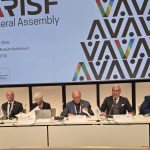
In a global context where major sporting events have come under scrutiny for the labor conditions they entail, FIFA has taken a new step to strengthen its commitment to workers’ rights. The world governing body of football announced a five-year collaboration agreement with the Building and Wood Workers’ International (BWI) aimed at promoting “decent and safe working conditions” across all its tournaments. This alliance seeks to generate tangible change in the labor environments linked to the construction of stadiums and sports infrastructure — a long-standing debt FIFA has carried since the organization of the Qatar 2022 World Cup.
The agreement comes at a crucial moment, following the controversy surrounding the awarding of the 2034 World Cup to Saudi Arabia, a decision criticized by the BWI for its lack of transparency in the bidding process and ongoing concerns over human rights in the country. Despite past disagreements, both entities have decided to work together once again, this time with the promise of establishing a stronger framework for monitoring, training, and remediation for workers involved in FIFA-related projects.
A new framework of cooperation focused on labor dignity
According to the official statement, the agreement includes joint labor inspections, training programs on occupational health and safety, corrective action mechanisms with defined timelines, and the publication of annual progress reports. These elements aim to ensure that labor rights are not just a promise but a verifiable practice in every host country. FIFA Secretary General Mattias Grafström emphasized the importance of ensuring that all workers contributing to tournament organization enjoy fair wages, job stability, and social protection — reinforcing the notion that football should also benefit those who make it possible through physical and technical effort.
For his part, BWI Secretary General Ambet Yuson highlighted that this collaboration is built on “years of experience and a critical partnership,” with the goal of turning human rights commitments into real improvements. The BWI, which had previously pointed out FIFA’s limitations in Qatar, now aims for a more preventive rather than corrective approach, promoting independent inspections and direct communication between workers and organizing entities. This pact, beyond institutional statements, seeks to restore dignity to the laborers who build the stages where the world celebrates sport.
A global commitment for upcoming World Cups
The scope of the new agreement is truly global. Inspections and measures will be applied to the most relevant tournaments of the next decade, including the 2026 World Cup in Canada, Mexico, and the United States; the 2027 Women’s World Cup in Brazil; and the historic 2030 World Cup, which will bring together six host nations — Morocco, Portugal, Spain, Argentina, Paraguay, and Uruguay. Preparatory work for the 2034 Saudi Arabia World Cup, one of FIFA’s greatest upcoming labor rights challenges, is also included.
Each host nation represents a different socioeconomic context, and the challenge will be to adapt labor standards to diverse realities while maintaining ethical consistency. The implementation of joint inspections and the training of labor representatives are emerging as key tools for building safer work environments. The initiative seeks to ensure that the legacy of future World Cups is not measured solely in stadiums and records, but in respect for the lives and well-being of those who make the world’s most-watched sporting spectacle possible.
 Last related articles