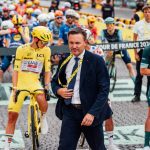
The revenues of FIFA president Gianni Infantino have multiplied since he took office in 2016. According to tax documents filed with U.S. authorities and revealed by ‘Le Monde’, the total compensation of the executive rose from 1.28 million euros in his first year as president to 5.27 million euros in 2024, during a period marked by the strongest economic expansion in the history of the international federation.
The increase in the president’s pay has come in parallel with the growth of FIFA’s revenues as an organisation. In the 2019–2022 financial cycle, the governing body generated 7.568 billion dollars in income, an increase of 18 percent compared with the previous cycle, driven mainly by audiovisual and commercial rights linked to the FIFA World Cup. For the 2023–2027 period, FIFA has projected revenues close to 11 billion dollars, in a cycle that will culminate in the 2026 World Cup, the largest edition ever in terms of teams and matches.
The World Cup as the financial engine
The FIFA World Cup remains the organisation’s main economic asset. In the 2019–2022 cycle, television rights alone generated more than 3.4 billion dollars, accounting for around 45 percent of FIFA’s total income. The Qatar 2022 World Cup exceeded the figures recorded for Russia 2018 and consolidated a business model based on the centralised sale of broadcast rights, global sponsorships and commercial licences.
For the 2026 edition, to be hosted by the United States, Mexico and Canada, FIFA expects a further increase in revenues, supported by the expansion to 48 national teams and a longer competition calendar.
The growth in income is also reflected in the financial distributions to national federations. FIFA has announced that it will allocate 727 million dollars in prize money for the 2026 World Cup, a record figure. Each participating team will receive a minimum of 10.5 million dollars, while the champion will earn up to 50 million dollars, amounts higher than in any previous edition.
This increase represents a significant shift compared with earlier cycles, both in the total volume distributed and in the guaranteed sums for participants, and forms part of a strategy aimed at strengthening the World Cup’s financial impact on member federations.

Club distributions and changes at the top
Beyond national teams, FIFA has also expanded the funds allocated to clubs. For the 2026 World Cup, the player release compensation programme is expected to distribute around 355 million dollars to clubs worldwide, a record amount under the so-called Club Benefits Programme.
At the same time, the federation continues to run structural initiatives such as FIFA Forward, through which it channels direct funding to its member associations for infrastructure, grassroots football development and institutional strengthening. The scale of these funds has increased progressively since Gianni Infantino assumed the presidency.
The rise in the president’s compensation is part of a broader evolution in salaries at the top of FIFA. In 2024, the organisation’s secretary general, Mattias Grafström, represented a cost of more than 2.2 million dollars for the federation, more than double the amount declared in earlier years. These remunerations, broken down into base salary, bonuses and other forms of compensation, are detailed in the annual tax filings that FIFA submits in the United States as part of its financial transparency obligations.
A cycle of maximum expansion
Gianni Infantino’s tenure coincides with a period of strong economic growth for FIFA, driven by the expansion of competitions, rising values for broadcast rights and a greater capacity to redistribute resources. The combination of record revenues, higher prize money and expanded compensation programmes for federations and clubs defines a cycle in which FIFA has strengthened its position as the sports organisation with the greatest financial power at global level.
The evolution of the president’s personal income therefore takes place within a broader expansion of the international football business, with the FIFA World Cup at its core and an economic model that has reached its largest scale since the federation was founded.
 Last related articles