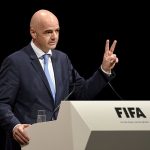
Gianni Infantino’s apology has not ended the crisis at FIFA. The Council meeting held in Zurich on Thursday, 15 October concluded with European officials demanding explanations about the abandoned FIFA Forward Enterprise (FFE) project and the Folarin Balogun case. The meeting launched a reform process, but left outstanding the documentation his critics consider necessary to scrutinise the president’s decisions.
Debbie Hewitt, chair of the English Football Association and a FIFA vice-president, linked Infantino’s fitness to remain in office to those answers: “If he doesn’t answer those questions, no, he is not fit to be the FIFA president,” she said, according to ‘Associated Press’. Bernd Neuendorf, president of the German Football Association, also left dissatisfied and called for new leadership capable of restoring the organisation’s credibility. Opposition was once again voiced publicly from within the Council itself.
The apology does not resolve the FFE case
FIFA’s official account places the apology in the context of mistakes in handling and communicating FFE, the private investment initiative that triggered the confrontation. FIFA says the project has been permanently withdrawn and attributes the confidentiality surrounding its details to ongoing legal proceedings in the United States. Acknowledging failures in consultation represents a political concession, but leaves unresolved the scope of the decisions taken and the information Council members will be able to access.
The Balogun case also remains unresolved. According to ‘The Guardian’, the Council deferred the proposed disciplinary amendment pending further information. FIFA’s official statement confirms that its Legal Committee will review the procedures and present its findings in December. The debate concerns the decision to suspend the American striker’s ban during the World Cup: changing future rules does not, in itself, explain how the previous ones were applied.
Reform placed in the hands of a new working group
FIFA confirmed the creation of a working group with representatives from across the confederations to review its governance framework. ‘The Guardian’ identifies Sheikh Salman bin Ibrahim Al Khalifa as its chair. The official statement does not detail its full membership or powers. Part of the dispute now centres on this process: an internal review may help secure agreement, but its credibility will depend on whether it can examine the contested decisions and establish effective oversight of the presidency.
Meanwhile, FIFA presented a programme that would increase development funding to US$6.35 billion for 2027–2030, with US$25 million per member association. The conditions must be finalised in December and submitted to Congress in March 2027. The announcement offers a route towards financial agreement, although it does not yet constitute final authorisation of all payments or resolve the demands for transparency.
The calendar adds pressure: the deadline for presidential nominations is 18 November, before the next Council meeting, scheduled for 16 December in Doha. According to ‘Associated Press’, Infantino retains explicit support among African officials. His critics therefore face two distinct tasks: obtaining answers and building an electoral alternative. Launching a reform process guarantees neither, and some explanations could arrive after the deadline to challenge for the presidency has already passed.
 Last related articles