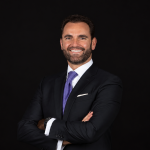
Gustavo Adolfo Sánchez Acero, three-time World Championships medallist and a leading figure in artistic swimming in Colombia, experienced the sharpest contrast of his career in the space of just twelve months. In 2023, he became the first Colombian — and the first South American — to win a medal at a World Championships in the sport, claiming silver in Fukuoka. In 2024, he added two bronze medals in Doha and later captured gold at the World Cup Super Final in both men’s solo and mixed duet. He was subsequently named Male Artistic Swimmer of the Year by World Aquatics. After establishing himself among the international elite, a serious illness and a personal crisis forced him to reconsider his future in the sport.
At the beginning of 2025, while training in Barcelona to prepare for the World Cup season, he contracted severe haemorrhagic dengue fever, which drastically reduced his physical capacity and kept him out of the pool. Shortly afterwards, a close relative was diagnosed with Guillain-Barré syndrome, an autoimmune disease that affects the nervous system and can cause paralysis. Sánchez chose to return home and focus on his family. “2024 was my year, and this one wasn’t. Those problems made me wonder what was happening. My mind was more in Colombia than in the competitions,” he admitted.
The year he considered retirement
The impact was also emotional. At the following World Championships, he went from fighting for a podium place to finishing seventh in his individual events. “It was tough. I thought my time had already passed,” he confessed. On social media, he spoke about “mental blocks,” fear and insecurity — feelings he had never experienced before in his career. “I lived the other side of sport,” he said, recalling the retirement thoughts that began to surface during that period.
Recovery did not come overnight. Sánchez stepped away and travelled to Thailand and Indonesia, where he immersed himself in nature and personal reflection. “Guilt, sadness, anger… after coming out of that, it was impossible not to feel different, liberated. I felt free. I finally chose to let it go, and the biggest lesson this leaves me is that if you’re not okay on the inside first, you’ll never be okay on the outside to show the world what you have to give,” he wrote after that period. The break allowed him to rebuild both physically and mentally, returning to the pool with renewed perspective.
The accident that shaped his adolescence
It was not the first time his career had been abruptly interrupted. At the age of 13, a school accident crushed his hand, and he lost part of the first phalanx of his left middle finger. The recovery was long and painful. “I almost tore my finger off,” he recalled in an interview. The injury forced him to step away from sport at a formative stage.
During that period, he tried different disciplines — volleyball, ultimate frisbee and water polo — before accepting an invitation in 2017 to train in artistic swimming. Four months later, he was competing internationally for the first time. Since then, he has advocated for the growth of men’s artistic swimming within a discipline historically more visible in women’s categories. “I used to watch this sport at the Olympic Games, and that motivated me,” he remembers.
Competing at home
Institutional uncertainty also fed his doubts. Two years ago, he felt “more outside than inside” the sporting system. “I was giving everything and the support was minimal. My mother lifted me up. I was disappointed, but she was always there,” he admitted. At one point, he even considered seeking opportunities abroad before eventually finding backing from the federation, sponsors and the Colombian Olympic Committee.
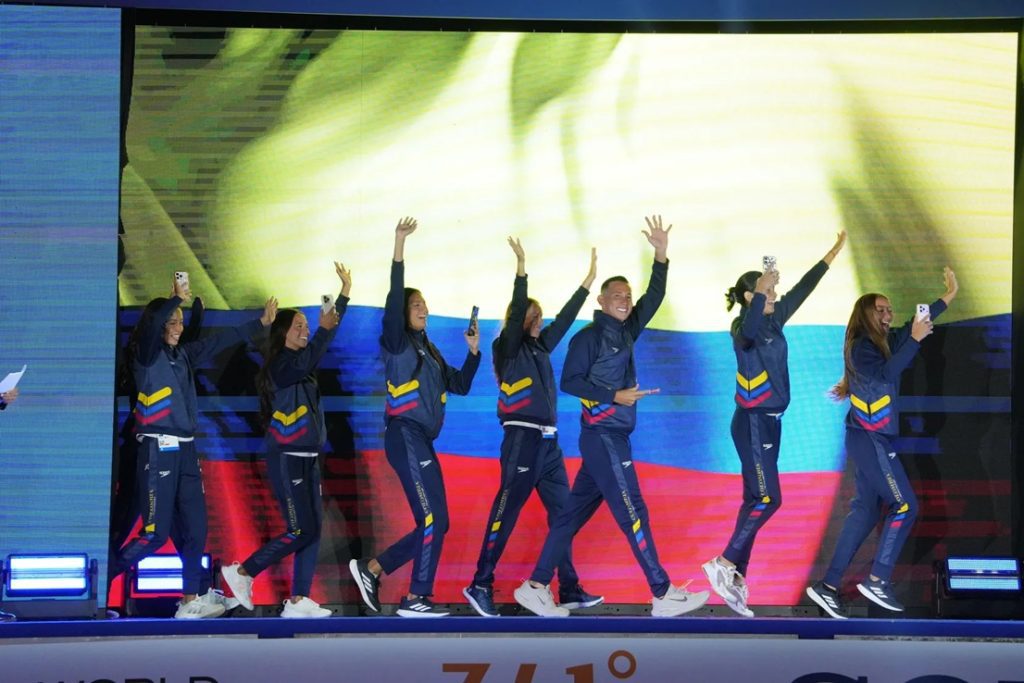
From 13 to 15 February 2026, the César Zapata Aquatic Complex in Medellín will host the first stop of the World Cup organised by World Aquatics, with nearly 300 athletes from 25 countries expected to compete, including Olympic and World medallists. In that setting, Gustavo Sánchez will compete at home not only as a three-time World medallist, but as one of the figures who have helped place Colombia on the global artistic swimming map — an athlete whose journey has been defined as much by resilience as by medals.
 Last related articles