Kosovo has used its growing presence in international sport as the starting point for a conference on unity, inclusion and cooperation. ‘Kosovo – Where Sport Unites the World’, organised by United Through Sports -UTS- and the International Federation of Muaythai Associations -IFMA-, brought together leaders from different organisations while the country hosts the Senior World Championships for all Muaythai disciplines. The conference opened with a special welcome message from Kosovo’s Prime Minister and addressed the role of federations, coaches, athletes and major competitions in creating opportunities and spaces for dialogue.
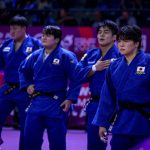
The choice of host formed part of the conference’s message. The Kosovo National Olympic Committee was recognised by the International Olympic Committee -IOC- in 2014 and, only two years later, Majlinda Kelmendi secured the country’s first Olympic medal by winning the -52kg judo title in Rio de Janeiro. Since then, Kosovo has expanded its presence within the Olympic Movement, won further medals and secured the right to host the Pristina 2030 Mediterranean Games. The conference therefore took place ten years after that first gold and while the country once again serves as the host of an international competition.
Kosovo presents its international journey
The President of the Kosovo National Olympic Committee, Ismet Krasniqi, and the Deputy Minister of Culture, Youth and Sport, Suleiman Elshani, delivered the official welcome. Both greeted representatives from UTS, IFMA and the international Muaythai community and highlighted the country’s gradual integration into global sporting structures. They also placed the meeting within a world still affected by conflict, division and inequality, circumstances in which sport can offer opportunities for institutions, delegations and communities from different backgrounds to engage with one another.
The first keynote address was delivered by Fatema Hayat, representing the Islamic Solidarity Sports Association -ISSA-, which brings together 57 countries under the presidency of Prince Abdulaziz bin Turki Al-Faisal. Hayat used the Riyadh 2025 Islamic Solidarity Games to demonstrate the platform’s reach: more than 3,000 athletes from 57 nations competed across 23 sports, with women accounting for 36 per cent of all participants. According to figures presented by ISSA, more than 70 broadcasters carried coverage in over 50 countries, attracting an estimated audience of more than 350 million across live broadcasts and highlights, with cumulative reach exceeding one billion.
Muaythai looks towards 2029
The presentation also explained that ISSA’s work extends beyond staging the Games. The association develops programmes designed to help its members organise competitions to international standards, assess their national sporting systems before making investments and incorporate athletes’ voices into decision-making. This framework is directly relevant to IFMA: Muaythai made its Islamic Solidarity Games debut in Riyadh, providing its athletes with another route into a multi-sport event. The federation hopes to retain that place at the next edition, scheduled to take place in Malaysia in 2029.
The second keynote address was delivered by Stephan Fox, President of United Through Sports and the Alliance of Independent Recognised Members of Sport -AIMS-. Fox argued that access to sport should be guaranteed regardless of nationality, gender, religion, ethnicity, social background, ability or passport. He also said that athletes should never become prisoners of politics and that those who have earned the right to compete must be able to reach the field of play safely, with dignity and without discrimination. His intervention translated the idea of unity into a practical institutional question: who is allowed to compete, and under what conditions.
When an opponent can also build a bridge
Fox used the relationship between Jesse Owens and Luz Long at the Berlin 1936 Olympic Games to explain how two rivals can show respect in an environment shaped by political division. The United States athlete won the long jump gold medal and the German finished second, but the image of them together outlasted the result and became one of the most recognisable symbols of those Games. Fox drew on their friendship to argue that sport cannot end every war or resolve every disagreement by itself, but can create an initial shared space. “We do not have to be the same to stand together,” he concluded.
The conference therefore brought together organisations performing different roles within the sporting system. United Through Sports works on inclusion, education and safeguarding programmes focused particularly on young people, while AIMS brings international federations together and provides them with a route into the Olympic Movement. IFMA supplied the setting of a World Championships featuring competitive, cultural and adapted Muaythai disciplines in Kosovo. Alongside the competition, the conference addressed athlete access, women’s participation, federation development and the responsibility of coaches and sports leaders to create opportunities.
 Last related articles