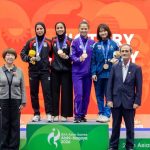
Iran’s men claimed world titles in both Greco-Roman and freestyle wrestling, marking a historic first for the country, while women remain barred from the sport, a ban the UWW continues to overlook.
The Greco-Roman World Wrestling Championships took place in Zagreb, Croatia, from September 17 to 21. The Iranian team delivered a strong performance, with Saeed Esmaeili (67kg), Gholamreza Farkhi (82kg), Mohammad Hadi Saravi (87kg), and Amin Mirzazadeh (130kg) capturing gold medals. Peyman Ahmadi (55kg) and Alireza Mohammedi (87kg) secured silver, while Mohammad Mehdi Keshtkar (63kg) and Seyed Danial Sohrabi (67kg) added bronze to the tally.
Earlier, the World Freestyle Wrestling Championships were held in the same city from September 12 to 15. Iran’s freestyle squad also shone, as Rahman Amouzad (65kg) and Amirhossein Zare (125kg) struck gold. Ahmad Mohammadnejad Javan (61kg) and Amirali Azarpira (97kg) won silver, with Mohammad Nokhodi (79kg), Kamran Ghasempour (86kg), and Amirhossein Firoozpour (92kg) completing the medal haul with bronze.
Iranian representation at the World Championships was not limited to the official national team. Seven wrestlers of Iranian origin also competed under the flags of other nations, highlighting a growing trend of athlete migration from Iran, often described by experts as a “sports brain drain.”

World Wrestling Championships 2025 – Iran National Team
In freestyle wrestling, Peyman Biyabani, a former junior world champion who once brought glory to Iran, competed at 65kg for Canada. Mohammad Motaghinia represented Spain at 74kg, while Mohsen Sir wrestled in the 125kg class for Germany.
The Greco-Roman field featured familiar Iranian names as well. World champion Ali Arsalan headlined Serbia’s squad at 72kg. Elsewhere, Aref Mohammadi (63kg) and Shahin Bodaghi (82kg) represented Qatar, while Jamal Valizadeh competed at 60kg under the United World Wrestling Refugee Team.
Despite wrestling’s widespread popularity in Iran and the country’s deep-rooted passion for the sport, Iranian women are still barred from competing in official international competitions. This exclusion dates back 47 years, to the political changes following the 1979 revolution, which effectively closed sports stadiums to women or subjected sports, including wrestling, to gender segregation and systemic discrimination. International sports federations have largely failed to address this inequity.
The Islamic dress code, or mandatory hijab, has no roots in Iran’s indigenous culture. Iranian women have repeatedly joined campaigns advocating for the right to choose their own attire and have staged widespread protests. Mandatory hijab remains a primary factor driving female athletes to emigrate or seek asylum. Yet international sports bodies and the International Olympic Committee have largely remained silent on the issue.
 Last related articles