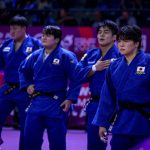
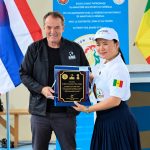
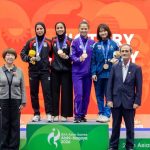
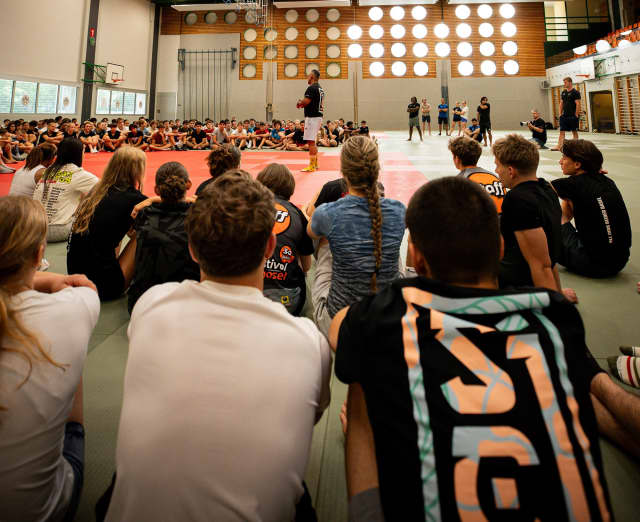
The International Judo Federation -IJF- has brought together 500 cadet and junior athletes from 40 countries at Sport Resort Fiesch in Switzerland. The 2026 edition of the IJF Youth Camp, also known as the Sergei Judo Camp, combines several days of intensive training, education and international exchange. The proximity of the Dakar 2026 Youth Olympic Games gives the camp additional significance, with many of its young judoka hoping to represent their federations in Senegal.
The camp is designed for high-performance athletes aged 14 and over and follows the philosophy of the NATSU programme. Its structure combines technical development, competition preparation and randori —free practice bouts— with activities focused on personal development. Participants train alongside athletes from other countries, learn from international specialists and share accommodation and communal spaces throughout the camp. Every delegation includes both male and female athletes, incorporating equality of opportunity into the structure of the event.
Technique, randori and international role models
Sergei Aschwanden leads the camp alongside an international coaching team. The bronze medallist from the Beijing 2008 Olympic Games and current president of the Swiss Judo Federation lends his name to a project designed to pass both competitive knowledge and the educational principles of judo on to the next generation. “This is not only about judo as a sport but about judo culture and everything it represents,” he explained while welcoming the participants.
Bruno Tsafack led the opening session and set the standard for the rest of the programme. Throughout the camp, the young athletes work with Olympic medallists and world and European champions who share their experience on the tatami. The sessions allow participants to refine their techniques, accumulate practice bouts against opponents with different characteristics and learn to manage the intensity of international competition. The range of ages and backgrounds also expands the variety of situations each judoka must learn to read.
Forty countries on the same tatami
The presence of 500 participants turns Fiesch into a meeting point for different national schools of judo. The athletes encounter grips, rhythms and approaches that may differ from those they usually face at their clubs or within their national teams. That diversity provides a form of preparation that is difficult to reproduce through domestic training alone and requires the young judoka to adapt continually, an especially valuable skill for those beginning to compete abroad.
Learning continues beyond the training sessions. Sharing accommodation, meals and activities with young people from other cultures over several days encourages independence, respect and communication. The camp also helps participants understand their future responsibilities as representatives of a national federation. The inclusion of boys and girls in every delegation reinforces this educational dimension and ensures that both groups have access to the same international training environment.
The IJF and Olympic Solidarity widen access
The camp benefits from the continued support of the IJF and Olympic Solidarity. Their cooperation allows national federations with different financial resources and sporting structures to access international coaches, training partners and high-performance conditions. Several of those federations are preparing athletes with Dakar 2026 as their objective. The camp does not provide qualification places for the Games, but it complements the work carried out in each country and helps identify the technical, physical and personal needs of their judoka.
The Dakar 2026 Youth Olympic Games will be the first Olympic sporting event held in Africa, with activities distributed across Dakar, Diamniadio and Saly. Athletes who reach the Games will need to adapt to a large-scale competition, live in a multicultural environment and accept the responsibility of representing their country. The Sergei Judo Camp recreates part of that experience several months in advance: it brings together young people from 40 nations, exposes them to unfamiliar styles and turns high-performance preparation into a sporting, cultural and educational experience.
 Last related articles