There is a particular way Luca Corsolini, Head of the Taranto 2026 Media and Press Office, talks about Taranto 2026. He does not begin with medals, ceremonies or television audiences. He begins with a problem. The Games were awarded to Taranto in 2019, but the Organizing Committee, he says, did not work properly during the first years. By the time the project was reorganized, there was a real danger that the Games could become disconnected from the city and eventually be given to another host.
The turning point came at the end of 2023 and the beginning of 2024. The Italian government chose Massimo Ferrarese as president of the Organizing Committee and as extraordinary commissioner responsible for delivering the venues required for the event to remain in Taranto. From that point, the project entered a much more intense phase, with a large amount of work having to be completed in a much shorter period than originally expected.
Corsolini became involved in the communications operation when the Organizing Committee was finally strong enough to concentrate on the international presentation of the Games. He was asked to help build a communications team with an Italian side and an international side. He was initially given the possibility of selecting a larger group, but after the budget was reviewed he was told he could involve six people.
His choice says something about the approach he wanted to take. Three experienced people came from different parts of Italy, bringing previous experience in sport and major events. The other three were very young people from Taranto. They did not have experience of major international events and did not come from a traditional journalistic background. Corsolini wanted the two groups to work together, combining professional experience with a direct knowledge of the city.
The communications operation was not designed simply to announce what was happening. A weekly newsletter was produced for almost two and a half months, providing journalists outside Taranto with footage, stories, press releases and other material. The intention was to give reporters enough information to tell stories about the city, not simply to reproduce information about competitions.
There was also a small detail in the newsletter that became part of the team’s humour. Corsolini noticed that the last three letters of newsletter were TAR, the same three letters associated with Taranto. It became a joke inside the team and a reminder that the material being produced was intended to speak about Taranto as much as about the Games.
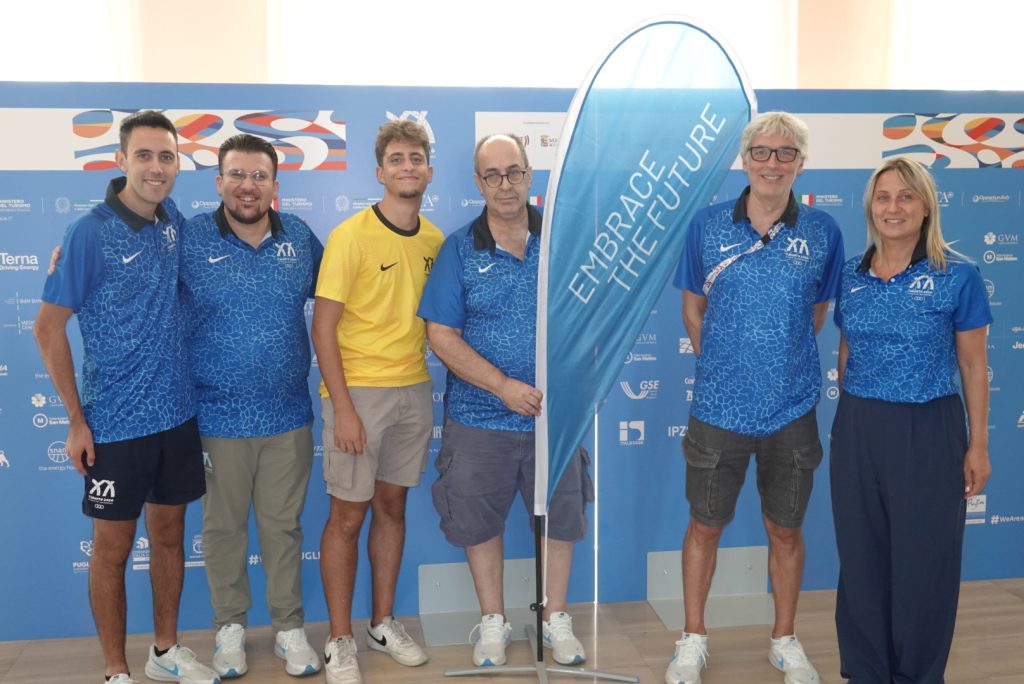
Taranto 2026 – Press Team
The same idea shaped the creation of the main press centre in the centre of the city. For Corsolini, a press centre is not simply a building containing desks, computers and accreditation facilities. It changes the way local journalists work. They suddenly find themselves alongside colleagues from other countries, people with different experiences and different ways of looking at the same city.
That creates an unusual situation for a local journalist. You have the advantage of knowing your own city, Corsolini says, but you lose part of that advantage when you have to explain the city to somebody arriving from abroad. The international journalist sees things that the local journalist may no longer notice. The local journalist, meanwhile, can explain things that an outsider could never understand alone.
“We are not here to speak about the Games. We are here to make you score your best goal in covering the Games.”
This is why Corsolini describes the role of the communications team in a rather unusual way. The press office is not supposed to become the story. Its job is to help the journalist find the story.
That could mean finding a restaurant, establishing contact with an athlete or helping solve a practical problem. Corsolini also acknowledges that this is not always easy, particularly when some National Olympic Committees are not prepared to facilitate contact between their athletes and the media. The press operation, in his view, should nevertheless try to remove obstacles wherever possible.
One of the most distinctive projects was the figurina. Italy has a long tradition of collectible sports cards, and the organizers used that culture to create an official Mediterranean Games card for individuals. People could send a photograph to the designated email address and receive their own card at home. More than 1,000 cards had been produced when Corsolini described the project, with the possibility of reaching a larger number by the end of the Games.
The communications strategy also moved outside the traditional media. Social media became part of the effort to present Taranto, while television coverage was developed more strongly during the final months of preparation. Corsolini explained that there had been a lack of Rai coverage, and that proper television coverage was only secured during the final two months. At the same time, the International Committee of the Mediterranean Games was producing its own reportage, giving the event an international voice.
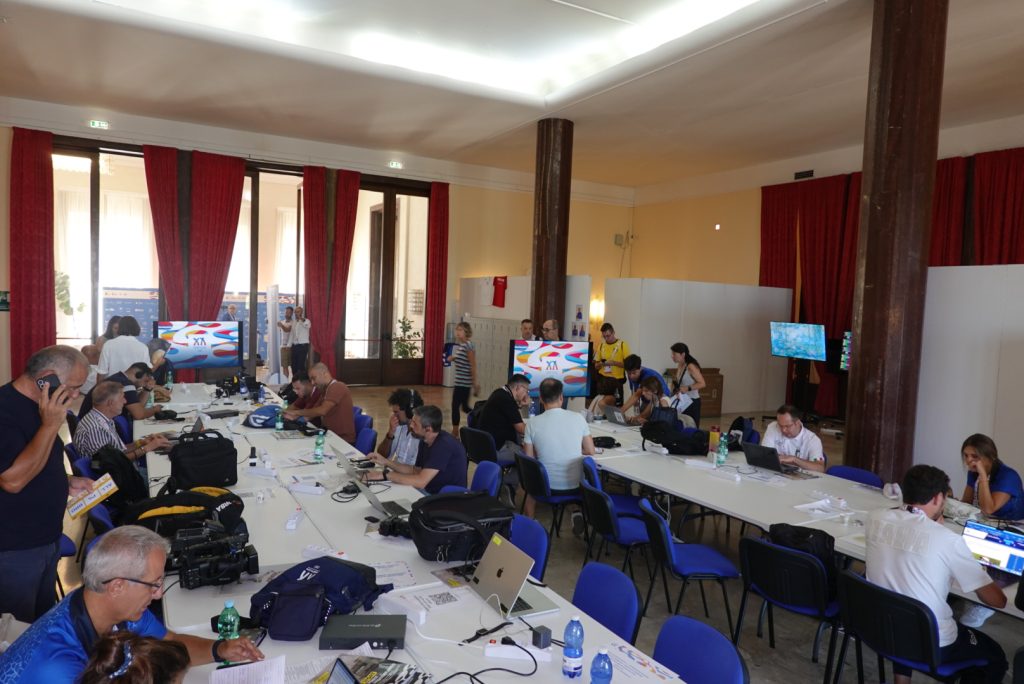
Media Press Centre – Taranto 2026
For Corsolini, however, communication was never only about promotion. Food, sport and culture were deliberately brought together. The international media were invited to a dinner hosted by local authorities, where food became another way of introducing the territory. The opening ceremony also connected the Games with the city’s history through the Athlete of Taranto, a historic treasure displayed at the local National Archaeological Museum.
The city itself became part of the communications strategy. On Via d’Aquino, the pedestrian street in the centre, tents were used to provide shade during a very hot period. Corsolini places particular emphasis on what was not there. There were no sponsor signs dominating the space. The intention was to allow people to experience their city without being surrounded by commercial messages. The same approach was used in Corso Due Mari, where benches and umbrellas carried the Games identity but not commercial branding. “Embrace the Future” was placed on the swing bridge, one of Taranto’s best-known landmarks.
Behind all of this lies a much more difficult question about Taranto itself. Corsolini believes the city has been trapped for years inside a particular narrative, dominated by its industrial history and especially its steel industry. He does not deny that history. What he argues is that Taranto needs another dimension, another choice and another possible future.
This is where the venues become important. Corsolini describes them through the idea of “The Great Beauty”. The point, in his interpretation, is not simply that the buildings should look good. They should give something back to the people of Taranto. If the city can create high-quality sporting spaces and make them part of everyday life, then sport becomes a social investment rather than a temporary event.
He sees an opportunity in Taranto’s climate as well. The city could, in his view, become an international sports hub operating twelve months a year. The facilities should not exist only for Olympians. Ordinary people should be able to use them too. The ambition is to make sport a real choice for the city and to attract people from elsewhere who want to train, compete or simply practice sport in a good environment.
Corsolini is clear that this is not only about sport. “This is a social issue, not only a sport issue.” If public institutions deliver something valuable to citizens, he argues, people can respond positively. The relationship between the city and its institutions can change when people see that something has genuinely been done for them.
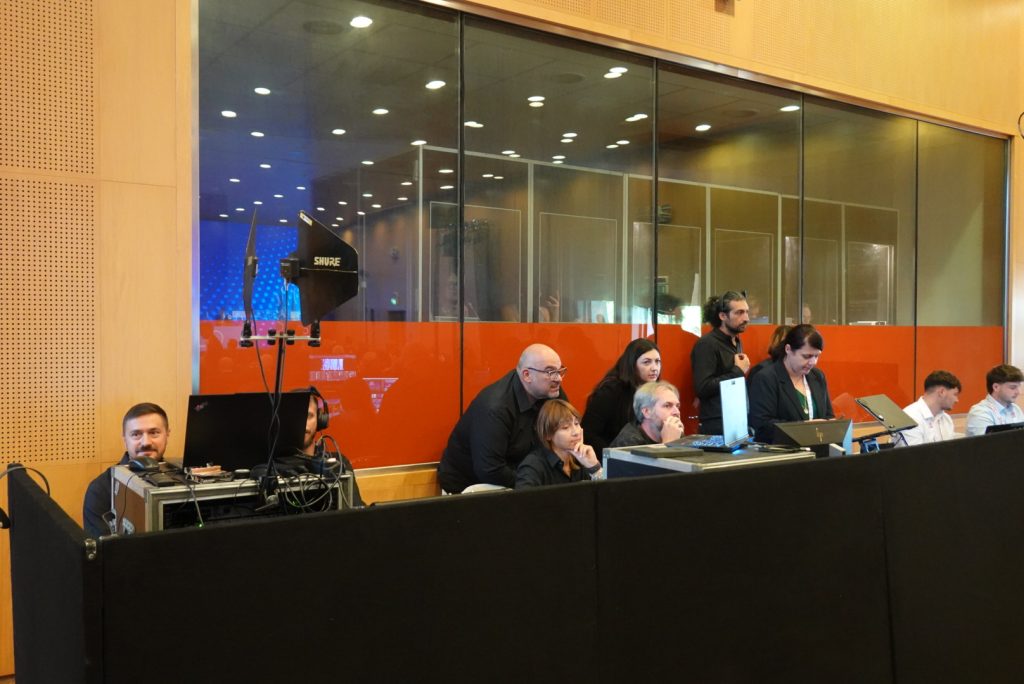
Provinciali SRL
There is also a political dimension to the story. Corsolini pointed out in that the Italian central government comes from the political right while the regional government in Puglia comes from the left. Yet the Games created an unwritten form of cooperation between the two sides. Political differences did not disappear, but the project created a common reason to work together. In his view, that cooperation ultimately served the people of Italy and the Mediterranean countries involved in the Games.
The financial question is another part of Corsolini’s argument. He insists that venue spending and sports spending have to be considered separately. The venue programme, involving the facilities across Puglia, was kept under control, with €275 million invested to complete the required venues. The point he stresses is not simply the amount of money, but the ability to deliver the planned project despite having less time than usual.
For Corsolini, controlling costs is also a question of respect. Respect for citizens, respect for authorities and respect for everyone involved in the project. The event, he argues, had to be delivered as promised rather than allowing the late start to become an excuse for extraordinary expenditure.
Then there is the Olympic problem. Taranto 2026 is taking place in a year in which the Olympic Games dominate attention. Corsolini remembers people asking why Italy needed to talk about the Mediterranean Games when the country had just been dealing with the Olympics. His response is that the Mediterranean Games cannot accept the role of a second choice.
He describes the challenge in very direct terms. The Games must be “Option A, not Option B”. That is particularly important because Italy has hosted previous editions in years such as 1963 in Naples, 1997 in Bari and 2007 in Pescara. Taranto is different because this edition is taking place in an Olympic year. Corsolini believes this made the communication challenge much harder, with public attention and major investment naturally drawn towards the Olympics.
He also points to another problem with the international sporting calendar. In a different even-numbered year, the Mediterranean Games could face the World Cup instead. His conclusion is cautious but clear. Holding the Games in the same year as the Olympics may be something that should be avoided altogether in the future.
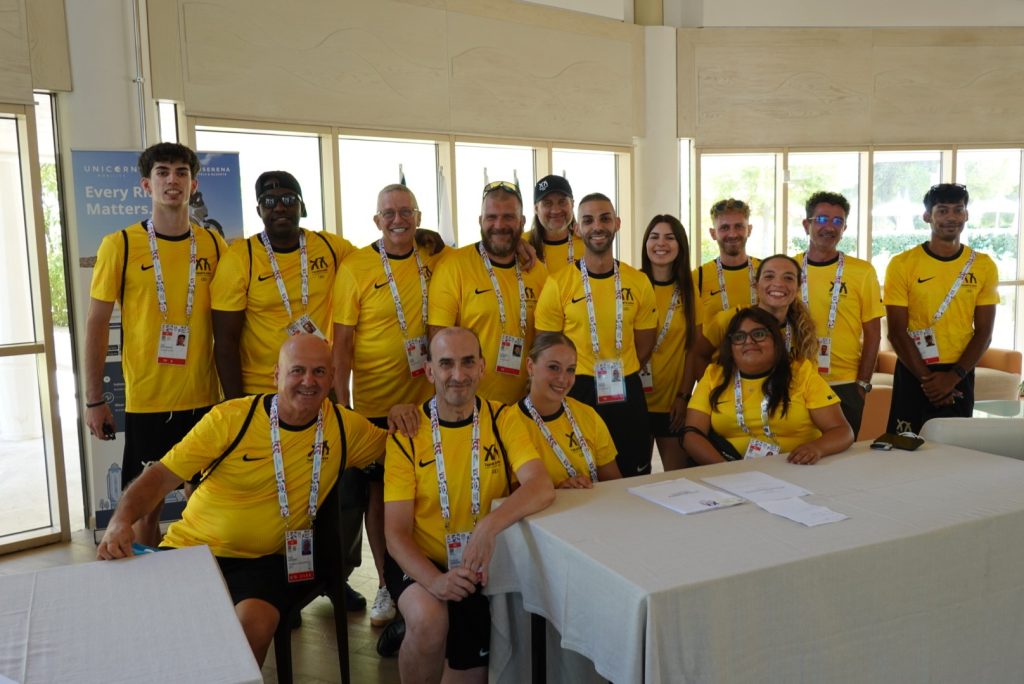
Volunteers – Taranto 2026
Yet Corsolini’s most important argument comes after the competition itself. He does not see September 3 as the end. “The Mediterranean Games are actually starting September 4.” Once the athletes have gone, the real work begins. The venues have to be managed. The city has to maintain the energy created by the event. The airport in Brindisi has to work as part of a wider effort to make Taranto closer to Europe, the Mediterranean and the rest of the world.
That requires a team capable of carrying the project forward. The same mood that existed inside the Organizing Committee during the preparation and the Games has to continue afterwards. If that happens, Corsolini believes, Taranto will have achieved more than simply delivering a major sporting event.
His argument ultimately comes down to a question of what remains. The Games can produce competitions, ceremonies, stories and images. But the harder task is to make the venues useful, keep the city connected and allow sport to become part of Taranto’s everyday future.
That is why Corsolini’s view of the Games is different from a conventional event narrative. He is not asking whether Taranto can stage the Mediterranean Games. He is asking what Taranto can become after it has staged them.
And for him, the answer lies somewhere between sport, the city, the people and the difficult task of giving Taranto another story to tell.
 Last related articles