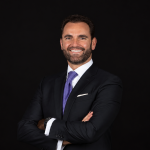
The latest controversy surrounding Marcos Llorente has once again centred on health. The Atlético de Madrid and Spain international has returned to that line of argument in recent days after a post about sunscreen and melanoma, following years of remarks such as, “If you think skin cancer is caused by the sun, you are the king of the ignorant,” or “The problem is not the sun, it is us,” two messages that have been challenged by specialists and that clash with a deeply established medical consensus on ultraviolet radiation and skin cancer.
Llorente has gradually built a public image linked to health, “biology” and lifestyle habits, with comments about the sun, sunscreen, glasses, blue light and even airplane trails. In his case, the context also matters because he is an international footballer with massive exposure and a level of influence that greatly expands the reach of any message, including those that move away from scientific evidence. His official Instagram account has more than 2 million followers, while his verified X profile has around 406,000. That audience strengthens his influence as an international player for Atlético de Madrid and the Spanish national team, and magnifies the impact of anything he posts about health, habits or supposed scientific phenomena.
Sun, sun protection and skin cancer
In the debate around the sun and sun protection, his remarks have been especially direct. “The problem is not the sun, it is us,” he wrote while defending his position, and in another post he added, “I will not tell you I knew it, but it was pretty obvious this was coming…,” in an ironic publication in which the player appeared dressed as sunscreen. The scientific response here is clear: the World Health Organization -WHO- states that skin cancers are caused mainly by exposure to ultraviolet radiation, and the agency also notes that risk is linked to the duration and frequency of sun exposure over the course of a lifetime.
In that same recent post, he also spreads the idea that sunscreen is part of the problem or that its usefulness is overstated. The WHO says the opposite: it recommends seeking shade, wearing suitable clothing and applying broad-spectrum sunscreen of at least SPF 30 to uncovered skin, while also warning that sunscreen should not be used to prolong time in the sun. Some of those measures are actually ones Llorente himself also promotes, except for sunscreen, although he does so without taking into account that not everyone can follow the kind of daily routines he describes, such as getting sun exposure every day or eating in natural light. Many families and ordinary people enjoy a few days of holiday at the beach or in the mountains and, unfortunately, do not have time to make the kind of transition he calls for. To enjoy the sun safely, they need sunscreen, along with other protective measures. In New Zealand, for example, daily sunscreen use is common throughout the year because the country has a thinner ozone layer due to its proximity to Antarctica, which leads to extremely high UV radiation levels. There are many such examples, and beyond the scientific evidence, each person’s circumstances and daily reality also matter.
In addition, the International Agency for Research on Cancer -IARC-, part of the WHO, estimated that 83% of new cutaneous melanoma cases in 2022 were caused by exposure to ultraviolet radiation, a figure that reinforces the high level of evidence on this point.
 Glasses, blue light and “biology”
Another of his most repeated talking points has been glasses and artificial light. “I never wear sunglasses and they should not be worn,” he said, before adding, “You are not letting the necessary rays reach your eyes.” He later also defended the use of coloured lenses by saying, “I use glasses with yellow lenses during the day when I am indoors,” and red glasses at night, as part of a broader message in which he argues that “blue light, outside its natural context (daytime), is a toxin.” In response, the American Academy of Ophthalmology -AAO- does not recommend blue-light-blocking glasses because there is no solid scientific evidence that blue light from screens damages the eye, or that these lenses consistently improve digital eye strain.
There is a scientific nuance here, but it does not match the certainty of his message. Medical literature does recognise that light affects circadian rhythms and that nighttime exposure can disrupt sleep, but that does not mean the entire chain of conclusions presented by Llorente can be treated as established fact. In fact, RTVE Verifica, relying on associations and ophthalmology experts, concluded that there is no scientific consensus on the benefits he attributes to yellow lenses, while the AAO insists that sleeping better or reducing visual fatigue does not necessarily depend on special glasses. The level of evidence linking light and circadian rhythm is moderate to high; the evidence supporting blocking glasses as a general solution is far more limited.
Airplane trails and the spread of conspiratorial messages
The part of his discourse closest to conspiracy thinking has been the one about airplanes. “I look at the sky and I had never seen skies like these before. For me, this is not normal,” Llorente said, before following it with another equally explicit line: “Then there is always that typical person who tells you it is water vapour and whatever.” In this case, the institutional response is also clear. The Spanish State Meteorological Agency -AEMET- explains that condensation trails are ice clouds formed by the condensation of water vapour contained in engine emissions, or by changes in pressure and temperature as an aircraft passes through the air. The level of evidence here is high, and the physical explanation is well established.
That is the point at which the Llorente case stops being a collection of personal habits and becomes a matter of public interest. To his remarks about the sun, sunscreen or artificial light, he adds a way of presenting them that reinforces his authority in the eyes of the public, with expressions such as “Nothing I share is made up” or “It is biology, not me saying it.” In an elite athlete, that combination of visibility, certainty in tone and messages without scientific backing can amplify misinformation and give greater reach to personal claims about health, particularly when bodies such as the WHO, the AAO or AEMET hold very different positions grounded in reviewed evidence and technical guidance.
 Last related articles