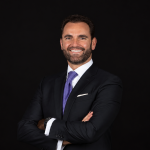
SportsIn speaks exclusively to Mohammed Jalood (born in 1961 in Babylon, Iraq), president of the International Weightlifting Federation (IWF) since 2022 and re-elected for the 2025–2029 term. A former athlete, coach, referee and sports official, Jalood has led a transformation designed to help the IWF move on from one of the most difficult periods in its history.
Jalood describes a federation that has strengthened its structures, entrusted its anti-doping programme to an independent organisation and expanded athlete representation within its decision-making bodies. The next step will be to consolidate that recovery, find new sources of revenue and demonstrate that weightlifting deserves to retain its place in an increasingly demanding Olympic Games.
A federation must be more than a competition organiser
The IWF president believes that the Olympic Movement will expect far more from International Federations over the next decade. Organising championships and setting the rules of each sport will no longer be enough. “The Olympic Movement rightly expects International Federations to be more than competition organisers. We must be trusted partners that demonstrate strong governance, financial accountability, integrity, innovation and relevance to society.”
For weightlifting, that process began after the 2022 elections. “We have strengthened our structures, modernised our Constitution, placed athletes at the heart of decision-making and reaffirmed our commitment to integrity. At the same time, we must make our sport more attractive, digitally connected and commercially sustainable.”
Jalood believes federations will no longer be judged solely on their results. “They will also be judged on how responsibly they govern their sports and on their commitment to the sustainable development of the Olympic Movement.”
Rebuilding lost credibility
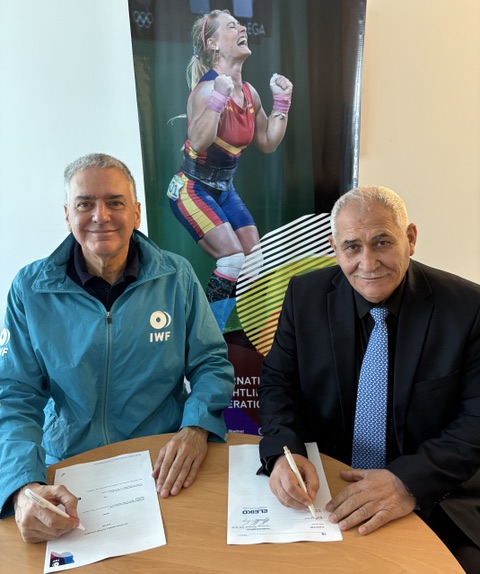
Weightlifting has endured a crisis in recent years that cast doubt on its continued presence at the Olympic Games. For Jalood, the main lesson from that period is clear: “Credibility can never be taken for granted. Our sport has shown that real change is possible when there is collective determination. Since 2022, the IWF has undergone a profound cultural transformation based on transparency, accountability, integrity and inclusion.”
Reforms to its internal structure, the creation of an independent anti-doping programme and cooperation with the sport’s different stakeholders have changed the way the organisation operates. “We are no longer focused on repairing the past, but on building a stronger future. Trust is earned every day through actions.”
The president insists that these reforms cannot be limited to meeting externally imposed requirements. “Good governance is not a project with an end date. It is a continuous process.” The IWF regularly reviews its Constitution to adapt its rules to new transparency and integrity requirements, but Jalood attaches equal importance to the everyday conduct of its officials. “Decisions must consistently reflect our values, and everyone must understand that accountability applies equally to all. When good governance becomes the normal way of working, rather than a simple compliance exercise, it truly becomes part of an organisation’s culture.”
The challenge of relying less on the Games
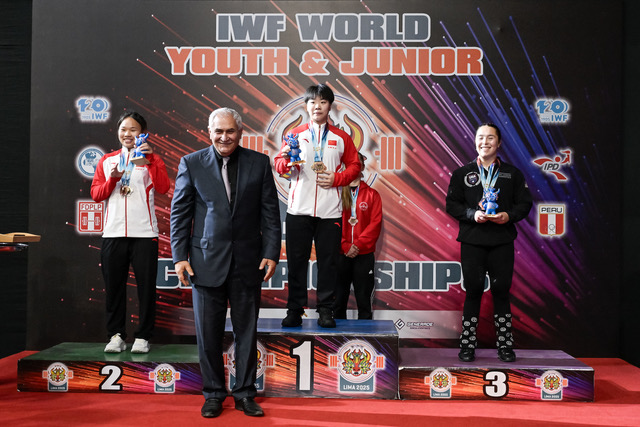
The transformation must also extend to the financial model. Revenue from the Olympic Games remains crucial for many International Federations, although the IWF wants to build a more diversified and resilient structure. “We are developing new commercial opportunities through sponsorship, marketing, stronger partnerships and greater athlete engagement. We also recognise that improving the presentation of our sport is essential to increasing its commercial value.”
Digitalisation will play a central role. Jalood believes a more direct relationship with fans can broaden audiences, deliver value to sponsors and support the growth of weightlifting across different regions. “Sport cannot rely on tradition alone. Organisations must innovate, embrace digital communication, strengthen commercial partnerships, engage athletes and create compelling experiences for fans.”
That commercial development, he warns, will continue to depend on each organisation’s reputation. “Credibility and strong governance are essential because they build trust among sponsors, broadcasters and stakeholders. Sustainable growth requires a balance between sporting values and modern business practices, while always keeping athletes at the centre.”
Innovating without losing the sport’s essence
The IWF is also working on new ways to present its competitions. The aim is to make them easier to understand, improve broadcasts and create formats capable of attracting audiences less familiar with weightlifting. “Innovation should enhance the sport while respecting its traditions. We are investing in better presentation, a stronger digital presence and new formats that make weightlifting easier to follow and more exciting for spectators.”
One of the first trials will be the mixed-team competition to be tested in Lausanne in August. “We believe formats such as this can increase fan interest without changing the essence of our sport.”
Technology should also help enrich broadcasts, create new narratives and make it easier to engage with fans around the world. The IWF hopes that this evolution will also help attract new commercial partners.
National federations and athletes
Jalood regards national federations as a fundamental part of any growth strategy. “They are our most important partners. The IWF provides the global vision, but our member federations bring that vision to life within their communities.”
Dialogue must ensure that international policies take account of the differences between continents and regions. “Our strength lies in a community present across all five continents. Maintaining close cooperation with national federations will remain fundamental to the future of weightlifting. Athletes must be at the heart of everything we do.”
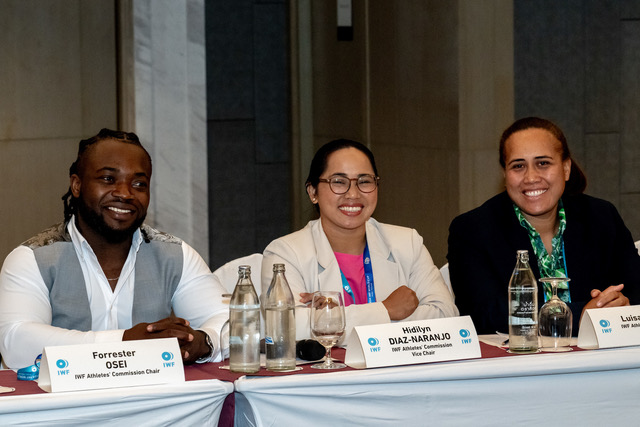
The IWF Athletes’ Commission is elected by the athletes themselves and will renew its membership during the 2026 World Championships in Ningbo. Three representatives sit on the Executive Board and at Congress with full voting rights. “Beyond competition, International Federations must protect athletes through safe environments, integrity programmes, education, career support after retirement and opportunities to participate in the governance of their sport.”
Integrity as a condition for survival
The fight against doping remains the main measure of the IWF’s recovery. “Integrity must remain our highest priority. One of our greatest achievements in recent years has been the success of the anti-doping programme, particularly through our close cooperation with the International Testing Agency.”
Jalood believes independent testing and transparent processes have helped restore some of the trust that had been lost. “These efforts, together with a strong structure and genuine accountability, demonstrate that the IWF is committed to protecting clean athletes and maintaining the confidence of the Olympic Movement.”
Brisbane 2032 as the ultimate confirmation
For the IWF, weightlifting’s presence at Brisbane 2032 will carry a significance that goes beyond the competition itself. “Oceania is, in many ways, a natural home for our sport. Across the Pacific islands and the wider region, weightlifting has a unique tradition and cultural significance. This shared heritage represents a common bond for the Pacific sporting community and makes Brisbane 2032 an especially meaningful recognition of the passion for weightlifting.”
The aim will be to reach those Games with any doubts over the sport’s future definitively put to rest. “I would like IOC members to say that, after Brisbane 2032, weightlifting has fully earned its place at the Olympic Games and justified its continued presence within the programme and the Olympic Movement. We want to demonstrate every day that we are a reliable, well-governed and forward-looking partner. Our commitment to integrity, innovation, athlete representation and global development reflects the values of the Olympic Movement.”
Success beyond medals
The IWF also wants to extend weightlifting’s influence beyond its major championships. “The role of an International Federation is becoming increasingly broad. Success includes developing athletes, promoting integrity, supporting member federations, advancing sustainability, gender equality and inclusion, increasing participation and creating social impact.”
These initiatives include the IWF Refugee Team, while the organisation is finalising a comprehensive sustainability policy. “Weightlifting occupies a unique place beyond competition. As one of the most fundamental expressions of physical performance, it plays an essential role in strength development across almost every sport.”
In ten years’ time, Jalood hopes to be able to describe the organisation in a single sentence: “The IWF is a modern, trusted and innovative International Federation that puts athletes first, acts with integrity and inspires strength around the world.”
His message to those who will shape that future follows the same principle that has guided the federation’s recovery: “Lead with integrity, respect your rivals and never stop striving for excellence. Success will not be measured solely by podium finishes, but by the positive impact our sport has on people, communities and the Olympic Movement.”
 Last related articles