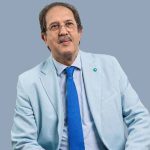
The Association of National Olympic Committees of Africa -ANOCA- has marked 45 years since its foundation on 28 June 1981 in Lomé, Togo. The organisation currently represents Africa’s 54 National Olympic Committees, divided into seven development zones, and coordinates their engagement with the international Olympic Movement. Since taking office in 2018, Mustapha Berraf has expanded programmes designed to strengthen national structures, prepare athletes and create opportunities for young people. That experience now forms the basis of his proposal to work with the 206 members of the Association of National Olympic Committees -ANOC-.
Berraf became President after serving as ANOCA Vice-President from 2002 to 2018. His previous experience as an athlete and President of the Algerian Olympic and Sports Committee gave him a background spanning national, continental and international sport. He is also a member of the International Olympic Committee -IOC-, ANOC Vice-President and President of the Olympafrica Foundation. At the Elective General Assembly held in Algiers on 14 and 15 March 2025, he was re-elected by acclamation for the 2025-2029 term, extending a project focused on converting coordination among Africa’s 54 NOCs into shared programmes and permanent national capacity.
Headquarters, infrastructure and support for national committees
One priority during this period has been the construction and renovation of headquarters for NOCs without permanent facilities. By July 2024, ANOCA had provided more than $600,000 to 14 national organisations through the programme. Eswatini opened the first completed headquarters in 2023, while the South Sudan National Olympic Committee inaugurated its new building in Juba in 2026. Angola, Benin, Chad, Cape Verde, Gabon, Guinea-Bissau, Sierra Leone and Tanzania had also received initial funding for their respective projects. These buildings provide permanent bases from which NOCs can centralise their administration, work with national federations and manage athlete development programmes.
ANOCA has also reported an infrastructure programme covering 50 international-standard football pitches and five Olympic swimming pools through agreements with the Fédération Internationale de Football Association -FIFA- and World Aquatics. In high-performance sport, the organisation allocated $2 million to its scholarship programme for Los Angeles 2028, which began in March 2026. The support covers training facilities, specialist coaching, medical monitoring, insurance, accommodation, meals, allowances and part of the travel costs for Olympic qualifiers. Athletics, boxing, judo, swimming, taekwondo, weightlifting and wrestling are the seven priority sports. The model previously supported 49 athletes ahead of Paris 2024: 33 qualified and eight went on to win a combined ten medals.
From the African School Games to Dakar 2026
The African School Games are one of the principal projects created during Berraf’s presidency. Their inaugural edition took place in Annaba, Constantine, Sétif and Skikda, in Algeria, bringing together more than 3,500 athletes aged between 13 and 18 from 51 countries, according to ANOCA’s final report. The programme featured 24 sports and 450 events over eight days, supported by more than 2,000 officials, coaches and delegation staff. The Games gave NOCs a platform to identify school-age talent and provided young athletes with international experience before reaching elite level. The event will be held every two years: ANOCA and the National Sports Commission of Nigeria signed the agreement for Abuja to stage the second edition in 2027, with free accommodation and meals guaranteed for participating athletes, while Kenya has been awarded the 2029 Games.

The Dakar 2026 Youth Olympic Games, scheduled for 31 October to 13 November in Senegal, represent the next stage of that youth development strategy. They will be the first Olympic sporting event held in Africa, with competitions staged in Dakar, Diamniadio and Saly. Together with Olympic Solidarity, ANOCA is supporting a Training Academy that will provide more than 400 young people selected through the 54 African NOCs with practical experience in international sports event management. Participants will complete a two-week course before joining the Organising Committee’s operational teams. ANOCA’s Athletes’ Commission is also involved, with ten places reserved for African Olympians in an eight-month training programme. Berraf has presented Dakar 2026 as both a test of Africa’s organisational capacity and an opportunity to leave qualified professionals within the continent’s sporting institutions.
From Africa’s 54 NOCs to ANOC’s 206 members
The presidents and representatives of the African NOCs unanimously approved a motion supporting Berraf’s candidacy for the ANOC presidency during an Extraordinary General Assembly on 19 June 2026. ANOC represents 206 National Olympic Committees across five continents, compared with the 54 members of ANOCA. The motion highlighted continental coordination, infrastructure development, leadership training and increased athlete support during Berraf’s presidency. His candidacy presents that experience within the African Olympic Movement as a basis for coordinating organisations with different resources, structures and priorities.
His ANOC Vision 2036 programme proposes strengthening the administrative capacity of every NOC, placing athletes at the centre of decision-making and widening access to training, innovation, digitalisation and artificial intelligence. It also covers transparency, sustainability, the development of future sports leaders and the exchange of knowledge between continents. Within that platform, Initiative 206 is intended to provide every member with tools, partnerships and opportunities regardless of size, location or resources. After eight years at the head of ANOCA, Berraf is proposing to apply globally the principle that has guided his African presidency: strengthening individual NOCs as the foundation for improving the collective capacity of the Olympic Movement.
 Last related articles