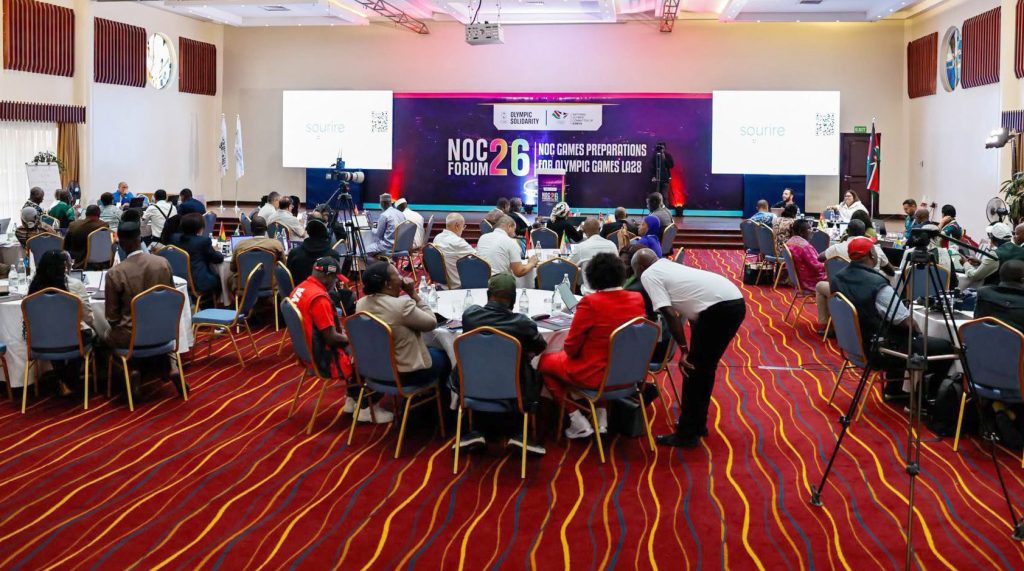
The Association of National Olympic Committees of Africa -ANOCA- brought representatives from all 54 African NOCs together in Nairobi to coordinate preparations for the Olympic Games Los Angeles 2028 -LA28-. Held on 29 and 30 June, the forum covered the full delegation pathway, including sports planning, qualification, accreditation, transport, accommodation, ticketing, communications, athlete selection, safeguarding, anti-doping and integrity.
The forum was organised in partnership with Olympic Solidarity and the National Olympic Committee of Kenya -NOC-K-. Plenary sessions introduced the operational systems being developed by LA28, while workshops allowed the NOCs to compare their structures and identify shared solutions. The meeting formed part of ANOCA’s wider programme combining high-performance funding, competition manipulation prevention and improvements to the facilities from which its members operate.
Preparing for LA28 before qualification is complete
Participants agreed that national plans should begin before the qualification process is completed and involve governments, federations and technical teams from the outset. The recommendations included requiring every delegation member to sign a code of conduct and establishing protocols for responding to mental health concerns, doping or competition manipulation. NOCs were also encouraged to use VisaLink, the LA28 Extranet, NOCnet and Athlete365 regularly to anticipate visa difficulties, manage information and educate their athletes.
The forum also addressed the implementation of the International Olympic Committee -IOC-’s new policy for the protection of the women’s category. The policy will apply from LA28 and includes SRY gene screening within the eligibility process. NOCs will need to prepare the medical and administrative management of the procedure in accordance with IOC rules. ANOCA has meanwhile allocated $2 million to its Los Angeles scholarship programme, covering training facilities, specialist coaching, medical assessments, insurance, accommodation and part of the travel costs for qualification events. Athletics, boxing, judo, swimming, taekwondo, weightlifting and wrestling have been prioritised, although athletes from other sports may be considered if they meet the established criteria.
Integrity moves from codes to education
Competition manipulation prevention forms another part of the preparations. The International Criminal Police Organization -INTERPOL- and the IOC held a regional workshop in Harare from 30 June to 1 July with representatives from Botswana, Ghana, Kenya, Namibia, Nigeria, South Africa, Uganda and Zimbabwe, as well as ANOCA. Sessions examined different forms of manipulation and their possible links to criminal activity, the detection and investigation of cases, and information-sharing between sports organisations and law enforcement agencies. Competition manipulation prevention ambassador Mweetwa Nchimunya Abishai shared her experience before participating in a subsequent training session for Zimbabwean federations.
The Egyptian Olympic Committee adopted the Olympic Movement Code on the Prevention of the Manipulation of Competitions on 11 January, in accordance with Rule 27 of the Olympic Charter. Mohamed Abdelalim, the committee’s single point of contact for the issue, confirmed that the code would be circulated to all Egyptian federations for adoption. The Egyptian Olympic Academy has also made prevention a compulsory subject within its coaching, sports injury and sports massage programmes. Benin, Mauritania and Zimbabwe have organised workshops for federations; Lesotho included a session in preparations for its Commonwealth Games delegation; and Namibia reached more than 700 athletes through its Olympic Day activities.
South Sudan adds a permanent headquarters
Institutional development has also taken physical form in Juba, where the South Sudan National Olympic Committee -SSNOC- has opened its new headquarters. The building will centralise the coordination of Olympic activities, support for federations, athlete preparation and relations with national and international institutions. It also contains shared working spaces designed to encourage cooperation between different sports. Committee President Chuol Laam said the facility represented “far more than bricks and mortar” and described it as a launchpad for the future of South Sudanese sport that fundamentally belongs to athletes and federations.
The development forms part of an ANOCA initiative to provide operational buildings for African NOCs that do not yet have headquarters of their own. The programme mobilises resources alongside the IOC, Olympic Solidarity, international federations and other institutional partners. Several committees have completed their facilities, while others remain under construction. Each beneficiary is subsequently responsible for maintaining and using the building, while ANOCA will also monitor national LA28 plans, the allocation of performance scholarships and the appointment of a certified welfare officer within every delegation.
 Last related articles