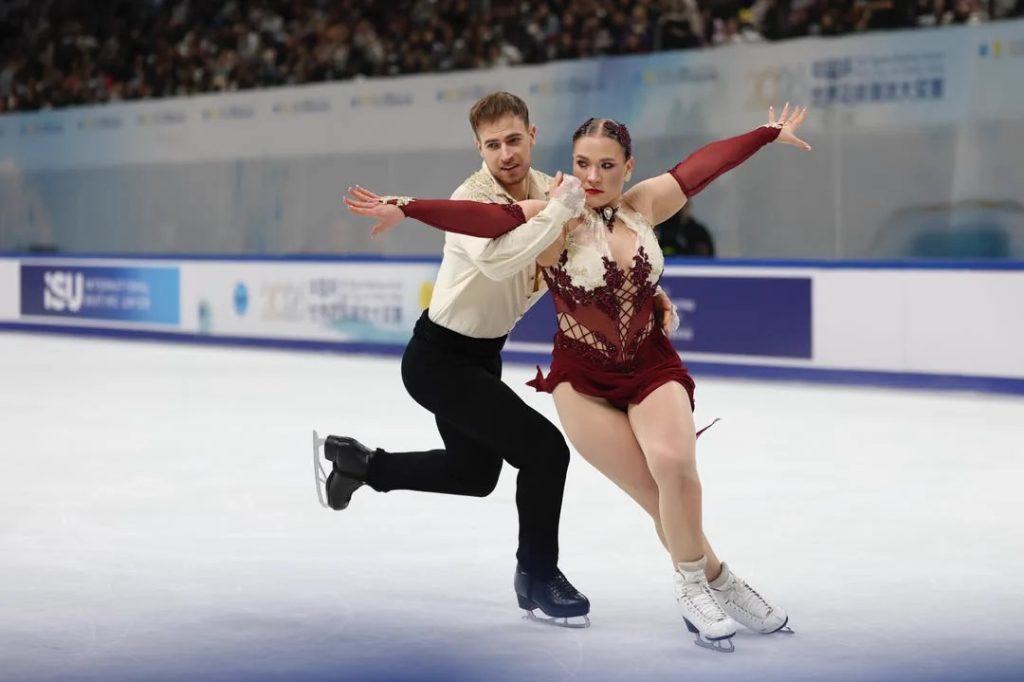
Natálie Taschlerová and Filip Taschler missed their first medal on the International Skating Union -ISU- Grand Prix circuit by nine hundredths of a point on 7 November at the Cup of China in Shenzhen. The Czech siblings finished fourth with 178.21 points after placing third in the rhythm dance. Behind a partnership that must synchronise movement, music and emotion are two very different temperaments. “Naty is extroverted, impulsive, and I’m a more reserved introvert,” Filip explained on the television programme ‘7 pádů Honzy Dědka’. His sister completed the picture: “Filda is a perfectionist, and I need freedom, to go wherever I want and, above all, to enjoy myself.” Learning to work together has also required them to reconsider how they speak to each other, what they expect from one another and how much room they leave for life outside training.
Neither had planned on their sibling becoming their skating partner. They grew up in a sporting family and both tried singles and synchronised skating; Natálie also did gymnastics. Breaking her arm during an acrobatic move left her afraid of jumping when she returned to the ice, and her coaches saw her expressive qualities as a reason to try ice dance. Filip had already spent two years in the discipline with another partner. “I thought they would find me a partner, and I was already looking forward to making an international friend. But then they told me to try it here,” she recalled. She was not enthusiastic: “I didn’t want to dance with my brother. I ran away after the first training session.” Filip remembers that session differently: it went better than what he had achieved over the previous two years. Natálie tried again and discovered that she enjoyed the feeling of flying during lifts.
The loss that changed their plans
In 2019, while training in Chicago, they received news that their father had died after a long illness. They returned to Czechia unsure whether they would continue competing. “Even on the day of the funeral, we didn’t know whether we would return to America, whether we would keep skating,” Filip told ‘iDNES’. The loss also affected the family finances that supported their international training. Eventually, after discussing it at home, they decided to return. “Dad wanted us to follow our dreams,” the older sibling explained. Years later, Natálie told the Czech Olympic Committee that they had not been with him in his final moments because they were still training in the United States: “But that was what he wanted.” At the Beijing 2022 Games, where they finished sixteenth, she held up a photograph of their father while they waited for their scores.
The same loss led them through different personal experiences. Natálie has linked the beginning of her difficulties with food to her father’s death; she later spoke publicly about anorexia and her recovery. Filip, meanwhile, explained that the experience prompted him to seek a more open social life: “I want to meet people, go out and be sociable.” Their differences have not remained fixed, either. The brother who describes himself as an introvert has gradually learned to express his emotions, while Natálie has spoken about losing her connection with herself. In the 2023/24 season, they brought part of their family story into a programme dedicated to their father. “I enjoy it much more when I can put a part of myself into the dance,” she explained. Remembering him also became a way of connecting with audiences.
When training began to affect their relationship as siblings
Their sporting progress did not prevent their relationship with skating from deteriorating. After finishing eighth at the 2023 World Championships, they went through two seasons they described as particularly stressful. “I think we both became a little lost in who we were and what we wanted,” Natálie said in a ČTK report published by ‘ČT sport’. Filip spoke about burnout and later described controlling behaviour and psychological abuse during their time with coach Matteo Zanni. According to his account, the pressure extended to food, personal relationships and whether mistakes were acceptable. His own perfectionism intensified that pressure, which he also directed towards his sister. Natálie explained why she had chosen to speak publicly about her difficulties: “Everyone sees the glitter, the make-up and the beautiful dresses, but behind the scenes it’s very tough.”
In summer 2025, they left Italy and moved to Helsinki to train with Maurizio Margaglio. The change included sports psychology, individual psychotherapy and sessions focused on their relationship. “We basically have a kind of couples therapy. We go every week,” Filip explained. Natálie said they addressed both their professional partnership on the ice and their relationship as siblings. One consequence emerged in a candid admission from Filip: “I no longer shout at my sister, which had left our relationship a little damaged.” The response to mistakes changed, too: they have described how, if they stumble or fall in training, their new team may react with applause and laughter. They are learning to accept mistakes without turning them into recriminations. “Now we go onto the ice and don’t have to be afraid,” he said.
Finding their own way to express themselves
That search has also shaped their programmes. For the 2025/26 Olympic season, they chose The Matrix, but Natálie eventually felt restricted by a story whose course was already set. “Halfway through the season, I had started to enjoy it a little less,” she told ‘iDNES’. Both missed having a broader emotional range, and for this season Filip began looking for music that would allow them to return to that way of expressing themselves. They considered Bad Bunny before choosing songs from Rosalía’s album Lux. “With every performance, we find new things in the dance and the music,” Natálie explained. Their rhythm dance reveals a more playful side, using songs from Hello, Dolly! and My Fair Lady. Filip created the music edits for both programmes, from the early attempts they discarded to the versions they now use in competition.
This year, they decided to start competing in September, even though their programmes were not yet completely ready. Previously, they tended to delay that first test; now they want to make the most of competitions as well as their daily work. “I want to enjoy every day and look forward to training as much as competing,” Filip explained. Natálie added that they prefer to take things year by year, having experienced how completely their plans could change. Fourth place in China hurt, and they will have another opportunity at the Grand Prix in Helsinki, but their new approach includes processing that disappointment without allowing it to spill into everything else. Between the first session Natálie ran away from and their relationship today lie years of shared experiences, arguments and professional support. Filip put it this way to the Czech Olympic Committee: “I have the best skater in the world by my side. I’m grateful for that.”
 Last related articles