“I think it’s been a year in which things have moved very quickly.” That was how Rafa Jódar summed up his arrival at the ATP Finals, a tournament he has reached in his first season as a full-time professional. The twenty-year-old from Madrid began 2026 outside the top 100 and entered the top 10 on 2 November. In Turin, where he made his debut on Sunday with a defeat against Alexander Zverev, he retains an unusual setup among the elite: his father, also called Rafael, as the only regular presence in his player’s box. While other contenders bring coaches, fitness trainers, physiotherapists and agents, Jódar has travelled through this season with a team that has barely changed as his results have improved.
The comparison is visible at the tournament itself. Carlos Alcaraz is accompanied by coaches Samuel López and Álvaro Alcaraz, his brother; fitness trainer Alberto Lledó; physiotherapist Juanjo Moreno; and agent Albert Molina. His doctor, Juanjo López, has also travelled to Turin. Zverev has his father as coach, his brother Mischa working on tactics, Jez Green overseeing fitness, Timo Schall providing physiotherapy and Sergei Bubka handling representation; at Wimbledon, Matthias Bachinger also accompanied him as a hitting partner. Ben Shelton, meanwhile, works with his father, Bryan, fitness trainer Gabriel Echevarria, and physiotherapy and management support. Juan Carlos Ferrero is joining that team and has already shared practice sessions with him in Turin ahead of their collaboration officially beginning for 2027.
Stick with what works
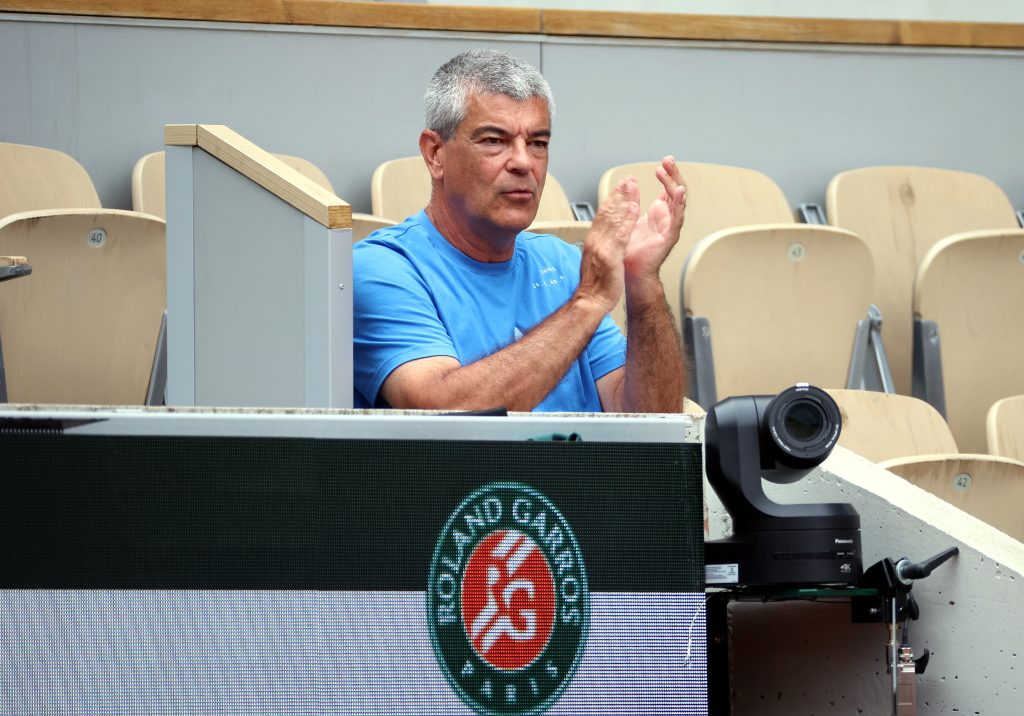
After winning his first ATP title in Marrakech in April, Jódar was asked whether he would add anyone to his team. His response was to maintain what was working: “I think what we’re doing this season is working very well. I’m very comfortable with the atmosphere, with how we travel.” He explained that a busy run of tournaments lay ahead and that he preferred to concentrate on competing and improving. That choice also had a practical expression during matches. At Roland Garros, he asked other people not to occupy his team’s seats: “The box is for the people on my team, and my team is my father and me.” Speaking to the media there, he described his father as his coach and manager, thanked him for travelling to a different city every week and explained that he offers observations Jódar cannot make while playing.
The possibility of expanding that setup has continued to come up throughout the year. Speaking on ‘El Larguero’ in August, Jódar left the decision until after the season: “We’ll have to assess the results and decide when the time comes.” Ferrero subsequently confirmed in an interview with ‘Marca’ that he had spoken to Jódar’s father about the player, although no agreement followed: “They were thinking of going in another direction.” After such a rapid rise, bringing in specialists would allow responsibilities to be shared and provide more individual support between tournaments. The question will be which resources they consider necessary after reaching the top 10 with an arrangement the player has defended throughout the season.
Their own way
“It’s simply our way of doing things,” Jódar said during Wimbledon, in an interview published by ‘AS’, when he was again asked about his father’s solitary presence. He recalled that they had started playing to spend time together and that their relationship had accompanied his entire development. “We’ve only just started, this is my first year and there are still many things to learn,” he added. On the road, he has also used tournament services: before Wimbledon, he explained that abdominal discomfort had initially been treated by ATP physiotherapists and that he then spent a week in Madrid with his physiotherapist and the federation’s doctor. The treatment and tests led them to pause and adjust his schedule before returning to competition.
A year earlier, his daily environment had been the University of Virginia, whose team he joined in January 2025. He finished that college season with nineteen singles wins and three defeats and was named National Rookie of the Year by the Intercollegiate Tennis Association. While studying, he also progressed on the Challenger circuit, winning three titles and qualifying for the Next Gen ATP Finals. When announcing his move to full-time professional tennis, after discussions with his family and coaches, he highlighted the university’s importance in his development and said he felt ready to take the next step. He was ranked No. 168 when he made the decision. In 2026, he won Marrakech, reached the finals in Washington and Shanghai, and made the quarter-finals at Roland Garros before qualifying for Turin.
A different stage, the same approach to life
Learning has accompanied every step up. At the ATP Finals media day, Jódar explained that the succession of tournaments, journeys and matches against the best had barely given him time to process what had happened. He saw qualification as a reward for his season and the group format as an opportunity to keep learning against leading opponents. His father has maintained the same message throughout that journey. “He tells me to be humble and not think I’m someone I’m not,” the player said in an interview published by the ATP in early November. That advice has stayed with him as he has moved from planning a schedule to find his feet on tour to playing the event that brings together the season’s best.
The growing attention has not changed the preferences Jódar expresses away from the court. Asked on ‘El Larguero’ how he handled his popularity, he replied: “The secret is to lead a simple life and not look too far ahead.” In April, he had already told ‘El País’ that checking his social media following was not a priority and that he tried to stay close to his friends and family. “I’m a calm person and I try not to share too much of my personal life,” he said. His media, tournament and sponsorship commitments have grown during this first year; on his travels, his familiar reference point remains the same person sitting in his box. Asked how he expected to handle the changes still to come, he offered a clear statement: “Whatever happens, I’ll always be the same person. I’ll never change.”
 Last related articles