Paraguay turned a victory into a national celebration. The win over Germany at the World Cup, decided on penalties after a 1-1 draw, led president Santiago Peña to declare 30 June a day of celebration across the country. Orlando Gill saved the spot-kicks from Kai Havertz and Nick Woltemade, Jonathan Tah also missed in sudden death and José Canale scored the penalty that sealed a historic night for the Albirroja.
Gustavo Alfaro gave the qualification an emotional frame that better explained the impact of the result. “I always told them that the opponents we had in front of us, with all due respect, had been developed in the best academies in Europe. We, on the other hand, come from the red soil. Our shirt carries the colours of that soil, where many started playing barefoot. We come from the sacrifice of parents who do everything possible so their children can train,” said the coach. In that reading, Gill appeared as the perfect face of a victory built on resilience, origin and opportunity.
Gill, from San Lorenzo to the national team
Gill was born on 11 June 2000 in the Paraguayan city of San Lorenzo, in the Central department. Before becoming a goalkeeper, he started out as a midfielder, a position in which, according to accounts from those around him, he performed well until his physical growth gradually pushed him towards the goal. At 1.98 metres, he eventually became a goalkeeper and made his first-division debut in 2020 with Sportivo San Lorenzo, where he played just two matches before the team was relegated.
The road that followed was not quick either. In Paraguay’s Intermedia, he spent several seasons without fully establishing himself and watched many matches from the bench. The turning point came at the beginning of 2024, when San Lorenzo de Almagro signed him from its Paraguayan namesake. In Argentina, he started in the reserve team under Damián Ayude and made his first-team debut towards the end of that season. His performances opened a place for him at El Ciclón and accelerated a career that, until then, had moved forward away from the spotlight.
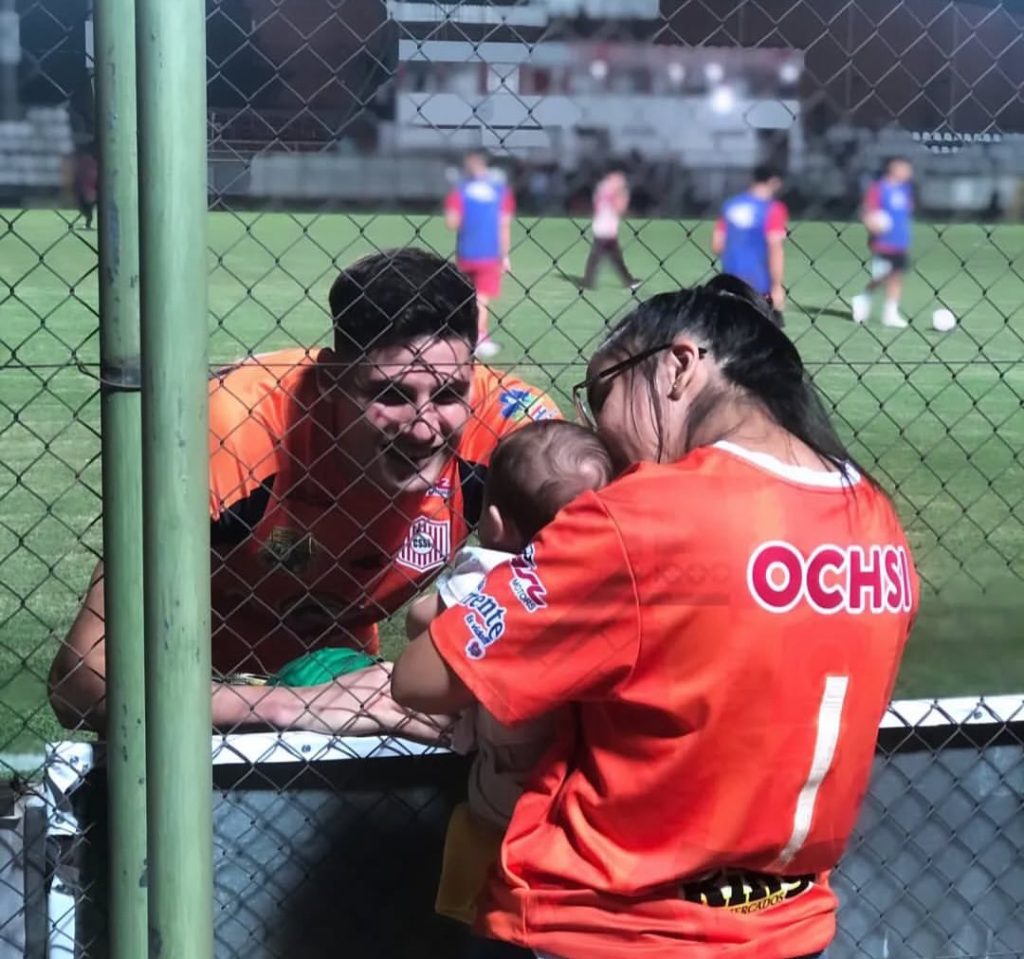 Melissa, Lautaro and what he had to sell
Alfaro’s call-up came in March, after barely a dozen matches in Argentina’s top flight. His senior international debut came on 6 September 2025, in Paraguay’s 1-0 win over Peru in Lima, in the South American qualifiers. That night was already special for his family. His wife, Melissa Ávalos, posted several images of his journey and wrote: “One day we dreamed it, and today we are living it.”
Melissa recalled a much harder period, linked to the birth of their son Lautaro and the health problems he faced in his first days of life. “When Lauti was born and we had nothing,” she said, before explaining that Gill sold items of clothing from the club where he was playing in order to cover expenses. The family story was not reduced to a general phrase: it was about food, medical costs and personal belongings leaving the house to sustain the basics.
Among those belongings were club clothes, football boots, trainers and a Paraguay under-20 shirt used at the 2019 South American Championship. For a footballer still trying to make his way, that shirt was an important memory from his career. Family need weighed more. “He sold everything, he sold his under-20 national team shirt, he sold his clothes, his trainers, literally everything,” Melissa wrote, closing her message with a simple idea: “With love and sacrifice, everything is possible.”
Chilavert and an answer from the goal
The performance against Germany also came after direct criticism from José Luis Chilavert, a hugely significant voice in Paraguay because of his place in the history of the national goalkeeping position. After the first match of the World Cup, the former goalkeeper questioned Gill by saying that he “doesn’t talk, he plays mute” and that football is communication, especially for a goalkeeper. Alfaro addressed the issue before the Germany match and said he would have liked Chilavert, instead of acting like “a sniper”, to have called him to speak with Orlando. Gill’s performance was the best answer.
After the shootout, the goalkeeper took the victory back to an even more personal story. Gill dedicated the qualification to a hospitalised nephew, to whom he had promised that, if he had an important role in the match, that moment would be for him. The gesture connected his most visible night with an intimate part of his life, the same one that had already appeared in Melissa’s account: illness, family, sacrifice and a career often sustained far from the main stage.
The national celebration declared by Paraguay found in Gill a story many people could recognise. Alfaro closed the night with a phrase that captured the tone of the qualification: “Twenty-six warriors went in and 26 legends came out.” The sentence applied to the whole group, although in Gill it had an especially concrete image. The goalkeeper who had sold part of his career to buy food and cover family expenses ended up saving two penalties against Germany, dedicating the qualification to a hospitalised nephew and giving Paraguay a reason to stop the country for a day.
 Last related articles