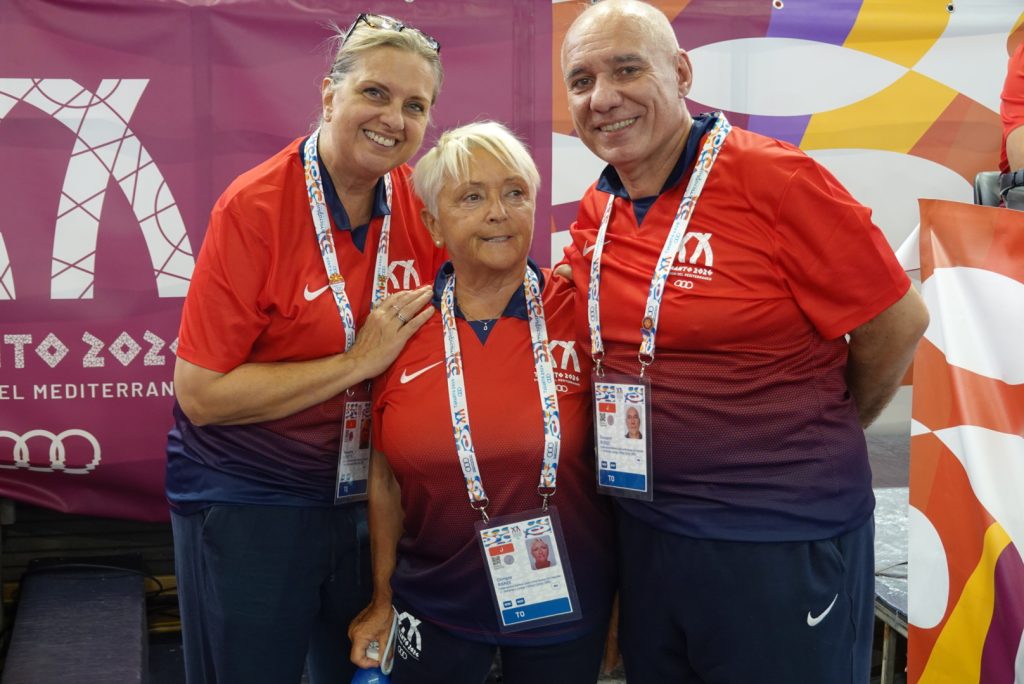
Pedro Silva, President of the Mediterranean Committee of United World Wrestling, was present at the Wojtyla Sports Hall in Martina Franca during the wrestling competition at the 20th Mediterranean Games in Taranto.
This edition of the Mediterranean Games carries particular significance, coming at a time when the International Committee of the Mediterranean Games has elected new leadership and is expected to raise the Games to a higher level, both in sporting quality and overall organisation.
Taranto 2026 has already represented a clear step forward compared with previous editions. From logistics and hospitality to the delivery of sporting competitions, the Games have demonstrated visible progress. This development not only raises expectations for future editions but could also encourage new approaches and innovations in the way the Mediterranean Games are organised and presented.
At a recent press conference, ICMG First Vice-President Mehrez Boussayene stressed that international sports federations are at the heart of the ICMG. The same principle was highlighted by ICMG Secretary General Iakovos Filippousis in an exclusive interview with SportsIn in Batumi, underlining the importance of close cooperation between the ICMG and the international governing bodies of sport.
Against this backdrop, Silva’s perspective is particularly relevant. His views on the future of wrestling within the Mediterranean Games, the development of the sport across the region and the challenges and opportunities facing the Olympic movement ahead of the upcoming Olympic Games provide an important insight into where Mediterranean sport may be heading.
His presence in Martina Franca therefore offered more than a visit to a wrestling venue. It provided an opportunity to examine how one of the world’s major international wrestling bodies views the evolution of the Mediterranean Games and the role wrestling can play in their future development.
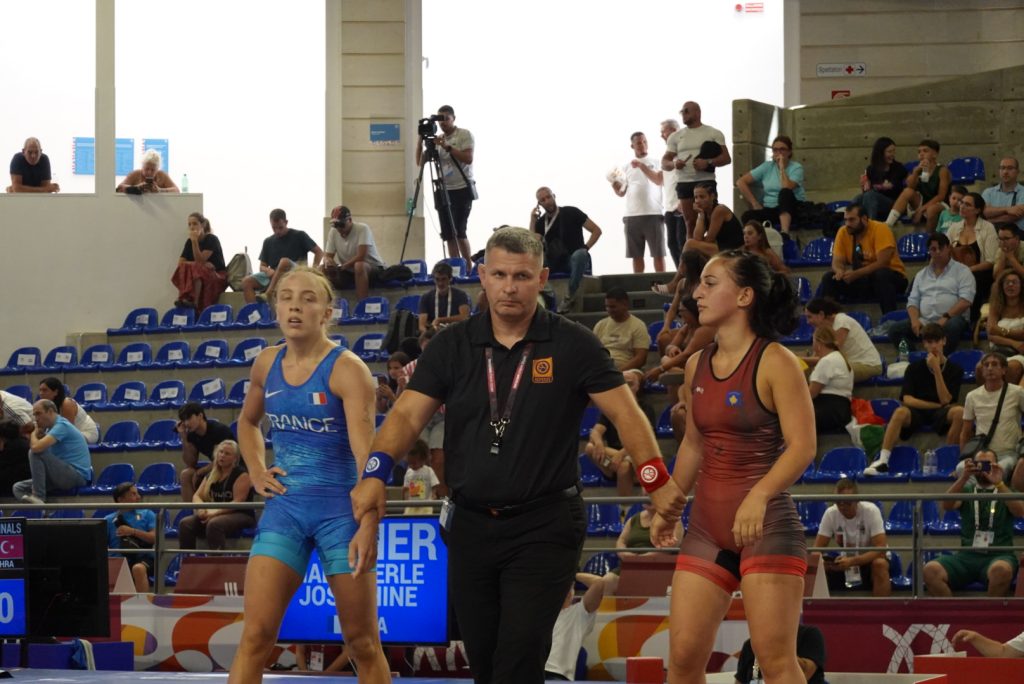
The current state of wrestling across the Mediterranean region, its historical and Olympic significance, and the most important developments the sport has experienced in recent years among Mediterranean countries.
“Wrestling and the Mediterranean share something deeper than a sporting relationship. They share history. The Mediterranean is one of the great cradles of civilisation, but it is also one of the cradles of wrestling. Across this region, wrestling has existed for centuries not simply as a competitive sport, but as part of the cultural and social identity of many communities. Mediterranean countries are united by the sea, by centuries of history, by culture and, of course, by our extraordinary gastronomy. But I would add something else: we are also united by wrestling.”
“From Southern Europe to North Africa, from the Balkans to the eastern Mediterranean, wrestling has a genuine place in the sporting landscape. Some countries have extraordinary Olympic traditions; others are developing very quickly. We have different traditions, different systems and even different expressions of wrestling, and I see that diversity as a strength.”
“What has changed most in recent years is that this heritage is increasingly being combined with a modern vision of the sport. We see greater participation by women, more investment in athlete and coach development, greater attention to education, better event presentation and a much stronger understanding of how we communicate with younger generations.”
“And that balance matters to me. At United World Wrestling, we are enormously proud of our history. We should be. Wrestling has an extraordinary heritage. But history is a foundation; it cannot be our strategy for the future. We respect our traditions, but our eyes are firmly ahead. Wrestling today is a global, dynamic and evolving sport, and I am convinced that the Mediterranean can continue to play an important part in that evolution.”
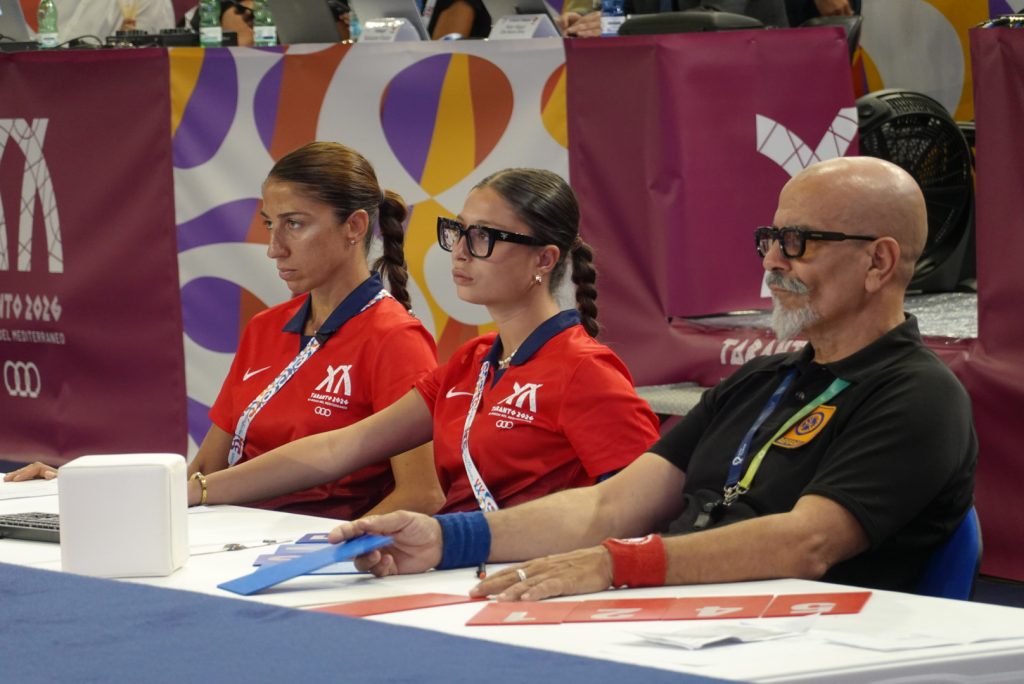
The importance of wrestling as one of the core sports of the Mediterranean Games and its role in bringing together sporting cultures and traditions from 26 countries across three continents.
“The Mediterranean Games have a very special identity. They bring together countries with different languages, cultures, religions and political realities, and yet, for these days, everybody accepts the same sporting language: the same rules, the same field of play, the same respect for the opponent.”
“Wrestling fits that idea very naturally. Across the Mediterranean, wrestling is present in one form or another everywhere. In some countries it is one of their most successful Olympic sports. In others it has enormous cultural and traditional importance.”
“So, wrestling does not feel imported into the Mediterranean Games. It belongs here. There is something else that makes this edition personally meaningful for me. I came to Taranto for the first inspection visit when much of what we were discussing still existed on paper. I returned for the Chef de Mission and International Federations seminar. And now I am here as Technical Delegate, watching athletes actually compete.”
“Seeing plans become a real sporting event always changes your perspective. You stop thinking about documents, venues and technical requirements for a moment, and you see the athletes, coaches, volunteers and officials. That reminds you why all the preparation matters.”
“For wrestling, being part of this family is both a privilege and a responsibility. We represent one of humanity’s oldest sports, but our responsibility is to present the best version of that sport to the athletes and spectators of today. I would also underline the strong and healthy relationship between the ICMG and United World Wrestling. It is based on dialogue, mutual respect and a shared belief in the capacity of sport to bring people closer.”
“And wrestling understands that idea very well. Two athletes can compete with extraordinary intensity for six minutes and, when it finishes, recognise one another with respect. The person in front of you is an opponent, never an enemy. That is a sporting lesson, but in the Mediterranean context I think it is also a very powerful human message.”
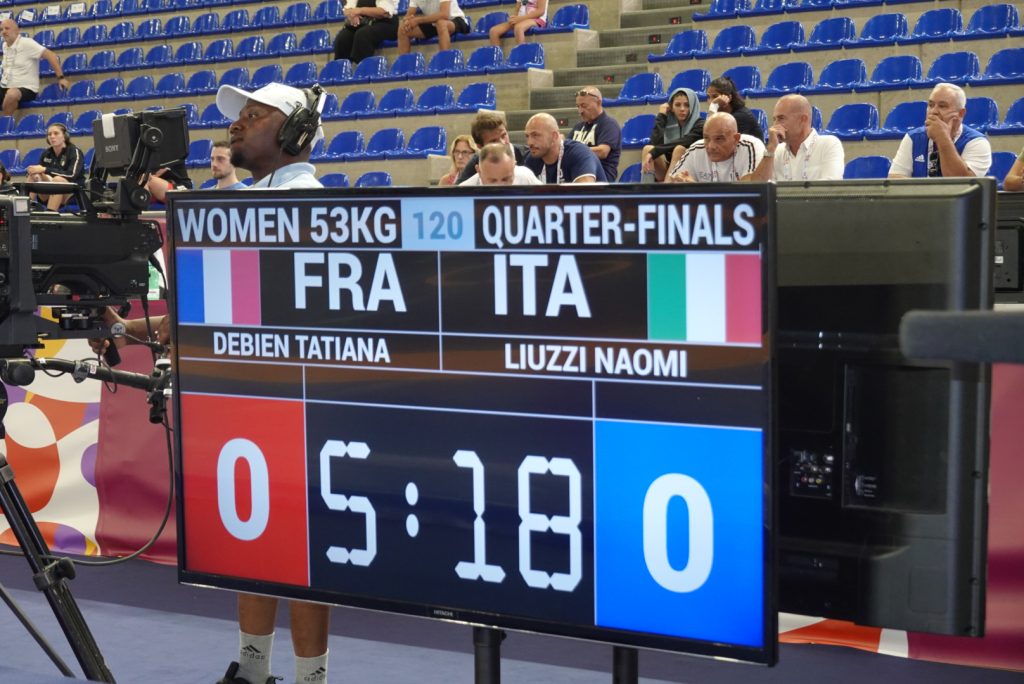
The growing popularity and participation of women in wrestling across the Mediterranean, the changing role of women in the sport, and the contribution of the Mediterranean wrestling movement and its federation to this development.
“The development of women’s wrestling is not simply one part of wrestling’s future. It is fundamental to that future. And here in Taranto we can see that progress very clearly. All of the women’s categories are being contested, with healthy participation. If we look back only a few editions, that level of participation across the Mediterranean would have been much more difficult to achieve. That tells us something important.”
“Women’s wrestling is progressively closing the gap with Men’s Freestyle and Greco-Roman in this region, and we are seeing outstanding female wrestlers become Olympic champions, world champions and, perhaps just as importantly, role models for the next generation. A young girl who watches one of these athletes today sees possibilities that may not have been visible to the generation before her.”
“United World Wrestling has therefore invested significantly in women’s wrestling – in competition opportunities, development programmes, coaching and technical education, support for National Federations, visibility and the progressive removal of barriers to participation. But I believe it is very important to be candid: the work is not finished. Participation on the mat is only one part of the picture. We need women throughout the entire wrestling ecosystem – as coaches, referees, administrators and decision-makers.”
“UWW has taken concrete governance steps in this direction. Our constitutional reforms guaranteed an increased minimum representation of women within the elected Bureau structure and at least two women among the Vice-Presidents. That is progress, and we should recognise it. But good governance is never something an organisation can declare completed. It is a continuous responsibility.”
“For me, the objective is very simple: a girl entering wrestling today should be able to look at our sport and see no artificial ceiling on how far her talent, competence and ambition can take her, whether that is to an Olympic final, to coaching an Olympic champion, to becoming an international referee, or to leadership within our institutions. That is the kind of sport we should be building.”
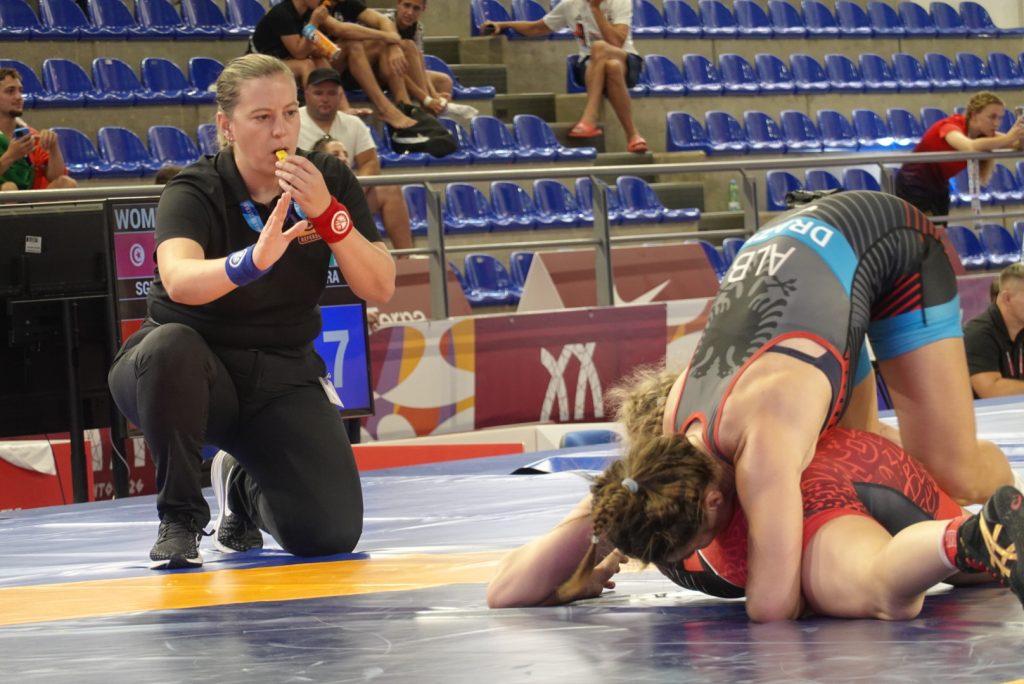
The role of the International Committee of Mediterranean Games in developing wrestling across the region, and the opportunities for the new ICMG leadership under President Francesco Purromuto to further strengthen the sport’s visibility, development and participation among Mediterranean nations.
“First, I would like to congratulate President Francesco Purromuto and wish him and the new leadership every success. He comes to the role with significant experience in sport, law, ethics and governance, so he understands both the traditions of the Mediterranean Movement and the responsibility of preparing it for the future. From UWW’s side, the starting point is very positive.”
“The relationship between ICMG and United World Wrestling is strong, healthy and constructive. We have mutual respect, open dialogue and a genuine willingness to cooperate. My hope is simply that we continue building on that. I think three words are particularly important for the future of the Mediterranean Games: tradition, relevance and innovation.”
“The Mediterranean Movement has a unique identity, and that identity should be protected. But protecting tradition does not mean resisting change. For wrestling, there are natural areas in which we can continue working together – athlete development, youth engagement, women’s participation, education, event presentation and the visibility of Mediterranean sport internationally. And I would emphasise legacy.”
“A major multi-sport event should not begin with the Opening Ceremony and finish with the Closing Ceremony. If we do our work properly, something remains afterwards: better athletes, better coaches and referees, stronger federations, improved facilities, new relationships and young people who have been inspired by what they saw.”
“Wrestling is ready to contribute to that. We are not asking for a special position. We want to be a reliable partner of the Mediterranean Movement. The Mediterranean has always been more than a geographical frontier. Throughout history, it has also been a bridge between peoples. Sport can help make that bridge stronger.”
The future of wrestling ahead of Los Angeles 2028 and Brisbane 2032, and the role of the next generation of athletes and coaches in shaping the sport.
“Confidence, but never complacency. Wrestling has one of the richest histories of any sport in the Olympic Movement. We were present in the ancient Olympic Games, we were there at the beginning of the modern Olympic Movement, and generations of remarkable athletes have written extraordinary chapters of Olympic history. We should be proud of that. But history does not give any sport an entitlement to the future.”
“Wrestling learned that lesson very clearly in 2013. It was a difficult moment, but it also forced our sport to look at itself, to listen, to modernise and to change. And I think wrestling became stronger because of it. That is the attitude we must keep.”
“Los Angeles 2028 is a tremendous opportunity to show the best of wrestling. And as the Olympic Movement itself looks towards 2032 and asks how sport remains relevant, impactful and attractive to new generations, wrestling must continue evolving with it.”
“Not by abandoning what makes us “wrestling” – quite the opposite. Our strength is our authenticity.”
“Two athletes. One mat. The same rules. Strength, technique, intelligence, courage and character. There is something extraordinarily simple and human about that. Our challenge is to preserve that essence while improving everything around it: the athlete experience, integrity, gender equality, presentation, technology, communication and the way young people discover and engage with our sport. And there may be no better place than the Mediterranean to make that point.”
“This region has seen civilisations rise, cultures meet, and societies transform over thousands of years. Wrestling has travelled through that history with them. So, to a young wrestler or coach watching these Games, I would say: Be proud of where you come from. Know the history of our sport. Respect it. But do not allow the past to limit your ambition for the future. Try to become an Olympic champion, certainly. But also try to leave wrestling better than you found it. Because we are very proud of our history. And we are even more confident about our future.”
 Last related articles