The Iranian national football team failed to progress to the next stage of the World Cup after recording three draws. Their participation in stadiums in Los Angeles and Seattle was accompanied by significant controversy.
Players, who appeared to have little choice but to publicly support their country’s Islamic government, faced strong criticism from sections of the crowd. In almost all three matches, when the national anthem was played, they were booed by spectators.
Mohammad Khakpour, a former Iranian footballer, wrote in an Instagram post following Iran’s exit from the World Cup that “a national team is a symbol of a nation. When a part of society feels that this symbol no longer represents their emotions, pain, and hopes, a gap emerges, and the result of that gap can be seen in public reactions.”
Iranian fans present in the stadiums, despite FIFA restrictions, carried numerous placards, including images of victims of the January 2026 killings in Iran, in which around 40,000 people were shot dead by state security forces. They displayed the historic Lion and Sun symbol and, in many cases, signs reading “Where is Rashid Mazaheri?”, showing them to others in the stands.
Rashid Mazaheri, a well-known Iranian goalkeeper, released a video on Instagram following the violent events of January 2026. In the video, he expressed support for the people and directly blamed Supreme Leader Ali Khamenei for the events, declaring that his rule over Iran had come to an end.
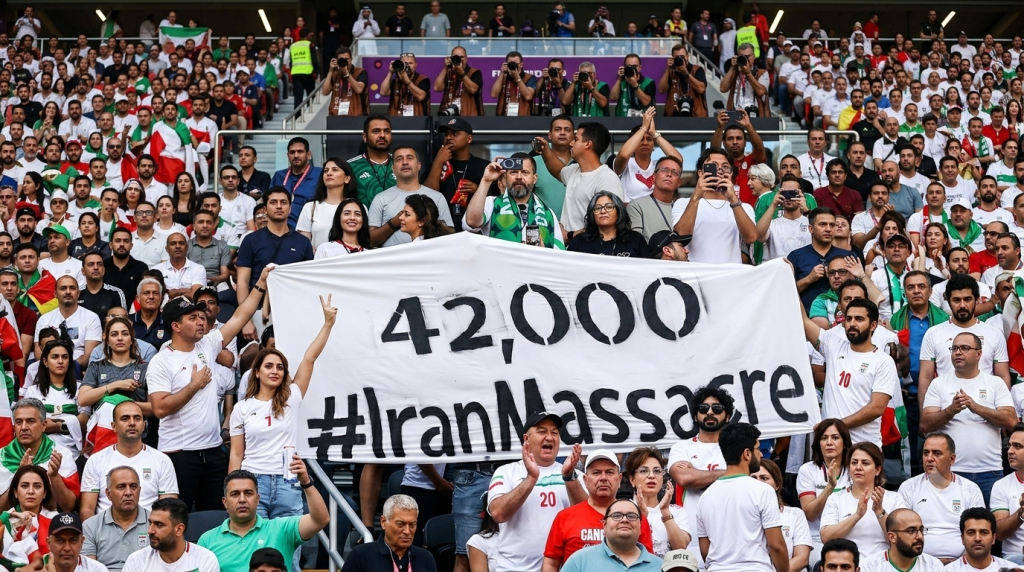
Fifa 2026 – Los Angeles
In his Instagram message directed at athletes, he wrote: “Chivalry is not in medals, but in standing against oppression. History remembers who, like Kaveh, the mythical Iranian hero who rose against a tyrannical ruler, stood against Zahhak, a figure symbolizing oppression in Persian legend, and who remained silent.”
In a phone conversation with Sportsin, his wife Maryam described him as deeply committed to the people: “Rashid always said that one must stand against tyranny and oppression and never bow to force. He believes that the people made his name, that he became famous through them, and therefore he owed everything to them.”
Rashid has been in prison since February 24. Reports have also emerged suggesting he has been held in solitary confinement. The Iranian judiciary has denied him access to legal representation.
Meanwhile, Iranian communities have launched multiple campaigns to amplify his voice, calling on FIFA to respond to the situation of Iranian athletes imprisoned in the country’s prisons.
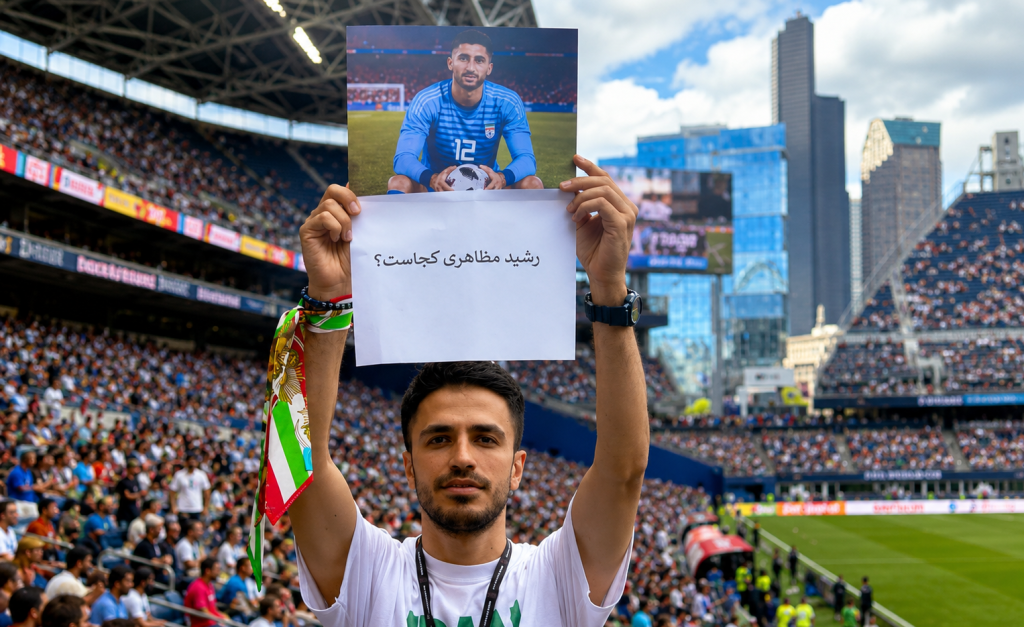
Where is Rashid Mazaheri?
In addition to Rashid Mazaheri, Amir Nasr-Azadani, who was detained during the “Woman, Life, Freedom” protests, is also in prison. He is among several Iranian whose situations have not been addressed by FIFA or other international sports bodies.
Abbas Yahya Beigi, Mohammad Hossein Hosseini, and Ehsan Hosseini-Pour are also among Iranian footballers reportedly detained during the January street protests and are said to be at risk of execution.
Iranian sport, particularly football as the country’s most popular sport, has long been intertwined with politics, with player contracts in domestic leagues and national team selections often influenced by the ideological framework of the state.
Sardar Azmoun, Iran’s leading striker who has previously played for Bayer Leverkusen and AS Roma, was not included in the squad for the World Cup 2026.
 Last related articles