TIME has included Rayssa Leal in the first edition of its TIME100 Sports list, dedicated to the 100 most influential people in world sport. The 18-year-old Brazilian skater, a World Skate figure, is the only representative from Brazil in a selection that confirms an influence no longer explained only by medals, but also by her cultural, generational and social impact in a sport that has changed scale since joining the Olympic programme.
Before appearing on a global influence list, Rayssa was a girl from Imperatriz, in Maranhão, who dreamed of having good shoes to skate in. Her parents could not afford them, so she used what she had, even when the soles were worn through and the holes also tore her socks. Years later, that image found a symbolic full-circle moment with her collaboration with Nike, the Rayssa Nike SB Dunk Low Pro, a shoe that sold out in just minutes and connected her present as a global icon with a childhood in which simply being able to skate was already enough.
The girl who learned skateboarding from YouTube and a borrowed board
Rayssa started skating at six after a friend of her father introduced her to a skateboard. “When I saw it, I fell in love,” she recalled in an interview, where she also said that her first trick was an ollie, learned through trial, error and YouTube videos. She watched how to strike first with the back foot, tried it on pavements and repeated it until the board began to respond. When asked whether she had always dreamed of winning major championships, she answered with a line that captures the speed of her story: “There wasn’t even time to dream.”
Her mother, Lilian Leal, explains that Rayssa, from a very young age, was more drawn to radical kinds of play than to traditional games. She rarely picked up dolls unless someone was playing with her, already had roller skates and found in skateboarding a natural way to move. In Imperatriz, there was also almost no female scene and not many people to skate with. Rayssa remembered that, at the beginning, there was only Sara, a 21-year-old woman who most encouraged her to learn tricks and keep watching videos, when the path still depended more on persistence than on any sporting structure.
 From Peter Pan fairy to competition
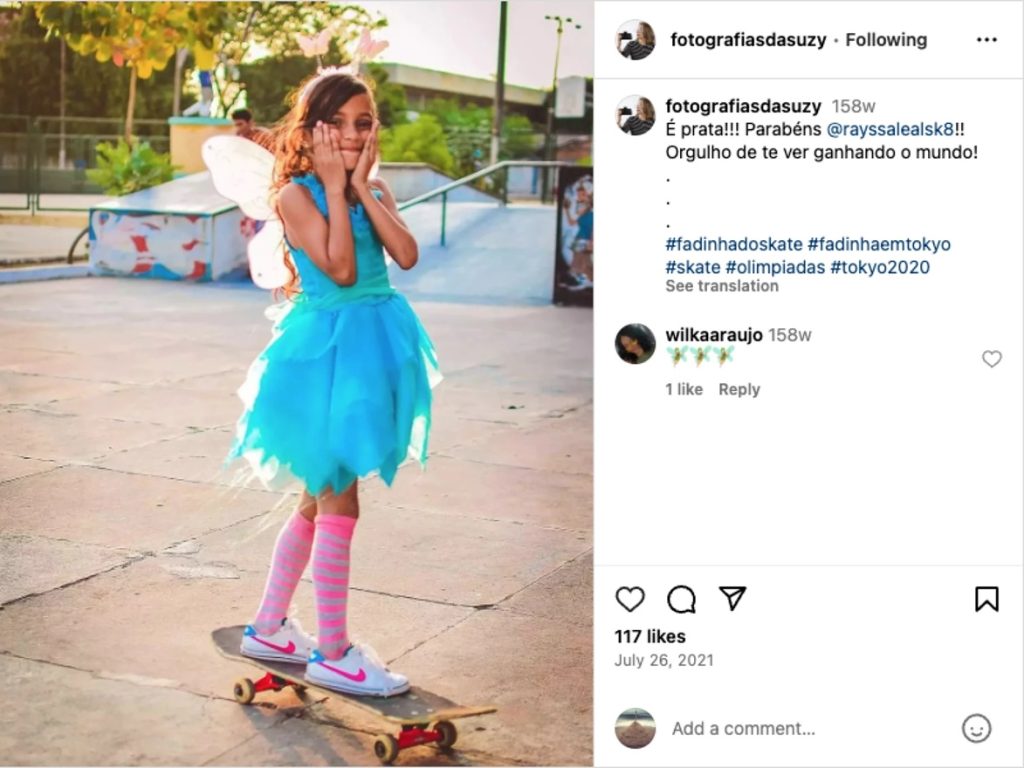
The nickname ‘fadinha do skate’, or ‘little skateboarding fairy’, was born by chance. It was 7 September, her school was taking part in a parade with a children’s stories theme, and Rayssa had been chosen to dress as Tinker Bell, the fairy from ‘Peter Pan’. That same day there was a local skateboarding competition and, when the parade ended, she did not want to waste time changing. She asked for her shoes, went straight to the event in costume and her mother filmed the heelflip she landed on the first attempt.
The video went viral, reached millions of views and even made its way to Tony Hawk, who shared it with his followers. The image of a small girl, with fairy wings and a board under her feet, turned Rayssa into a recognisable figure before she could fully understand the exposure that would come with fame. But behind the viral moment there was also a family searching for ways to fund travel. In 2015, to compete in her first Campeonato Brasileiro de Skate Street Mirim in Blumenau, in Santa Catarina, they travelled around 2,800 kilometres from Maranhão, using raffles, prize draws and an online crowdfunding campaign that barely covered part of the journey.
 Broken shoes, Nike and two Olympic medals
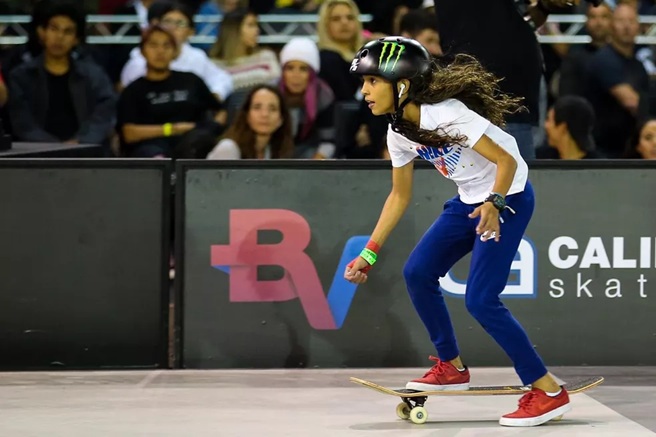
Her sporting rise came quickly and almost without pause. Rayssa won silver at the Tokyo 2020 Olympic Games at 13, bronze at Paris 2024 and became the youngest athlete in history to win medals at two different Olympic Games. She also added titles on major international circuits, but global attention brought pressure that was not always easy to manage. After Tokyo, she explained that she did not understand the weight of the Games, or the scale of people asking her for photos, autographs or even to see her medal at school.
That exposure led her to rely on therapy to manage nerves, negative comments and expectations. “I think it was the best thing I did with my life, going to therapy,” she told Olympics.com, where she admitted that she always felt butterflies before competing even if she looked calm from the outside. Fame, social media and elite performance arrived while she was still a teenager, but skateboarding also gave her a way to compete and live: fall, try again and lean on those around her.
Today, Rayssa is also a sustainability ambassador for the International Olympic Committee -IOC-, a role in which she has wanted to use her image to speak about environmental preservation. In Paris, she presented an Olympic board decorated with two hyacinth macaws, birds native to Brazil, as a symbol of biodiversity and the need to protect the Amazon and the country’s species. “We have to take care of the environment not only for this generation, but for the next generation too. We have to pay attention, because nature is life,” she said. Los Angeles 2028 is waiting for her to keep writing her story.
 Last related articles