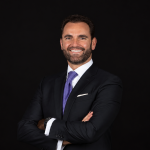
Ryley Batt spent much of his early childhood moving around Port Macquarie, Australia, on a skateboard. Born in 1989 with a limb deficiency, without legs and with only a few fingers on his hands, he refused to use a wheelchair until the age of 12 because he associated that image with a version of disability he did not want to accept. “I just wanted to be a normal boy and I didn’t want to jump in a wheelchair because, in my eyes, I thought wheelchairs were for disabled people,” he has said. As a child, he once wrote to Santa asking for legs. When they did not appear, he spent the rest of Christmas Day locked in his room.
Batt’s story begins with that rejection, but it does not end there. His grandfather, his “Pop”, was a huge influence in his life: they shared fishing, work on the family farm, water skiing, quad biking and a way of understanding the world through activity, family and the outdoors. During the Sydney 2000 Paralympic Games, his grandfather tried to get him to watch the competition, but Batt responded bluntly: “I’m not watching people in wheelchairs participate in sport.” At the time, he did not associate wheelchairs with athletes capable of extraordinary things, but with hospitals, illness and limitation. Years later, his career would end up revolving precisely around the image he had been unable to look at as a child.
The wheelchair he first rejected
The change came in his teenage years, when a wheelchair rugby programme appeared in his school environment. At first, he was not particularly interested in getting close to para sport, but he was drawn to seeing his able-bodied friends get into those rugby chairs, which he described as “Mad Max”-looking devices, and crash into each other with enthusiasm. When he finally got into one, he found something he had been chasing for years: the chance to compete on equal terms. Not only to compete, but also to excel. “Not only compete, but actually excel,” he said of that feeling.
Wheelchair rugby changed the meaning of the chair. It stopped being a label he rejected and became a tool for identity, contact, speed and belonging. Batt has described the sport as a mixture of basketball, netball and handball, but with physical contact, and also as “bumper cars on steroids”. The game gave him a community where disability was not something to hide, but part of a shared experience and a shared pursuit of excellence. “Wheelchair rugby has let me find a community and see life with a half-full mentality,” he has explained.
From Athens to Paris, a six-Games career
Batt made his debut with the Australian Steelers as a teenager and became the youngest wheelchair rugby player to compete at a Paralympic Games when he appeared at Athens 2004. Then came Beijing 2008, London 2012, Rio 2016, Tokyo 2020 and Paris 2024. Across that journey, he won Paralympic gold in London and Rio, silver in Beijing and bronze in Paris, while establishing himself as one of the major figures in his sport through his speed, tactical reading and team-first mindset.
He has also watched wheelchair rugby change from the inside. What once could be sustained with a couple of sessions a week became daily work built around analysis, nutrition, psychology, recovery and the search for small performance details. International competition, he has explained, is now far more demanding, with several national teams capable of winning the same tournament. In that setting, Batt went from being the young player who needed to prove himself to a veteran who understands leadership as a responsibility. In Tokyo, he was co-captain of the Australian Paralympic team alongside Danni Di Toro, an honour he does not present as a title he pursued, but as trust received from his teammates and an obligation to “lead from the front”.

The ritual before the impact
Before competing, Batt reduces the world to a very specific sequence. He times his meal so his body feels settled for the match, puts music in his headphones, with room even for country songs, puts his phone away and quietly runs through scenarios in his head. Then comes the almost handcrafted part: taping, adjusting and preparing his gloves until everything feels “absolutely perfect”. The final mental shift comes with the green and gold jersey of Australia. “As soon as I put that Australian jersey on, it’s game time,” he has said.
Away from the court, his balance returns outdoors: the farm, the animals, practical tasks and that open-air life connected to his childhood in Port Macquarie. It does not work as an escape from high performance, but as another form of discipline. There is also physical pain, years of impacts and the accumulated demands that come with being a veteran in a contact sport. But his perspective has widened over time. At first, winning meant medals, titles and being the best on court. Over the years, his message has moved towards the Steelers as a team, mentoring and one repeated idea: showing abilities, not disabilities.
Becoming the image he did not have as a child
Batt’s most important line may not be about a final, but about television. On the Australian Institute of Sport Win Well podcast, alongside Chris Bond, he explained that the priority for Paralympians is to inspire the next generation of children with disability. He recalled that, when he was young, athletes such as Louise Sauvage and Kurt Fearnley already existed, but he did not see them on television or in mainstream media. “So now I want to be on TV. I want to set an example. I want to play my absolute heart out and show these kids with disabilities like, hey, yeah, look at me. Okay, I have a disability, but I’m going to go bloody do this and I’m going to show them what I can do with my abilities and not my disability.”
That is the natural closing point of his transformation. The child who did not want to watch the Sydney 2000 Paralympics became the athlete who wants to appear on screen so that other children do not grow up with the same absence of role models. Brisbane 2032 adds another layer to that story: a home Paralympic Games can change what Australia expects from sport and who can be recognised as a sporting hero. Batt speaks about the Paralympic atmosphere as an energy that is difficult to explain until it is experienced, and his own life captures that change of perspective. The wheelchair he avoided for years became his place in the world. Today, when asked about that childhood request to Santa, his answer is different: “Offer me legs right now and I wouldn’t take them.”
 Last related articles