Sabatino Aracu is no ordinary executive. He is the president of World Skate, the international federation that brings together twelve disciplines on wheels and has turned skateboarding into one of the major protagonists of the new Olympic sport landscape. Under his leadership, the organisation has evolved from a traditional structure into a global platform with 137 affiliated national federations and more than 10,000 athletes participating in its main events. In an exclusive conversation with SportsIn, Aracu analyses the keys to that expansion, the balance between urban culture and institutionalisation, and the Olympic future of skateboarding.
“Uniting twelve sports under one global family”
Aracu summarises his project with a clear idea: “World Skate’s growth is the result of a clear and deliberate vision: uniting twelve different sports under one global family, all connected by wheels.” For him, success lies not in standardising, but in integrating: “Each discipline retains its own identity, but they are united by shared values and a strong sense of community.”
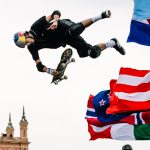
The inclusion of skateboarding in the Olympic Games marked a turning point. “The inclusion of skateboarding in Tokyo 2020 and Paris 2024 gave extraordinary visibility to the entire movement,” he explains. He adds a symbolic reflection: “It opened doors that once seemed unimaginable, proving that a sport born in the streets could reach the biggest stage in the world.”
Growth, he insists, has also been structural. “We invested heavily in professionalising our events, from the World Skateboarding Tour to the World Skate Games, creating world-class platforms for our athletes.” But if there is one element he highlights as distinctive, it is culture: “Our true strength has been fully embracing the values of urban culture: authenticity, inclusivity and sustainability.”
“We don’t want to institutionalise skateboarding”
 One of the main challenges has been integrating skateboarding into the Olympic structure without stripping it of its cultural content. Aracu defines it as “our most beautiful and most important challenge.” And he makes it clear: “We don’t want to institutionalise skateboarding; we want to elevate it while preserving its soul.”
The key, he explains, lies in the direct involvement of the athletes: “The key is to involve athletes directly in decision-making, because they are the authentic voices of the culture.” His events aim to reflect that philosophy: “Our events celebrate both sporting excellence and creative expression; they are not just competitions, but true festivals of urban culture that combine sport, music, art and inclusivity.”
Balance, he argues, comes from constant listening: “Balance comes from continuously listening to the community and staying true to the values that made this culture what it is.” He adds a strong commitment to education: “We invest heavily in education, training judges and coaches and providing high-level athlete development, particularly in countries with limited economic or political resources.”
Los Angeles 2028 and the return “home”
Attention is already turning to Los Angeles 2028, an event that holds special meaning for Aracu: “Los Angeles 2028 will be a historic moment, a return home to California, where skateboarding culture was born.” He expects “spectacular competitions that reflect the incredible technical evolution of the athletes.”
However, the legacy he seeks goes beyond medals: “The legacy we want to leave is broader than medals. We want a new generation inspired to participate, supported by strong youth development programmes that continue well beyond the Olympic event.”
Aracu is convinced that skateboarding has already transformed the Olympic movement: “Skateboarding has already left its mark on the Olympic movement, showing that sport can be young, urban, inclusive and sustainable while maintaining the highest level of excellence.” He sums up his vision with a phrase that transcends competition: “It’s not just about competing; it’s about values and the message we pass on to future generations.”
In a sporting ecosystem that seeks to connect with younger generations, the president of World Skate is clear: “The language of our sports is the language of Generation Z.” And, he argues, understanding that language is the key to continuing to grow in a world where sport is no longer consumed or experienced as it once was.
 Last related articles