SailGP unveiled its 2030 strategy on Wednesday, setting out a roadmap designed to place it among the world’s 25 leading sports competitions. The championship plans to grow from its current 13 teams and 13 events to a maximum of 20 teams and a calendar of around 20 events, while attracting more than 30 million dedicated viewers per round. Its expansion will rely on repeat host cities, a greater presence across Asian and American markets and the development of revenue streams that remain relatively limited, including media rights, licensing and merchandise.
Russell Coutts, SailGP’s chief executive and co-founder alongside Larry Ellison, described the launch as the beginning of a different phase. “Our first five years were about building strong foundations, creating an exceptional, fan-centric sporting product, testing what works and learning”, he explained. The championship has expanded from six teams and five events to 13 privately owned teams and the same number of annual stops. “Now we move into a different phase, one that’s defined by audience growth, consistency and scale”, Coutts added.
Five pillars and measurable targets for SailGP 2030
The strategy is organised around five pillars. The first three seek to establish SailGP as a recognisable global sports brand, expand its fan community and increase consumption of its broadcasts and content throughout the season. The remaining two focus on management: developing a more integrated relationship with teams, commercial partners and host cities, while delivering greater consistency across the calendar, event planning and execution. SailGP intends to reduce variations between events and make longer-term agreements with its principal host cities possible.
SailGP has attached specific indicators to each area. By 2030, it aims to exceed 30% brand awareness in its priority markets, build a database of more than five million fans, triple its global following and welcome 250,000 spectators per season. Its broadcast target is to increase the official average of 18.2 million dedicated viewers per race weekend to more than 30 million per event. The 2025 season recorded a cumulative dedicated broadcast audience of 215 million, while the 2026 event in Perth set a record of 23.6 million.
From $20 million teams to valuations approaching $100 million
The championship’s sporting growth has also changed the value of its teams. During the third season, they could be acquired for approximately $20 million, but by the end of 2025 their valuations generally ranged from $60 million to $70 million, according to ‘Fast Company’. The Italian team was sold for approximately $45 million to a consortium involving Anne Hathaway. At the beginning of 2026, Coutts placed the typical value of a team at around $70 million and later said SailGP expected to have its first $100 million team in the near future.
Four of the 12 teams operating during 2025 were already profitable, primarily through sponsorship agreements, while the championship projected that its annual revenue would exceed $200 million by the end of that season. Rolex signed a ten-year agreement as title partner, while Amazon, Tommy Hilfiger and T-Mobile became associated with individual teams. SailGP still considers media-rights revenue sharing, licensing and merchandise to be underdeveloped. Host regions received an estimated combined economic impact of $230 million in 2025, according to the organisation, while another figure released by the championship placed the average impact per event at $26.2 million, compared with $6.8 million in its inaugural season.
Spain becomes a priority market with Valencia and Alicante
Spain is listed among SailGP’s top-tier markets, alongside Australia, Brazil, Canada, Denmark, France, Germany, Italy, New Zealand, Sweden, Switzerland, the United Arab Emirates, the United Kingdom and the United States. The next phase involves increasing awareness in those territories and entering or expanding its presence in China, Hong Kong, Japan, India, South Korea, Mexico and the Middle East. Market selection will also affect team valuations, as their commercial potential depends on audience size, available sponsors and the capacity to stage recurring events.
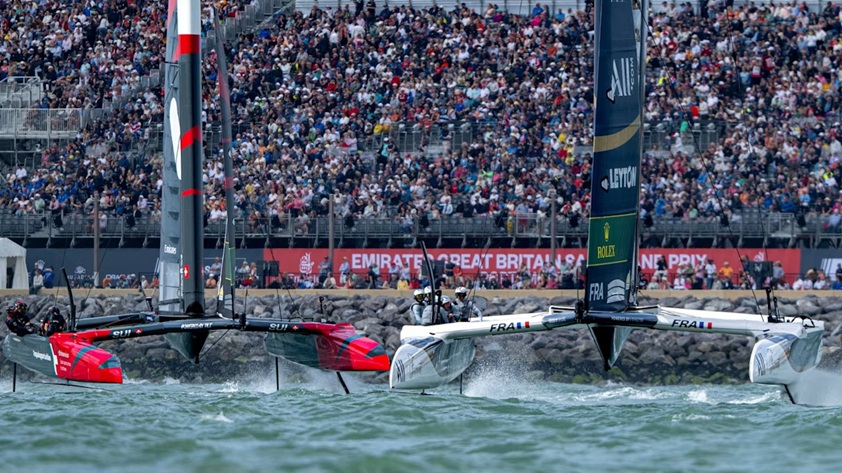
Valencia will host its first Spain Sail Grand Prix on 5 and 6 September, replacing Cádiz after four editions there. The Valencian Community has also linked the championship to a multi-year programme. According to ‘El País’, the Valencian Government will provide up to €10 million to finance 50% of the cost of the events scheduled in Valencia and Alicante between 2026 and 2028. The remaining share will be covered by the local and provincial authorities involved, meaning that total public expenditure could approach €20 million over the three-year period.
Technology, content and repeat host cities to expand the audience
The model combines short races close to shore with identical F50 catamarans capable of exceeding 100 kilometres per hour. The proximity of the racecourses supports both in-person attendance and television production, while navigation data can be used during broadcasts to explain speed, tactical decisions and the differences between the boats. In 2025, SailGP recorded 1.9 billion digital content views, six times more than in the previous season, and welcomed more than 100,000 ticketed spectators. Some 36% of its audience was aged between 18 and 34, although digital views are measured differently from dedicated broadcast audiences.
Expanding to 20 events will require SailGP to return to host cities, conclude longer-term agreements and maintain a stable operational structure throughout the season. It would also increase the commercial inventory available to teams and sponsors across television, fan zones and digital content. SailGP managing director Andrew Thompson attributed that expansion to the championship’s wider network: “None of our growth to date would have been possible without the belief and commitment of all of our stakeholders: our partners, teams, host cities and the athletes. This strategy is as much theirs as it is ours and together, we will drive the league and the sport’s next chapter into 2030 and beyond”.
 Last related articles