Thierry Henry explained one of the keys on Tuesday night after Spain defeated France and reached the World Cup final. “They have an identity, a philosophy, and they play the same way at every level”, the former French footballer said as a commentator for ‘FOX Sports’. Spanish players know what to do because they have been learning the same footballing language since they were children.
Francis Hernández, the RFEF’s former youth-team coordinator, explained back in 2022 how the Spanish Football Federation had transformed that footballing tradition into a shared method. “Tiki-taka was in the air, and our task was to give it shape through a playing model and a player profile, and to put it in writing for everyone who comes after us”, he said in a report published by Prensa Ibérica.
That style stopped being a legacy passed exclusively from one coach to another a long time ago. Spain defined it, developed it and documented it so that all its national teams could work from the same foundations. “We have worked based on a playing model, and we have it stored on a massive scale”, Hernández explained in an interview with AS in March 2025. Every footballer who arrives at the national team receives an explanation of what Spain wants to achieve and how they can fit into that idea. Every coach does too, thanks to a model that has been defined, written down and shared across all the national teams. From the youth categories to the senior side, Spain try to control the ball, create chances, defend far from their own goal and recover possession quickly after losing it.
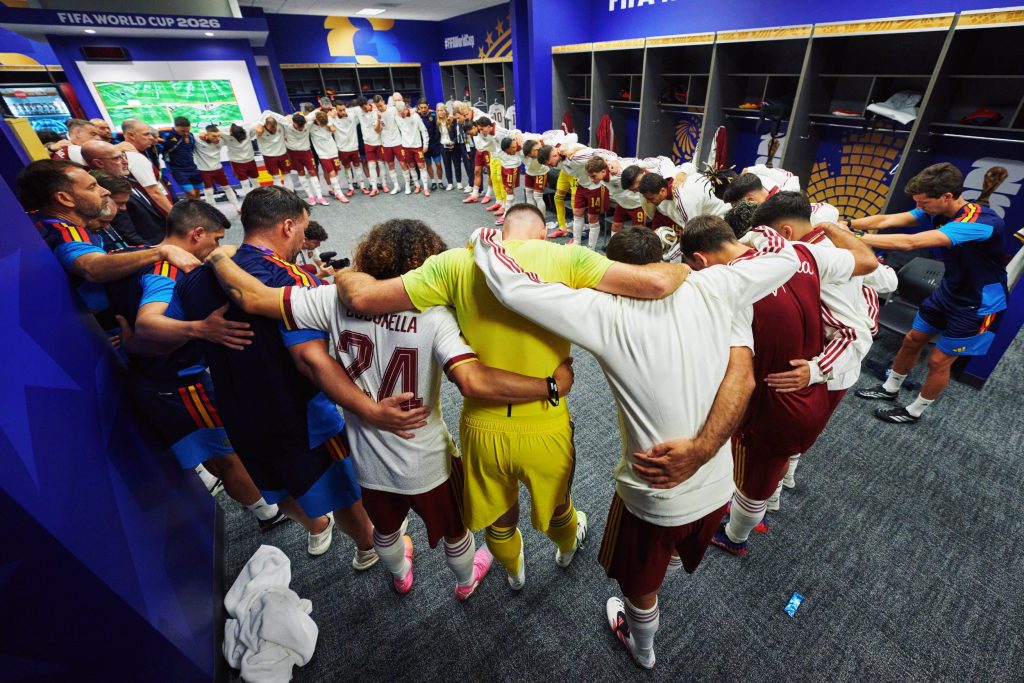
The idea is based on the type of footballer traditionally produced by Spanish football: technical players who combine well with their teammates, are capable of interpreting tight spaces and have a joyful and daring relationship with the ball. Not all of them fit the same profile, but the national team looks for those who can become part of a side in which the ability to understand the game carries as much weight as individual talent. This profile is particularly common in Spain. Every country should identify the player profile and style of football that best suit its own culture, rather than building everything around one particular generation.
Luis de la Fuente did not need to invent anything
Luis de la Fuente has possibly been the coach most faithful to that model. Other managers, especially Luis Enrique, respected many of its principles, although they added their own knowledge and nuances. De la Fuente joined the RFEF’s youth-team structure at the beginning of 2013 and has developed professionally within that system. He knows the method, the coaches and many of the players from before they became stars.
During his first few months, that career path was presented as a weakness. He had never managed a major club or handled a dressing room full of international stars. His experience had come from more modest teams and Spain’s youth sides. That was precisely what eventually made him the perfect candidate for the Federation: he did not arrive to impose a personal revolution, but to take an idea he knew better than anyone to its fullest expression.
The beginning was not easy either. Spain lost 2-0 to Scotland on 28 March 2023, in De la Fuente’s second match in charge of the senior team, and doubts began to emerge about both the coach and a generation in which many supporters barely recognised several of the names. Three years later, that cycle has produced a Nations League title, a European Championship, a Nations League runners-up finish and a World Cup final. His contract has also already been extended until the end of Euro 2028… and everything points towards him remaining in charge until the 2030 World Cup as well.
Not “prisoners of the model”
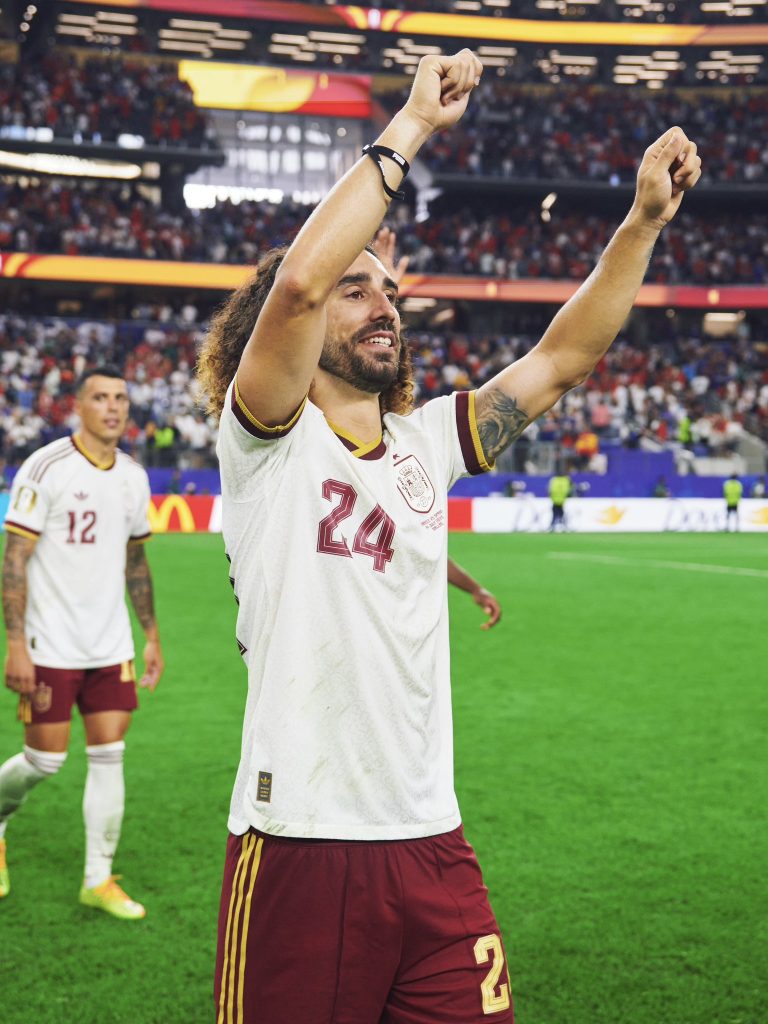 The absence of a collection of superstars has also strengthened the group. Spain have world-class footballers and a Ballon d’Or winner in Rodri, but even their leading figure represents an unusual type of superstar within the football industry. Hierarchy is built through football and behaviour, rather than social media or television adverts.
That balance explains the team spirit, the ability to integrate new players and the natural way in which the side maintains its identity despite injuries or changes to the starting line-up. After defeating France, De la Fuente highlighted the unity, humility and absence of egos within the dressing room. These are values that were previously mistaken for a lack of leadership but have now become part of Spain’s competitive strength.
France reached the semi-final with one of the most powerful squads in their history and with Mbappé, Barcola, Dembélé and Olise as their main threats. Spain defeated them 2-0, barely allowed them to create any danger and reached the final with six clean sheets in seven matches. They also equalled the European record of 37 consecutive games without defeat.
Everything that once appeared to limit this national team has ultimately become its greatest weapon. A coach without experience at the biggest clubs, which allowed him to develop within the RFEF’s philosophy; a squad without an accumulation of egos; and a playing idea learned from the youth categories and written down and defined in the RFEF’s computers, applications and notebooks, so that everyone who joins the organisation knows its philosophy from their very first day. And when players such as Lamine Yamal or Nico Williams emerge to decorate it with their individual brilliance, so much the better because, as Francis Hernández also warned, “we are not prisoners of the model”.
 Last related articles