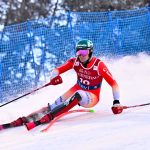
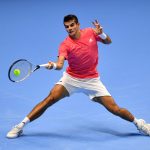
Tanguy Nef’s voice cracked as he thanked his team and his family. On Sunday, three days after turning 30, the Swiss skier finished third in the slalom in Gurgl, Austria, behind Norway’s Timon Haugan and Eirik Hystad Solberg. Eight years after his World Cup debut in Levi and after 22 top-ten finishes, he finally had his first individual podium. He knew the Austrian course well, having finished fifth there the previous year. This time, he climbed from seventh after the first run to third. “It took a while, but that makes it even better,” he told Swiss public television.
In February, when Nef won Olympic gold in the team combined at Milano Cortina, his younger brother Arsène was working on a football pitch in Geneva. Franjo von Allmen had finished fourth in the downhill at Bormio, and Tanguy’s slalom run took the Swiss pair into first place. Arsène followed the race on his phone. “I was so nervous I couldn’t sit still. Tanguy’s win is the best thing that’s ever happened to me,” he recalled in ‘Blick’. One of his two dreams, he said, was to see his brother win a World Cup race. After finishing third in Gurgl, Tanguy set himself the same target. “I think I’ll manage to win a race too.”
The orange jacket his siblings wore
As a boy, Tanguy wanted an orange jacket like the ones Tamara and Laszlo wore. The two eldest of the four Nef siblings were already racing for a ski club, and he wanted to join so he could have one too. Their father was a ski instructor and the family spent winters in La Tzoumaz, in the Swiss canton of Valais. They watched races on television at home, and at weekends Tanguy and one of his brothers would stage their own Olympic Games. Years later, Laszlo led him to another club. While studying architecture, he would come home full of stories about the weekend races run by the Swiss Academic Ski Club. Tanguy ended up joining as well.
At 14, Tanguy left Geneva for Brig to combine skiing with school. In 2014, he broke his tibia and fibula in a downhill race at the Swiss junior championships, the year he had hoped to make the national team. He needed a plan B and went on to study at Dartmouth College in the United States, where he graduated in computer science while continuing to race. In an interview with ‘NOW Village’ during his university years, he spoke about the hardest part of being away. His younger brother called him every day, and he could not always pick up. He went back to Geneva whenever he could. Spending time with Arsène, he said, helped him stay grounded.
A room in Le Châble
Arsène and Tanguy are the youngest of the four. As teenagers, they skied, cycled, sailed and climbed together. Arsène now has a room in the flat Tanguy shares with his partner, Zara Maillard, in Le Châble, below Verbier. Since their parents separated, Tanguy has called it the family’s “headquarters”. Arsène can come over whenever he likes for dinner, to watch television or to stay for a few days. When the schedule allows, they ski together in winter and ride in summer. Tanguy gave him a gravel bike. Arsène, who has Sotos syndrome, a rare genetic condition, works for the local council in Veyrier, looking after three waste collection points and the municipal noticeboards.
“Arsène has taught me a lot about courage,” Tanguy said in their joint interview with ‘Blick’. Thinking of his brother helps him keep going when things get difficult. In a separate interview in 2025, he explained why making a good living from skiing mattered to him. “That’s another reason I want to earn as much money as I can, so I can give Arsène the best life possible.” Arsène, who has also made the podium at the Swiss adaptive skiing championships, described how they help each other. “Tanguy is my superhero,” he said. Following Tanguy’s career motivates him, and it matters to him that his brother notices the progress he makes too. As he listened, Tanguy’s eyes filled with tears.
The four Nef siblings in the Pyrenees
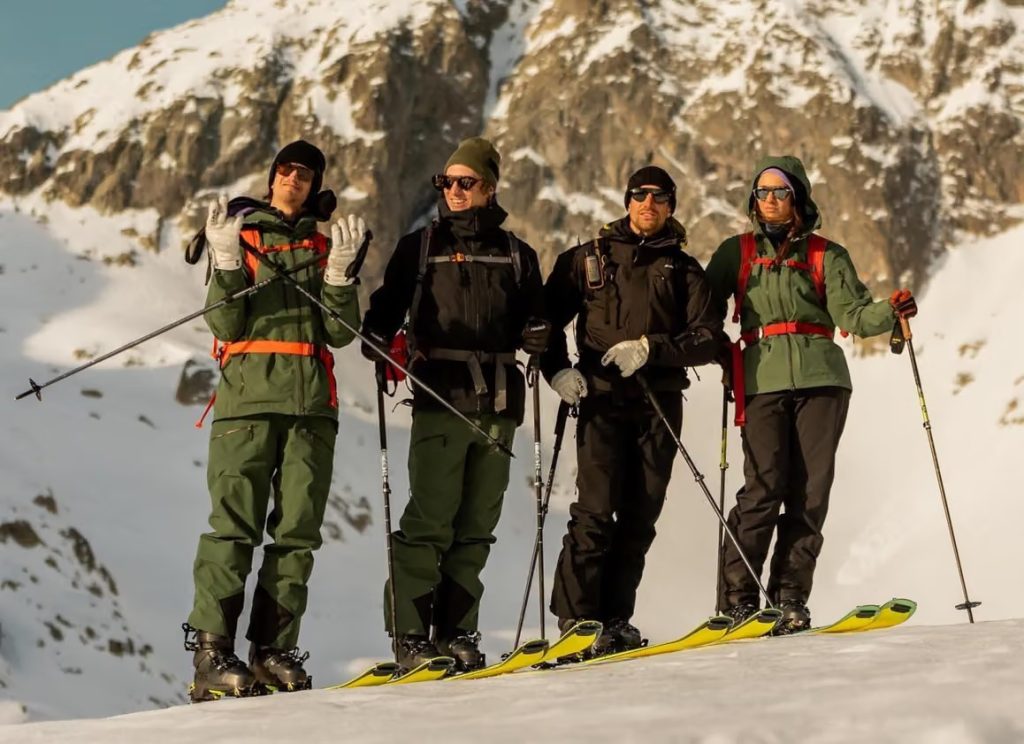
Tamara, Laszlo and Tanguy gave Arsène his first ski tour in the Pyrenees, a trip they would all take together. It was also a chance to make the mountain film they had long wanted to shoot as a family. They kept that part to themselves at first so Arsène would feel less pressure. When he found out, he was surprised and thought of it as “an adventure like any other”, he recalled alongside Laszlo on the Geneva television station ‘Léman Bleu’. Laszlo wanted to move away from ski films built around adrenaline and tell a story that might reach other families. The trip became Mon frère Sotos, a 40-minute documentary that won the audience award at Les Diablerets and the special jury prize at Chamonix.
In Chamonix, Arsène went on stage with Tamara to collect the award. He told the audience he wanted to take his next trip alone, spending three days on his bike. In September, he met Tanguy at the Olympic Museum in Lausanne, where the skier remembered first dreaming of competing at the Games during school visits. Arsène then spoke about his other dream, the one they could pursue together. “I’d like to climb Mont Blanc with Tanguy,” he said. Tanguy put an arm around his shoulders and told him he liked the idea.
 Last related articles