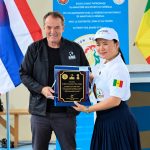
Meetings of World Taekwondo in Tashkent, held on the eve of the World Taekwondo Junior Championships 2026, have offered a comprehensive picture of the sport’s global trajectory, combining governance reform, technical evolution and strategic event planning with the backdrop of a record-breaking competition.
At the centre of proceedings was Choue Chung-won, who underlined the significance of the championships both in the World Taekwondo Council meeting and during the official press conference. Marking the 30th anniversary of the event, he described the Tashkent edition as a milestone moment, not least because it is being staged in one of the most advanced Olympic-standard complexes in the region.
The Council approved a series of key amendments to the organisation’s statutes, as well as to the Competition Rules and their Interpretation. Further changes were adopted to the Integrity Code, Disciplinary Actions and Appeals Code, and the Articles of Association, signalling continued efforts to strengthen transparency, accountability and governance standards across the sport.
The Council also ratified the 2025–2026 operational and financial reports and received updates on integrity-related matters, including the outcomes of the Extraordinary Council meeting and workshop held earlier this year in Fujairah.

986 athletes from 115 countries
Decisions were also taken regarding future hosts, reflecting World Taekwondo’s ongoing commitment to world expansion. Pune and Samarkand were selected to stage the 2027 Grand Prix Challenge 1 and 2 events respectively, while Lima was awarded the 2028 World Taekwondo Junior Championships.
Attention, however, is firmly on the present, with Tashkent hosting what has become the largest edition of the Junior Championships to date. A total of 986 athletes and 556 officials from 115 member national federations are in attendance, alongside the Refugee Team and athletes competing under the WT flag. President Choue described the scale of participation as a powerful demonstration of the resilience and unity of the global taekwondo community.
Speaking alongside him, Adkham Ikramov emphasised the significance of the event for the host nation, noting that preparations began two years ago. He highlighted the importance of welcoming nearly 1,000 athletes, as well as coaches and media representatives, to the newly developed Olympic City, describing it as a landmark moment for Uzbekistan’s sporting ambitions.

Credit was also given to Sherzod Tashmatov and his team for their extensive preparations and the delivery of a high-standard international event.
From a technical standpoint, Philippe Bouedo outlined a series of rule changes that will be implemented for the first time at these championships, following their approval at the 2025 General Assembly in Wuxi. Among the most notable adjustments are the increase in scoring for a spinning head kick from five to six points, and the removal of video replay requests for head kicks, measures designed to encourage greater activity and fluidity in matches.
Beyond the competitive arena, Jeongkang Seo stressed the broader significance of the championships as a platform for cultural exchange among young athletes, expressing hope that participants would also engage with Uzbekistan’s rich cultural heritage.
This dimension was reflected in visits by officials and delegates to the Museum of Olympic and Paralympic Glory and the Olympic City Martial Arts Sports Complex, which together highlight the scale of the country’s investment in modern sports infrastructure.
Pictures from WT facebook
 Last related articles