Thailand is seeking to reshape the future of Muaythai by bringing the sport’s domestic system closer together, putting young people at the centre of its development and creating a clearer route from grassroots participation to international competition.
The approach was set out with the launch of the MTAT Muaythai Movement 2026–2028, a three-year strategy presented by the Muaythai Association of Thailand Under Royal Patronage. At its core is an attempt to connect the different parts of Muaythai in Thailand and establish a more consistent pathway for those entering the sport.
The ambition is significant because Muaythai is already a Olympic movment sport. Its techniques, traditions and training culture have spread far beyond Thailand, with athletes and gyms now established across the world. But the new strategy starts from a simple premise: the country where Muaythai originated needs strong foundations at home if it is to play a greater role in shaping the sport’s international future.
That idea is reflected in the movement’s slogan, “Muaythai Starts in Thailand. Grows with the World.” Thailand wants to protect the cultural identity and traditions of Muaythai while developing a modern sporting structure capable of supporting athletes, coaches and officials at every level.
The principle of One Nation, One Fight sits at the centre of that approach. MTAT wants schools, gyms, coaches, athletes, referees and national programmes to become part of a more connected system rather than developing separately. The proposed pathway begins at grassroots level and extends through youth competition and athlete development to national selection and international representation.
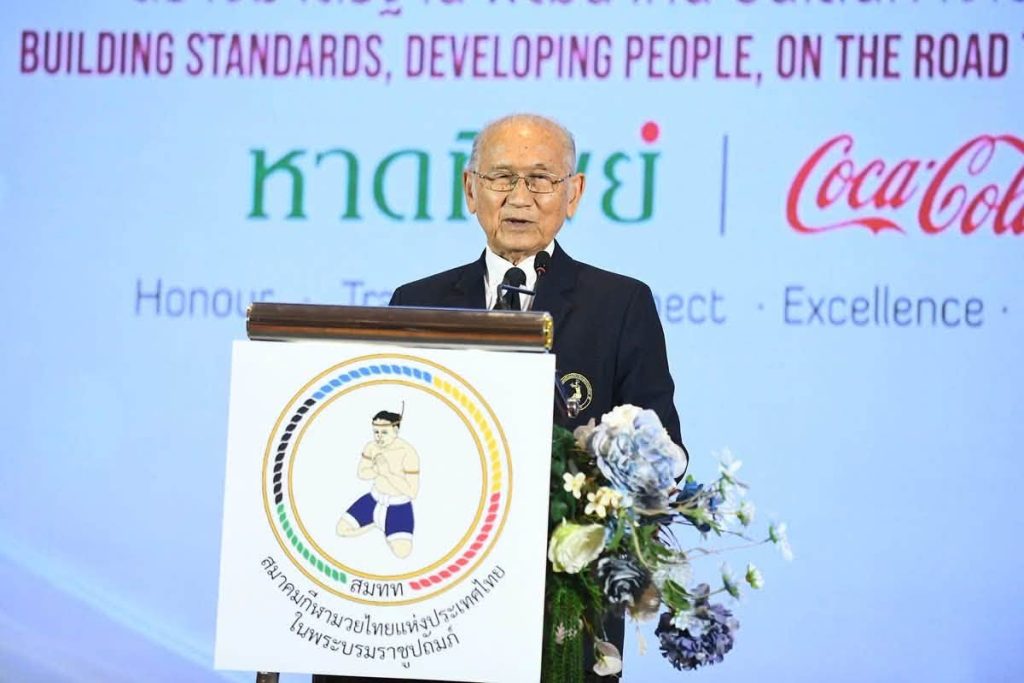
The strategy also moves beyond the traditional measure of sporting success. For MTAT, the objective is not simply to produce champions, but to develop athletes and responsible citizens through the values of Muaythai and the Olympic Movement.
Education, coaching, athlete welfare, safeguarding, clean sport, refereeing and technical development are therefore included alongside competitive performance. The intention is to create an environment in which young athletes can develop safely while gaining a broader understanding of the sport and its traditions.
Maj. Gen. Phatchara Rattakul, who heads the newly established Muaythai Sport Movement Working Committee, presented the three-year plan in Bangkok. The strategy places young people firmly at its centre, with the argument that the future of Muaythai should not simply be built for them, but with them.
Its values are drawn from the Five Pillars of Muaythai, Respect, Honour, Tradition, Excellence and Fair Play, alongside the Olympic values of Excellence, Respect and Friendship.
For Thailand, the challenge is to make those principles part of the development system rather than leaving them as statements of intent. Schools and gyms are expected to become part of a wider environment in which young athletes can access qualified coaching, understand the traditions of Muaythai and progress through recognised stages of development.
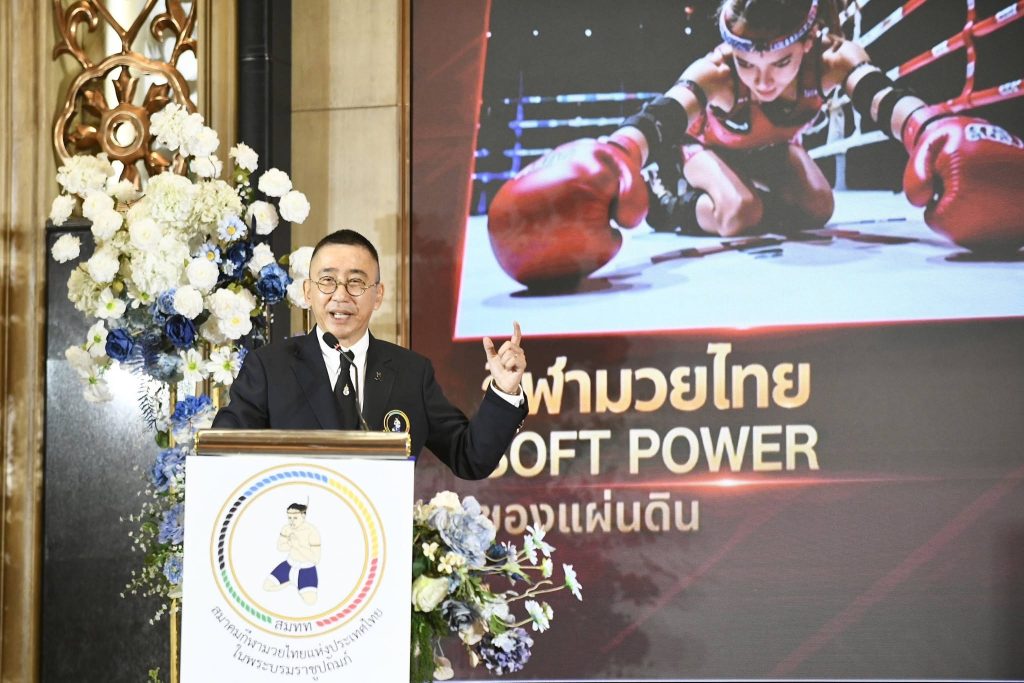
That combination of tradition and modernisation is increasingly important as the sport expands internationally. Muaythai remains closely associated with Thailand’s cultural identity, but its global growth has also brought greater attention to areas such as athlete welfare, safeguarding, technical standards, clean sport and consistent coaching.
The new strategy seeks to bring those elements together within a national framework. Its success will depend on how effectively that framework can be implemented across the country and whether athletes and clubs experience a genuinely more connected system.
The plan is also shaped by the experience of Dr Sakchye Tapsuwan, president of both MTAT and the International Federation of Muaythai Associations. His career has included senior positions in Thai sport, including Governor of the Sports Authority of Thailand and Vice President of the National Olympic Committee of Thailand.
His role places the domestic strategy within the wider development of Muaythai internationally. IFMA is recognised by the International Olympic Committee as the international federation governing Muaythai and is a signatory to the World Anti-Doping Code.
That international connection is central to Thailand’s ambitions. The country is not seeking simply to preserve Muaythai as a national tradition. It is seeking to strengthen the structures through which the sport can develop internationally while maintaining the values and traditions associated with its origins.
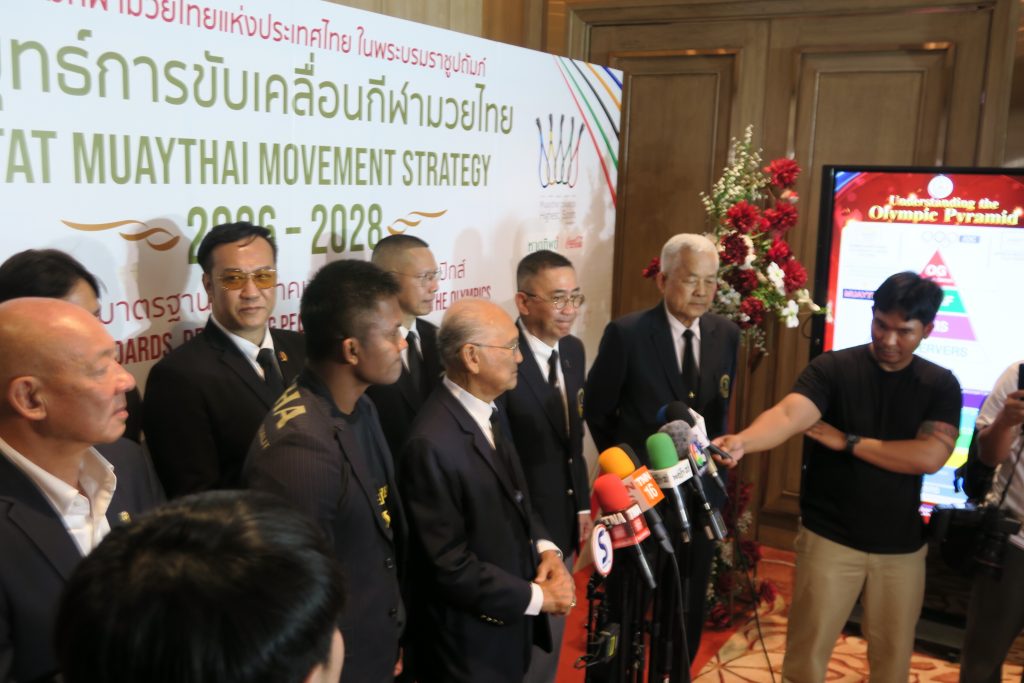
The association itself entered a new phase earlier this year. On 12 March 2026, it received its new name, Muaythai Association of Thailand Under Royal Patronage, bestowed by His Majesty the King. The change came alongside a renewed identity and the new three-year strategy.
The real test, however, will come after the launch. A national strategy can establish priorities, but the difficult work will be connecting schools and gyms, improving coaching, protecting young athletes, maintaining consistent standards and ensuring that talented fighters have a credible route towards the national team and international competition.
There is also a broader question about Thailand’s role in a sport that is no longer confined to its country of origin. Muaythai now belongs to a global community, but Thailand remains its cultural home. The new strategy suggests that the country wants to use that position not simply to celebrate its heritage, but to take greater responsibility for how the sport develops.
The three-year movement is therefore about more than a new programme. It represents an attempt to build a more unified national system, transfer the knowledge of one generation to the next and strengthen the foundations from which Muaythai can continue to grow internationally.
For Thailand, the message is straightforward. Unite the sport at home, give young people a clearer path into its future and allow those stronger foundations to support Muaythai’s continued growth around the world.
 Last related articles