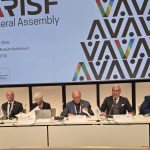
The FIVB Volleyball Empowerment Commission held its first meeting of 2026 with a review that positions the Volleyball Empowerment programme as one of the main drivers of volleyball development worldwide. The headline figures underline the scale reached to date: USD 53 million invested, 1,658 projects funded and 206 countries supported since the programme’s launch, highlighting its structural and long-term impact.
The meeting, opened by the President of the Fédération Internationale de Volleyball (FIVB), Fabio Azevedo, and by Commission President Glenn Quinlan, reviewed the programme’s progress throughout 2025 and outlined the next phase of a platform designed as a cornerstone of sustainable volleyball growth, in line with the FIVB Strategic Vision 2032.
Competitive impact and gender balance
Between April 2025 and January 2026, National Federations supported through Volleyball Empowerment translated this investment into tangible competitive results. In beach volleyball, 59 National Federations won medals across FIVB, continental, zonal and multi-sport events, with a balanced distribution between women’s competitions, accounting for 52% of medals, and men’s competitions, with 48%.
In indoor volleyball, 52 National Federations reached the podium during the same period, maintaining an almost identical split between women’s competitions (52%) and men’s competitions (48%). The Commission also received an update on the FIVB International Centres of Excellence, identified as pillar 10 of the Vision 2032. In 2025 alone, 14 memorandums of understanding were signed to establish new centres, with the aim of creating a global, performance-driven network based on a two-tier model combining High-Performance International Training Centres and International Training Centres.
From April 2026, National Federations will be able to access training camps at these centres, while existing Development Centres will progressively transition into the new system after completing the current cycle. The model is designed to provide continuous technical and competitive support to national teams, strengthening a more consistent and efficient development structure.

Olympic solidarity and regional growth
Collaboration with the International Olympic Committee through Olympic Solidarity was highlighted as another key pillar of the programme. Applications for team support grants in volleyball and beach volleyball represented 30% of all approved applications across summer Olympic sports, underlining the strong presence of these disciplines within Olympic development policies.
Within this framework, the Youth Athlete Development Programme, delivered in partnership with Olympic Solidarity, was presented as a new initiative aimed at strengthening young talent in emerging regions. The programme is designed to provide long-term development pathways and to reinforce the pipeline of athletes feeding into high performance in future cycles.
The goal of real and measurable change
The report also reviewed the evolution of zonal competitions, with 17 events registered in 2025 within the World Ranking system and significant growth in participation: a 49% increase in men’s teams and a 32% increase in women’s teams. This expansion has increased the number of official matches and reinforced the competitiveness of regional structures. The Commission also confirmed the formal recognition of a new zonal body, the North Central America’s Zonal Volleyball Association.
In closing, Glenn Quinlan stated that “the Volleyball Empowerment programme continues to demonstrate that targeted investment, strong partnerships and a shared vision can deliver real, measurable change,” while Fabio Azevedo thanked members for their commitment and reaffirmed empowerment as one of the strategic pillars underpinning the global growth of volleyball.
 Last related articles