
The NBA has concluded that the Los Angeles Clippers helped Kawhi Leonard receive tens of millions of dollars through contracts with four sponsors and suppliers linked to the franchise: Aspiration Partners, Boingo Wireless, Daktronics and Lockton Insurance. According to the independent investigation conducted by Wachtell, Lipton, Rosen & Katz, the team facilitated the agreements, offered business to the companies to induce them to accept and paid personal expenses for the player and his representatives. That money did not appear in Leonard’s contract or count against the salary cap, the mechanism that restricts how much each team can spend on its roster. That is what makes the case serious: if a franchise can supplement a star’s salary through affiliated companies, the owner with the deepest pockets can make an offer that rivals cannot match without it appearing in the team’s basketball accounts. The league fined the Clippers $30 million, stripped them of five first-round draft picks and placed them under supervision for five years. Owner Steve Ballmer and president of business operations Gillian Zucker were suspended for one year, while president of basketball operations Lawrence Frank received a six-month suspension.
Leonard, by contrast, must pay $700,000 but has not been suspended for a single game. He retains his contract and Bird rights and can complete the agreed trade that would return him to the Toronto Raptors. The disparity is difficult to ignore: the Clippers lose money, executives and much of their sporting future, while the player who received the improper income can leave with his contractual position intact. Has the NBA distributed responsibility fairly, or has it concentrated almost the entire punishment on the team? Does the severity of the response against the Clippers strengthen the league’s credibility, or is that credibility weakened when the primary beneficiary emerges almost unscathed?
The punishment that cannot be measured in dollars
The most lasting damage to the Clippers may be neither financial nor even sporting, but reputational. Ballmer bought the franchise for $2 billion in 2014 after the racism scandal that ended Donald Sterling’s ownership. The club subsequently invested in a contending roster, reached the first conference finals in its history in 2021 and built the Intuit Dome, its own arena valued at around $2 billion. The project was intended to leave behind decades of losing, dysfunction and unfavourable comparisons with the Lakers. The ruling now gives the franchise a different identity that may prove equally difficult to erase: that of a team that cheated to pay its leading star. The Clippers reject the findings, describe the investigation as biased and say they will exhaust every available avenue to challenge them, but that response cannot remove the public impact of the decision.
The loss of five first-round picks also turns the punishment into a problem that will extend across several seasons. The Clippers will forfeit one selection in every draft from 2029 to 2033, having already committed other assets in the deals used to acquire Paul George and James Harden. The proposed trade with Toronto could return two unprotected first-round picks, but the Stepien Rule —which prevents a team from trading future first-round selections if doing so would leave it without one in two consecutive years— will restrict their use in subsequent deals. The franchise can still use salary-cap space and sign free agents, but its conventional route to rejuvenating the roster through the draft, or using picks as trade currency, will be largely closed until 2033. The real punishment is not the $30 million, an affordable sum for Ballmer, but the fact that the Clippers’ next rebuild has been compromised before it has even begun.
 A negligible financial penalty
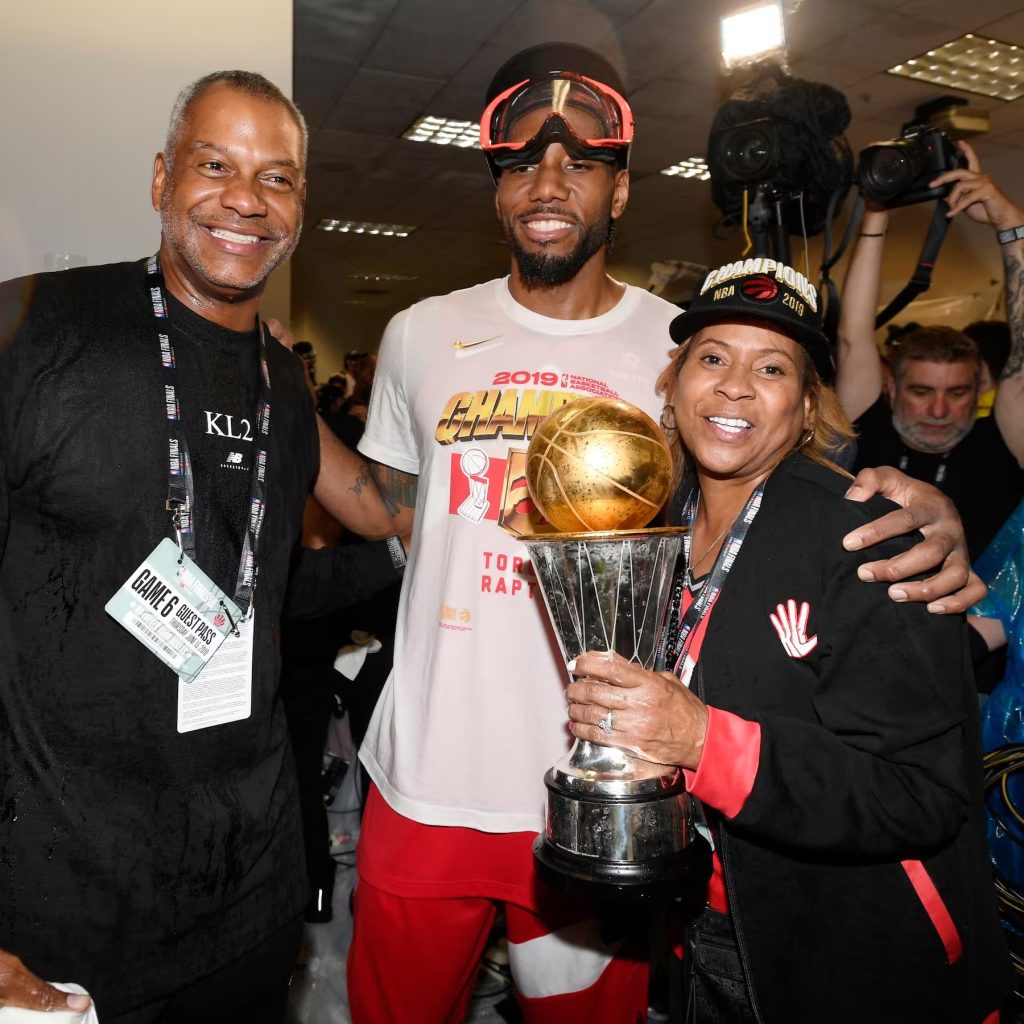
The investigation calculated that Leonard received $66 million through the four commercial agreements facilitated by the franchise. Against that figure, the $700,000 he must pay represents 1.4% of his $50.3 million salary for the coming season and just 0.46% of the $149.5 million maximum extension he signed in January 2024. He is not required to return all the income he received, nor does he lose his contract or face any time away from the competition. He can close his chapter in Los Angeles and return to the team he led to the championship in 2019, leaving behind an organisation without five first-round picks and with its senior leadership suspended. In material and sporting terms, Leonard paradoxically emerges as one of the case’s biggest winners, even though his reputation will inevitably remain attached to it.
Part of the difference can be explained by the Collective Bargaining Agreement. The agreement between the NBA and the National Basketball Players Association -NBPA- sets a maximum player fine of $350,000 for each violation of the salary-cap circumvention rules. Leonard’s $700,000 payment therefore represents two maximum penalties. Similarly, the $30 million imposed on the Clippers amounts to four fines of $7.5 million, the maximum for each franchise violation. The agreement, however, also allowed the league to void the contract involved, recover certain benefits or prohibit future agreements between the player and the team. The NBA chose not to use those powers and agreed with the union that the penalties would be final and binding. Leonard maintains that he acted in good faith, without knowing of any intention to circumvent the cap, and accepts responsibility for errors made within his inner circle. His uncle and former representative, Dennis Robertson, has been barred from conducting business with NBA franchises for five years.
The salary cap is also part of the game
The NBA operates a soft salary cap: it includes exceptions, allows teams to exceed certain thresholds and imposes luxury-tax payments and additional restrictions on the highest spenders. What it does not allow is for part of a player’s compensation to be concealed inside an endorsement agreement arranged by his own franchise. Leonard was free to sign independent commercial deals; the Clippers were not permitted to seek out those opportunities, induce their partners to provide them and subsequently compensate those companies through additional business. That distinction protects something more important than an accounting rule. If Ballmer, the league’s wealthiest owner, could use his personal fortune and the club’s commercial network to make payments outside the system, the cap would stop balancing offers and become a barrier only for teams with fewer resources. Adam Silver confronted the NBA’s most financially powerful owner and imposed the penalties that could genuinely affect him: draft picks, suspensions and institutional oversight, alongside a fine that would offer little deterrence on its own.
The league also considered that the Clippers had already been punished in 2015 for violating these rules in the DeAndre Jordan case and had received a warning following another investigation into Leonard’s arrival in 2019. From that perspective, the response against the franchise could hardly have been more severe: five first-round picks, four maximum fines, the suspension of Ballmer and his two senior executives, and a five-year monitoring programme. The NBA has protected its credibility by investigating and punishing one of its most powerful owners, but the final distribution leaves an uncomfortable precedent. If the player retains the money, the contract and the opportunity to begin again with another team, the incentive for his representatives to make similar demands does not disappear completely. The league has made clear what cheating can cost a franchise; it remains less obvious what it should cost the person who benefits from it, although the damage to his reputation is still difficult to measure.
 Last related articles


