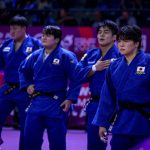
Born in 1954 in Greece, Panagiotis Theodoropoulos has emerged as a leader whose vision has propelled the Ju-Jitsu International Federation onto the world stage. Since taking over the presidency in 2008, he has championed a transparent and democratic management system designed to give structure and opportunities to athletes, coaches, academies, and national federations alike.
Under his stewardship, the JJIF has developed into a global organization, now representing more than 140 national bodies across all five continents. Its executive board is composed of 11 voting members, including the president, five continental vice presidents, two athlete representatives, and three appointed members. A general manager, who also heads the technical commission, supports the federation’s operations, reflecting a commitment to professionalism and accountability.
Now serving his fifth term, Theodoropoulos continues to consolidate the federation’s role in international sport. World and continental championships are stronger than ever, while ju-jitsu’s visibility has expanded thanks to strategic use of traditional broadcasting and new digital platforms. Plans are already in motion for AI-based information systems to assist athletes and officials, alongside a mobile app designed for coaches, competitors, and national federations that will simplify administration and free up more time for the practice of the sport itself.
“Every year, Grand Prix and regional events are organized, giving all JJIF athletes many opportunities to participate and gain experience. Being part of the Olympic Movement, JJIF and Ju-Jitsu practitioners are aiming for IOC recognition and why not dream of being part of the Olympic Games in the future?”

Beyond competition, the JJIF has sought to anchor itself in wider social values. Its initiative Ju-Jitsu 4Good is not simply a slogan but a lived philosophy, encompassing anti-violence, safeguarding, and crisis-management education. Self-protection programs for women and children are a central feature of affiliated academies, and participation rates among women are significantly higher than in most other martial arts. Young people are also encouraged to take part, with under-16 events forming a growing part of the competition calendar.
Inclusivity has been further strengthened through the introduction of Para Ju-Jitsu, which entered the world stage in 2018. Medal events have since been included in the SportAccord Combat Games, and the discipline will feature at the World Games 2025. A close partnership with the World Para Jiu-Jitsu Federation underscores the federation’s determination to ensure that all athletes have a place within its structures.
At the same time, the sport has remained true to its Japanese roots, with ju meaning “gentle, flexible” and jitsu meaning “art.” It has, however, adapted to the demands of modern sport, offering a wide range of disciplines from the speed and technical intensity of Fighting and Ne-Waza to the precision of Duo, the acrobatics of Show, and the physicality of full-contact formats. Annual world and continental championships, regional tournaments, and Grand Prix events provide athletes with a wide array of opportunities to test their skills and gain experience on the international stage.

“Ju-Jitsu is popular all over the globe. The challenge is to unite the various groups, disciplines, and styles that have developed over a long time under the umbrella of JJIF into a single national federation or organization per country.”
Looking to the future, Theodoropoulos and his federation have their eyes on grassroots development. Beginning in 2026, the JJIF plans to build a global league by working directly with clubs and academies, aiming to create a community without barriers to information or participation. The vision is of a system where athletes at every level can compete, develop, and contribute to the growth of the sport.
For Theodoropoulos, however, the long-term ambition is unmistakable: full recognition by the International Olympic Committee and, ultimately, inclusion in the Olympic Games. As he often points out, even established sports such as taekwondo and wrestling were nearly excluded from the program in 2013 before structural reforms saved their place. Karate, by contrast, has remained outside the Games. Ju-jitsu, he insists, must learn from these examples, adapt where necessary, and demonstrate its global reach and relevance.
The message is clear. Ju-jitsu, guided by a balance of tradition and innovation, is building its case step by step. With inclusivity, integrity, and ambition at its heart, the JJIF under Panagiotis Theodoropoulos is steering the sport steadily along its path toward the ultimate dream: a place on the Olympic stage.
 Last related articles