The 1994 World Cup marked the sporting discovery of football for the United States. At the time, the country lacked an established professional league, and creating one was among the conditions imposed by the International Federation of Association Football -FIFA- when it awarded the tournament. That edition attracted 3.59 million spectators across 52 matches, averaging 68,991 per game, and its main legacy was the Major League Soccer -MLS-, which launched in 1996 with ten teams.
The 2026 World Cup has represented a different kind of discovery. The country already had stadiums, sponsors, broadcasters, major investors and an established MLS, but the tournament has opened its eyes commercially to football’s possibilities. The 104 matches attracted 6.81 million spectators, averaging close to 65,500 and filling 99.7% of available seats. FIFA had also sold more than 600,000 hospitality packages before the quarter-finals, while the competition boosted travel, consumer spending and activity across digital platforms. For more than a month, football occupied the space normally reserved for the country’s largest sports and entertainment properties.
From MLS to the World Cup business
Gianni Infantino has moved quickly to interpret that success. FIFA is proposing the creation of FIFA Forward Enterprise, a company valued at around $20 billion that would manage the commercial operations of the men’s and women’s World Cups, the Club World Cup and other competitions. Selling a stake of up to 20% to private investors could raise approximately $4.2 billion and allow the World Cup to be exploited even further commercially after what was witnessed across North America. The initiative involves US companies and executives including Thrive Eternal, JPMorgan and Greg Maffei, one of the people behind Formula 1’s transformation during his time at Liberty Media.
MLS also has another opportunity to build on that momentum. It has expanded from ten to 30 franchises, San Diego paid $500 million to join, and five clubs are now valued at at least $1 billion. Its broadcasting agreement with Apple was estimated at $2.5 billion over ten years, while the arrival of Lionel Messi and other stars has increased the competition’s international visibility. However, becoming one of the world’s best leagues remains an extremely difficult journey. Even Saudi Arabia, despite its financial strength and recruitment of international stars, has failed to approach the level of LaLiga, the Premier League, Serie A or the Bundesliga. Beyond Europe, there is also the ecosystem surrounding the Copa Libertadores, sustained by tradition, extensive support and a South American passion that MLS would struggle to match. Its growth has been predominantly commercial, while salary restrictions continue to widen the sporting gap: Seattle Sounders, champions in 2022, remain the only MLS representative to have won CONCACAF’s leading club competition since Los Angeles Galaxy in 2000. Americans will probably find it easier to exploit the first side of that equation than to complete the second.
Liberty found the formula with Formula 1
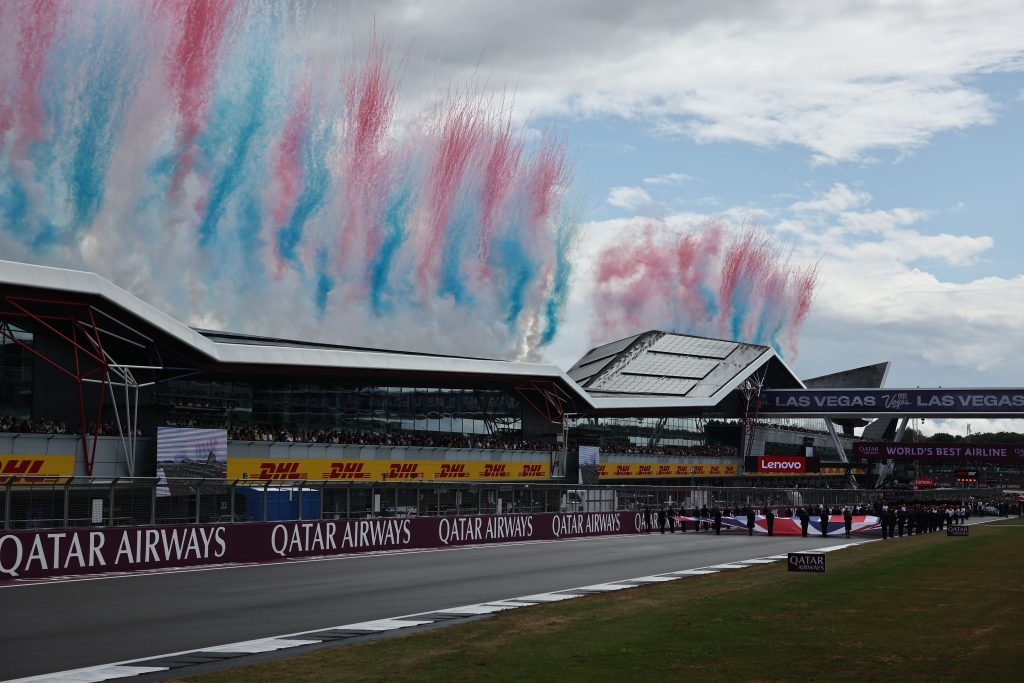
Liberty Media has already demonstrated how much an international sport can grow when the tools of the US entertainment industry are applied. The group completed its acquisition of Formula 1 in 2017 through a transaction that valued the business at $8 billion. Since then, it has opened the competition to social media, strengthened the narratives surrounding drivers and teams, promoted ‘Drive to Survive’, developed premium hospitality and increased the number of races held in the US market from one to three, adding Miami and Las Vegas alongside Austin. In 2025, F1 generated $3.9 billion in revenue, attracted 6.75 million spectators to its circuits and increased live television viewership by 21%. The average US audience rose from around 554,000 viewers per race in 2018 to 1.32 million in 2025. The new 2026 regulations are intended to open another chapter in the sporting competition, but Liberty’s greatest transformation has taken place around the track: in storytelling, distribution and consumption.
The next experiment is MotoGP. Liberty completed the acquisition of 84% of Dorna Sports, holder of the championship’s commercial rights, in July 2025, in a transaction that valued the company at approximately €4.3 billion. The championship begins from a different position: it has a well-established fanbase in Spain, Italy and several Asian markets, although its presence in the US and its economic scale remain smaller. According to the pro forma figures published by the group, MotoGP generated $573 million in 2025, compared with F1’s $3.9 billion, and attracted 3.66 million spectators to its circuits, 21% more than the previous year. The technical changes planned for 2027 will renew the sporting product, while Liberty focuses on the areas where it has already achieved results with F1: content, sponsorship, hospitality, digital distribution and growth in the United States. Its challenge will be to apply that experience while respecting the differences between the two championships.
The NBA’s difficult move into Europe
The National Basketball Association -NBA- is trying to transfer that expansion capacity to European basketball alongside the International Basketball Federation -FIBA-, although it faces a difficult market to reorganise because it needs to convince its leading historic clubs. The NBA Europe project proposes a 16-team league, with 12 permanent places and four entries earned on sporting merit, and is considering cities including Madrid, Barcelona, Paris, London, Berlin, Milan, Athens and Istanbul. More than 120 potential investors expressed interest during the initial phase, before more than 20 football and basketball clubs submitted proposals, many valued at between $500 million and $1 billion. Its sporting appeal, however, will depend on the involvement of institutions with decades of history in European basketball. Major urban markets and football clubs can provide greater financial strength, but they cannot replace the prestige of the continent’s traditional basketball powers on their own. If the NBA can bring them into the project or reach an agreement with the EuroLeague, it will have a major product to develop. Without them, it could find itself with a competition that looks valuable on paper but remains detached from Europe’s main basketball legacy.
The United States has demonstrated a particular ability to identify what the rest of the world already follows, reorganise it as entertainment and expand its market. It did so with Formula 1, wants to repeat the process with MotoGP and is seeking to transfer it to European basketball. The 2026 World Cup may have shown that football remains the greatest opportunity of all. Alongside the continued growth of MLS, the next step may be to participate economically in the world’s leading competitions through direct investment in their clubs. US investment firm Apollo Sports Capital completed the purchase of approximately 55% of Atlético de Madrid in March, valuing the club at around €2.5 billion. Its development will provide another measure of how far a US investor can increase the value of an institution already established among Europe’s elite. How far can a sport that was already the most popular on the planet grow commercially once the United States decides to exploit it in its own way?
 Last related articles