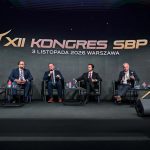
“The future depends on national federations building strong partnerships with governments and institutions.” Vlad Marinescu, president of the International Esports Federation (IESF), delivered that message during the opening debate of the 12th Sport Business Poland Congress in Warsaw. Speaking alongside representatives of the Polish government, the Olympic movement, professional football and European sponsorship, he argued that closer cooperation would put esports on a firmer footing in each country.
Marinescu credited the growth of esports to the players, organisers, volunteers and federations that built the sector over many years with little support from sports ministries or national Olympic committees. “The international federations and national federations are consistently working hard to prepare national teams that compete and bring home results,” he said. He called on governments to work with the organisations already preparing those teams. He also addressed officials who measure success by the medal table: “We cannot forget that the medals are not the only target, they are the first step in making national heroes.”
Esports as a gateway to sport
The IESF president rejected the idea that esports draw young people away from traditional sport. He argued that an interest in competitive gaming could encourage them to be more physically active and spend time with their peers in person. “What we must do is light the fire in the youth, to love sport, to love exchanging with their colleagues in a physical way. And I believe esports is the catalyst for that.”
Marinescu cited hand–eye coordination and quick decision-making as skills that gaming can help develop. He also challenged the image of a player isolated behind a headset, pointing out that many young people use games to communicate with others across languages and cultures. “Ultimately, the job of sport is to educate physically, mentally and socially,” he said.
Taking the case for esports to sports leaders
The opening debate asked who would shape European sport by 2040: technology, capital or the fans of the future. Joining Marinescu were Seweryn Plotan, chair of Sport Biznes Polska; Marian Kmita, acting president of the Polish Olympic Committee; Stuart Wareman, chair of the European Sponsorship Association; Marcin Animucki, president of the management board of Ekstraklasa, Poland’s top football league; and Piotr Borys, Poland’s deputy minister for sport and tourism.
For the IESF, the panel was a chance to make its case in a discussion about European sport as a whole. The ministry and the Polish Olympic Committee represented two types of institution whose support for esports, according to Marinescu, had come only recently. Ekstraklasa and the European Sponsorship Association brought perspectives from competition organisers and the sponsorship industry. The congress gave Marinescu an opportunity to set out how organisations outside esports could help the sector develop.
From Warsaw to the World Championship in Banten
The World Championship in Banten illustrates the role Marinescu sees for national federations. They prepare the players who represent their countries under IESF rules, and that is the structure on which he wants to build partnerships with governments. The IESF also pointed to a result with particular relevance for the audience in Warsaw: Poland won a gold medal at the 2022 World Championship in Bali.
The 18th World Esports Championship will return to Indonesia from 15 to 20 December. The IESF expects more than 400 athletes from 101 countries and more than 160 national teams to compete at ICE BSD City in the province of Banten. A total of US$500,000 in prize money will be shared across seven competitions.
 Last related articles