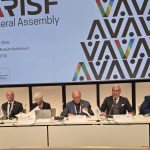
The World Anti-Doping Agency -WADA- brought together its president, Witold Bańka; its vice-president, Yang Yang; and its director general, Olivier Niggli, in Beijing this week with government representatives, anti-doping agencies and regional structures from Asia and Oceania. The agenda included the 21st Asia and Oceania Intergovernmental Ministerial Meeting on Anti-Doping in Sport, held on 1 June, and the 2026 Regional Symposium for Asia/Oceania, scheduled for 2 and 3 June at the China National Convention Center-II.
The main focus was the implementation of the 2027 World Anti-Doping Code and the International Standards, which will enter into force on 1 January 2027. WADA told more than 100 participants from 42 countries that the transition to the new framework will not depend only on sporting rules, but also on governments capable of funding their national programmes, supporting their anti-doping organisations and building solid legal frameworks. The underlying message is that, without public resources and strong national structures, the new Code may remain limited on paper.
Governments, funding and national responsibility
The intergovernmental meeting concluded with the adoption of a resolution recognising the role of governments in funding and supporting their national anti-doping programmes. The text also encourages public authorities to work in coordination with their National Anti-Doping Organizations -NADOs- and Regional Anti-Doping Organizations -RADOs- to implement the 2027 Code and Standards, turning regulatory preparation into a shared task between sport and public administration.
Bańka thanked the General Administration of Sport of China and the China Anti-Doping Agency as co-hosts of the meeting, and described the gathering as a “crucial” week for anti-doping in Asia and Oceania. “Governments will have a marked impact on the implementation of the 2027 World Anti-Doping Code and International Standards in the months ahead,” he said. The WADA president added that there is “a lot of work to be done” before 1 January 2027 and expressed confidence that ministers will prioritise the process in their respective countries.
 The risk of a strong Code on weak structures
Niggli’s intervention reinforced the most delicate part of the debate: the real-world implementation of the new system. WADA’s director general underlined the need for governments to commit adequate financial resources to their NADOs, develop strong legal frameworks and work with the agency to ensure compliance. The reading is clear: a more complete Code needs staff, budgets, operational independence, education, testing, investigations, results management and international cooperation.
“Meetings like the Intergovernmental Ministerial Meeting are important building blocks upon which governments can take tangible steps towards ensuring their countries are ready,” Niggli said. He also stressed the need for public authorities to provide national anti-doping organisations with sufficient financial and human resources so that the transition to the 2027 Code is seamless. That pressure on governments marks a relevant shift: WADA is not looking only at federations and sporting agencies, but also at those who must legally and economically support the system.
Education before control alone
Yang Yang introduced another central pillar for the new period: education. WADA’s vice-president argued that athletes need more than regulations, testing and sanctions. “They need guidance, encouragement, trusted mentors, and positive examples to follow,” she said. She also stressed that a young athlete’s first experience with anti-doping should come through education and support, not only through testing and disciplinary measures.
The WADA official recalled the role of the Anti-Doping Education and Learning platform -ADEL- and highlighted that the 2027 Code and the International Standard for Education include articles making education mandatory for minors competing internationally. For that obligation to reach athletes, coaches, support personnel and medical professionals, government backing will be decisive. Education therefore appears as a prevention tool, not just as a complement to enforcement.
The presence in Beijing of officials such as Yaya Yamamoto, Darren Mullaly, Tom May and Emiliano Simonelli, with interventions on development, government relations, compliance and other key issues, reinforces the practical dimension of the transition. WADA enters the final months before the 2027 Code with a clear priority: aligning governments, NADOs, RADOs and sporting structures so that the new framework becomes not only a regulatory update, but a real capacity for implementation. The meeting left an institutional and operational message: global anti-doping is built on common rules, but also on countries capable of funding, applying and teaching them.
 Last related articles