The World Anti-Doping Agency has begun reviewing one of the most delicate parts of its system: the ability of governments, Olympic committees and sports federations to influence the organisations responsible for testing their own countries’ athletes. On 16 July, WADA launched a consultation aimed at strengthening the operational independence of national anti-doping organisations from 2027, when the new World Anti-Doping Code will come into force.
The reform directly affects who decides which tests are carried out, which cases are investigated, how positive results are managed and who can intervene in those decisions. Many agencies depend financially on governments, while their senior officials are appointed through procedures involving political authorities. Although this relationship does not in itself prove interference, it creates a risk of control over procedures and outcomes, leading to differences between countries.
Russia: when the state controlled the testing system
Russia has shown how far this interference can go. The investigation commissioned by WADA and led by Richard McLaren confirmed in 2016 the institutionalised manipulation of the Russian anti-doping system. The Ministry of Sport, the national agency RUSADA, the Moscow laboratory and members of the Federal Security Service took part in a structure designed to conceal positive tests, swap samples and protect selected athletes.
The system became most notorious during the Sochi 2014 Winter Olympic Games, when samples were replaced through an opening in the laboratory wall before the bottles were returned apparently intact. Russia showed how a national agency can formally retain its responsibilities while the real decisions are made at other levels of the state.
China: a national investigation that inspired little confidence
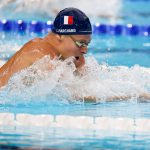
The more recent case involving China was different. Twenty-three Chinese swimmers tested positive for trimetazidine between 1 and 3 January 2021. China’s anti-doping agency, CHINADA, concluded that the athletes had been exposed to environmental or food contamination at the hotel where they were staying and closed the cases without finding any anti-doping rule violations. WADA reviewed the documentation, accepted the explanation and decided not to appeal the decisions. A subsequent independent investigation conducted by Swiss prosecutor Eric Cottier concluded that WADA had not shown favouritism towards China and described its decision not to appeal as reasonable.
However, the case left an uncomfortable question of trust hanging over the system. The initial explanation, the inspection of the hotel and much of the evidence came from the Chinese agency itself, while pandemic restrictions made an international investigation on the ground more difficult. Even if the conclusion was legally defensible, the system relied heavily on the work carried out by the national organisation responsible for assessing athletes from its own country. Criticism from other agencies, particularly the United States Anti-Doping Agency -USADA-, arose from this lack of external verification and from the fact that the positive tests were not initially made public.
Preparing for the Los Angeles 2028 Olympic Games
State involvement in doping began around five decades ago with the German Democratic Republic, which developed a systematic programme of forced doping over several decades and used sporting results as a political instrument. WADA’s reform aims to act before the next major case emerges by protecting the autonomy of those who order tests, investigate positive results and decide whether an athlete should be sanctioned.
The new rules will take effect in 2027 and will form part of the anti-doping framework for the Los Angeles 2028 Olympic Games. Within a few months, independence will be measured by the ability to investigate a country’s leading athlete without receiving a phone call, an instruction or a warning from outside.
 Last related articles