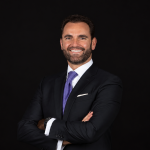
In the first exclusive conversation with ‘SportsIn’ of 2026, we sat down with Sasa Jeremic, president of AIDA, and the feeling is clear from the very first answer: apnea and freediving are not only growing, they are redefining themselves. And with that evolution come a new name, a new public identity and a future-oriented vision that aims to place this sport on a truly global stage under a single banner: World Apnea.
Looking back and analysing 2025 is, in Jeremic’s words, the best way to understand why this transformation was inevitable. “2025 was a year of extraordinary growth and consolidation for AIDA. With record figures for athlete participation and unprecedented country representation at the World Championships in Japan and Cyprus, AIDA once again confirmed its position as the leading global organization for freediving and apnea”.
A global sport in full expansion
The figures support that message. Freediving, for years perceived as a niche discipline, is now a sport with worldwide reach. “In 2025 alone, more than 350 AIDA competitions were held in over 50 countries, involving more than 6,000 athletes across all continents”, Jeremic explains. For the federation, this expansion is not just a matter of volume. “This global growth was accompanied by exceptional performance levels, with athletes from very diverse regions achieving top international results under AIDA regulations”.

At the centre of all this growth lies a non-negotiable principle: safety. Jeremic insists on this repeatedly, not as a slogan, but as a structural pillar. “One of the key focuses throughout the year was athlete safety”, she underlines. “Through sponsored and organised safety training programmes in the main freediving centres around the world, AIDA ensured the highest safety standards, allowing athletes to perform at their best”. The outcome of this approach is tangible: “This resulted in 10 new official AIDA World Records in 2025 and the registration of national records in 127 countries, over 33 years of existence”.
Regulations, science and integrity
That long-term vision was also reflected in regulatory evolution. In January 2025, AIDA introduced updated competition rules and new criteria for World Record-status events. According to Jeremic, the logic was clear: “These changes reflect a proactive philosophy, anticipating the evolving needs of the sport rather than merely reacting to incidents”. Behind these decisions lies constant scientific work that is rarely visible. “This progress was made possible thanks to continuous investment in medical and scientific research led by the AIDA Medical Committee and its associated researchers”.

Sporting integrity is another key pillar. “The fight for clean sport and fair play was another priority”, states the AIDA president. Collaboration with the World Anti-Doping Agency went beyond formalities. “In cooperation with WADA, AIDA participated in studies analysing substances not officially banned, but with potential performance-enhancing effects in apnea”. At the same time, the sport’s visibility took a significant step forward. “Sustained investment in promotion and close cooperation with athletes significantly increased the sport’s visibility. In 2025, apnea achieved greater exposure across major media outlets and online sports platforms worldwide”.
An ambitious calendar for 2026
All of this provides the foundation for approaching 2026, a year that AIDA faces with “great ambition and a clear vision”. The calendar is already defined, with two major events marked in red. “The AIDA Pool World Championships will take place in Budapest, Hungary, in early June 2026, and the AIDA Depth World Championships will be held in Limassol, Cyprus, in late September 2026”, Jeremic reveals.
But the roadmap goes beyond those events. “Under the World Apnea brand, we will focus on developing continental-level competitions with World Record status”, she explains. The objective is to maintain a common standard. “These competitions will follow organisational and safety criteria equivalent to those of the World Championships, responding to the growing needs of regional freediving communities while maintaining global consistency”.
Athlete support and a new identity
Support for athletes remains a central axis. “AIDA will continue supporting athletes through prize funds and development grants”, Jeremic assures. And there is room for growth. “Together with our sponsors and partners, we want to continue increasing these resources and provide stronger support for athletes at all levels”.
All these elements converge in the concept that now defines the federation’s future: World Apnea. The change, Jeremic insists, does not represent a break with the past, but rather its natural evolution. “AIDA has been setting global standards for freediving and apnea since 1992. Founded as a non-profit organisation in Nice, France, AIDA was born from the vision of passionate freedivers who wanted to formalise and structure breath-hold diving as a sport”.

From AIDA to World Apnea
More than three decades later, that vision has grown exponentially. “Over the past 33 years, the work of several generations has shaped AIDA into what it is today: a global federation made up of 61 national member organisations, representing freediving and apnea worldwide”. The evolution towards World Apnea follows a path already taken by other sports. “Following the example of other international federations with similar scale and global presence, AIDA is evolving its public identity towards World Apnea. This step reflects the natural progression from sport development to full global representation”.
What truly matters, however, remains unchanged. “AIDA / World Apnea remains exclusively dedicated to freediving and apnea, maintaining its independence, expertise and long-standing commitment to athlete safety and sporting integrity”, she emphasises.
A responsible outlook and thanks to the community
When asked about more sensitive issues within the sport, including incidents that occurred outside the AIDA framework, Jeremic adopts a cautious tone. “Rather than focusing on specific incidents or organisations, I believe this matter has already been addressed through AIDA’s consistent emphasis on safety, athlete welfare and proactive governance. A global sports federation must always communicate with responsibility, balance and respect”.
She prefers to close with a message of collective recognition and an invitation to the future. “I would like to sincerely thank the entire freediving community –athletes, instructors, coaches, safety divers, doctors, scientists, photographers, videographers, journalists, media partners, sponsors, national representatives, volunteers, the AIDA team and all freediving fans– for their dedication and support throughout 2025”.
And the final message is clear. “I invite everyone to continue this journey with us in 2026, moving forward under the World Apnea vision and entering together the next chapter of freediving’s global development”.
 Last related articles