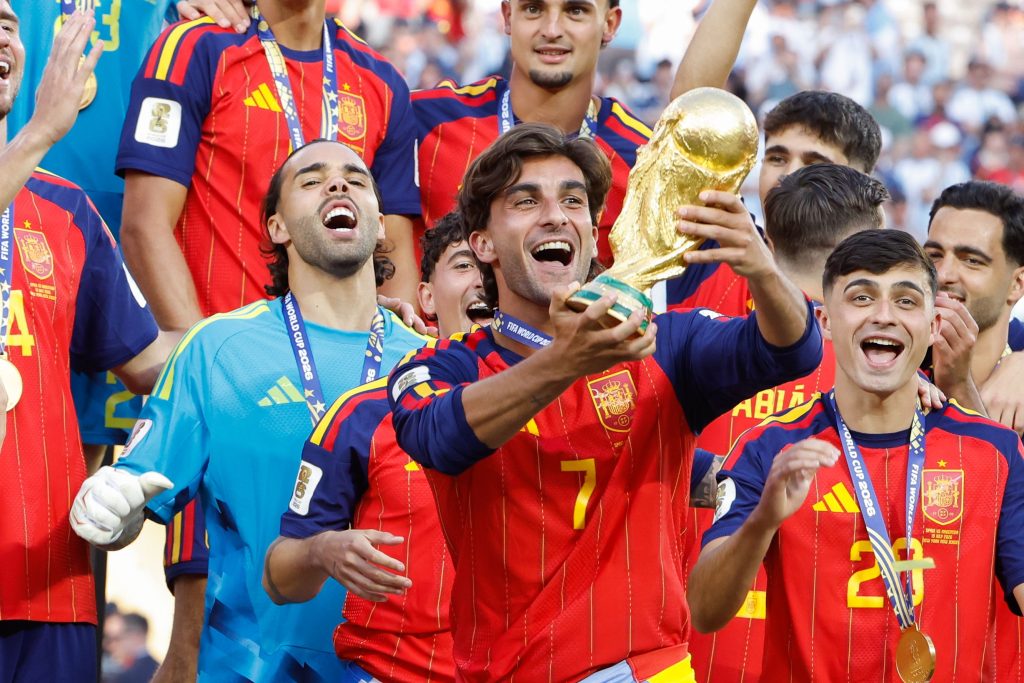
The 2026 FIFA World Cup will not only be remembered for the title won by Spain after defeating Argentina in a thrilling final, but also for transforming the business model of the tournament into the most important event in world football. The first edition featuring 48 national teams shattered every financial record, becoming the most profitable sporting event in history. With estimated revenues exceeding $9 billion, the competition confirmed that the expansion driven by Gianni Infantino has taken FIFA into a new commercial era.
The increase in participating teams, the expansion of the tournament to 104 matches, and the growth in revenue from broadcasting rights, sponsorships, and ticket sales were among the key factors behind the competition’s financial success. At the same time, FIFA significantly increased prize money, awarding $50 million to the champion while raising financial allocations for every participating federation as part of a strategy to strengthen football’s global reach ahead of the 2030 World Cup.
The World Cup expansion drove the biggest business in sports history
The expansion from 32 to 48 national teams allowed FIFA to significantly increase the size of its most valuable commercial asset. The 104 matches played over six weeks provided more content for broadcasters, additional opportunities for sponsors, and a greater number of tickets for fans. Even with ticket prices exceeding $10,000 in some cases and averaging close to $900, demand remained exceptionally high, reaching nearly 99% stadium occupancy during the group stage, according to Football Benchmark.
Behind this transformation is the strategy promoted by FIFA President Gianni Infantino, who has made the tournament’s expansion the central pillar of his administration. The executive has already proposed expanding the World Cup to 64 national teams in 2030, a move that would not only increase the tournament’s commercial potential but also allow more countries to participate in football’s biggest event. At the same time, FIFA announced that it will invest $2.7 billion in the FIFA Forward 4.0 program between 2027 and 2030 to finance football development projects across its 211 member associations, further strengthening its influence within the organization.
A historic prize for the champion and greater benefits for federations and clubs
The World Cup’s financial success was also reflected in the distribution of prize money. Spain, as tournament champion, received $50 million, the largest reward ever awarded in the history of the World Cup. The amount far exceeds the $42 million earned by Argentina after winning the Qatar 2022 World Cup and represents a $20 million increase compared to the $30 million received by the Spanish national team when it won its first world title at South Africa 2010. The runner-up received $33 million, while the third- and fourth-place teams earned $29 million and $27 million, respectively.
Participating federations also benefited from a significant increase in financial allocations. FIFA distributed a total of $871 million among the 48 national teams, a 15% increase compared to the previous edition. Each federation received $10 million for qualifying, along with additional funding for team preparation and operational expenses, bringing the total amount to nearly $16 million per participant. This was complemented by the club compensation program, through which clubs received daily payments for every player released to their national team, making organizations such as Atlético de Madrid and Barcelona among the biggest financial beneficiaries of the tournament.
 Last related articles