The educational momentum of World Gymnastics advanced with unusual strength in recent months, leaving its mark across four continents and in sports communities that differ greatly from one another. From technical workshops to Olympic Solidarity academies and camps for young athletes, each initiative reflected the conviction that education is a driving force that sustains the evolution of global gymnastics. The stories that emerged in countries such as Tajikistan, Bangladesh, Costa Rica, Mongolia, Egypt, and Estonia reveal not only technical progress but also the deep human value that arises when coaches, federations, and experts share a common purpose.
This international journey, particularly intense in November, showcased settings where sports education became a bridge between cultures, generations, and social realities. Whether in an introductory trampoline course in Dushanbe, advanced-level academies in Cairo, or development camps in Tallinn, each training space upheld a shared idea: gymnastics grows when those who teach it feel supported, recognized, and challenged. This educational ecosystem culminated with the first meeting of the Education and Licensing Working Group in Istanbul, a gathering that marked a starting point for a more structural approach to the future of learning in this sport.
Training programs that connect continents and methodologies
The period began in Tajikistan, where an Olympic Solidarity Trampoline Gymnastics course brought together 13 coaches under the guidance of Alexey Ryzhkov, creating a key learning space for a country seeking to strengthen its technical foundations. A few days later, in Bangladesh, the Young Athletes Development (YAD) project concluded its final training camp of the year, with 12 teenage gymnasts and seven coaches working intensively under the supervision of expert Damien Millot, who highlighted the positive environment driven by local commitment.
In Costa Rica, a course focused on the “Fundamentals of Gymnastics” brought together coaches from four countries and was led by Marco Bortoleto, Carmen Gómez Alcalá, and Esmeralda Rojas Campos, inspiring participants to renew their teaching methodologies. Meanwhile, Mongolia hosted a high-impact academy directed by Helena Dias and Silviya Miteva, an effort closely supported by Olympic and federative authorities, helping to raise the visibility of the sport’s growing presence in the country.
Specialized camps, technical work, and a global meeting in Istanbul
Egypt also became a key point in the educational itinerary with a level 3 academy in Cairo for Aerobic Gymnastics coaches, led by Olga Kyselovicova with support from Ana Margarida Macanita. The course, held at the El Maadi Olympic Center, was described by Kyselovicova as a space full of positive energy and a deep love for gymnastics, thanks to the local support led by academy director Gasser Ahmed. Meanwhile, Estonia hosted the third annual Parkour camp, led by Francisco De La Riva, where collaboration between the local community and the Estonian Gymnastics Federation was strengthened, with institutional presence from its secretary general, Margot Vosokov.
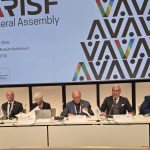
The cycle concluded with the first meeting of the Education and Licensing Working Group in Istanbul, chaired by Suat Celen, who brought together experts and academics from all continents. Over four days, the group reviewed the educational system of World Gymnastics and explored models to make it more sustainable and adaptable to the realities of each national federation. Celen expressed gratitude for the trust placed in him and highlighted the importance of the diverse perspectives represented, emphasizing the role they will play in shaping the future of gymnastics education worldwide.
 Last related articles