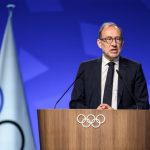
Just a few days ago, SportsIn analysed how the proposed amendments to the Olympic Charter appeared to strengthen the principle of neutrality and the independence of sport from external pressures. In that article, ‘IOC Changes to the Olympic Charter to Strengthen Neutrality‘, we explained that the reforms promoted by the IOC seek to protect athletes, competitions and sporting institutions from influences unrelated to sport while reinforcing the autonomy of the Olympic Movement.
Before that, another initiative was among the first to bring attention to this debate. An open letter from Astrit Hasani called on the IOC to eliminate the concept of neutral athletes and maintain the position that athletes should compete for their respective countries, above political considerations.
Perhaps all these ideas will soon materialise into something more concrete, as the next institutional meeting of the International Olympic Committee will take place on 24 and 25 June. Prior to that, from 22 to 25 June, the Executive Board will hold a series of meetings to discuss developments and reforms within the Olympic Movement. It is possible that the direction of travel will become clearer there.
The origin of the suspension
To understand the current situation, it is important to remember why the Russian Olympic Committee was suspended. Contrary to what is often perceived in the public debate, the IOC did not suspend the ROC simply because of the war in Ukraine. The decision adopted by the Executive Board in October 2023 was linked to the incorporation by the Russian Olympic Committee of sports organisations from the occupied Ukrainian regions of Donetsk, Luhansk, Kherson and Zaporizhzhia.
The IOC concluded that this measure violated the territorial integrity of the National Olympic Committee of Ukraine and therefore constituted a breach of the Olympic Charter. If the suspension was based on a specific violation of the Olympic Charter rather than directly on the geopolitical conflict itself, what happens if that violation no longer exists?
Signs pointing towards change
Various sources maintain that the Russian Olympic Committee has modified its structure and removed the elements that originally triggered the suspension. At the same time, the IOC has already lifted the restrictions imposed on Belarus while maintaining that the Russian case remains under legal review.
For decades, different Olympic leaders have argued that athletes and sports organisations should not automatically bear the consequences of decisions taken by governments. Political neutrality and the autonomy of sport have been recurring elements of the Olympic narrative for generations.
A division within the Olympic Movement
If the IOC ultimately reinforces this principle through amendments to the Olympic Charter or future institutional decisions, the consequences will extend far beyond the Russian case.
Many National Olympic Committees across Africa, Asia and Latin America have spent years defending a strict interpretation of neutrality and have expressed concern about the selective application of political criteria within international sport. For many of them, the autonomy of the Olympic Movement represents one of the fundamental pillars of sports governance.
However, opposition is also likely to be significant. Ukraine will almost certainly continue to oppose any process that facilitates Russia’s reinstatement. Poland, the Baltic States and several Nordic countries may take a similar position, arguing that the debate cannot be separated from the consequences of the war and the need for accountability. The European Union itself could also take a critical stance. Beyond Europe, countries such as the United States or Australia may not look favourably on such decisions either.
This could become one of the deepest divisions the IOC has faced in recent years. On one side is the desire to preserve sport as a neutral and independent space. On the other is the belief that certain geopolitical circumstances require exceptional measures.
Much more than Russia’s return
That is why the key question may no longer be whether Russia will return to the Olympic Movement. The more important issue seems to be under what legal and philosophical framework such a return could take place.
If the recent signals ultimately prove accurate, the real story will not simply be Russia’s return. The real story will be the potential return of the IOC itself to a doctrine that has historically maintained that sport should remain separate from politics whenever possible. The coming weeks may provide the first answers as to whether that is once again becoming the direction chosen by the Olympic Movement.
 Last related articles