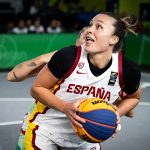
Marta Canella returned from Antwerp with a silver medal after Spain reached the final of the FIBA 3×3 Europe Cup. The team of Canella, Txell Alarcón, Gracia Alonso de Armiño and Helena Oma defeated Belgium and Azerbaijan in the knockout rounds before losing 16-13 to the Netherlands. A one-legged two-pointer from the Galician proved decisive in the semi-final. The result gave Spain a fourth consecutive European podium and earned Canella another continental medal five years after winning the competition in 2021.
The 31-year-old will now move directly from the end of the 3×3 season into the start of the Liga Femenina Endesa campaign with her new club, Meins Avenida. Between those two moments lies a career that began with a hoop installed in her family’s garage, almost ended when two doctors told her that she might never play sport again and was rebuilt while she studied, worked as a data analyst and used her holidays to represent Spain. It took Canella several years to make basketball her sole profession, but she first had to learn how to play with two knees that could have brought her career to a premature end.
The basketball hoop that ended up broken
Canella started playing because of Xosé Luis, her physical education teacher in the third year of primary school, who encouraged her to attend training sessions with Airexa de Nigrán. Her father had also played basketball and installed a hoop in the family garage. For a while, she combined basketball with football before eventually choosing the court. “I wanted to spend all day playing basketball,” she later explained. The makeshift facility survived much of her early development, although it did not reach her adulthood intact: “It is badly damaged. I really wore it out.”
Her progress took her into the Celta academy and, on 29 October 2011, to her debut in Spain’s top division against Basket Zaragoza. She was 16 years and eight months old and played almost 27 minutes because two of the senior team’s point guards were injured. “I was a bundle of nerves,” she recalled. Four years later, she won the European Under-20 Championship with Spain. She had initially been called up because other players were unavailable through injury and informed the coaching staff about her knee problems from the outset. Her place was not guaranteed, but she earned it during the training camp. That medal came before her relationship with basketball stopped depending solely on her performances.
Two diagnoses at the age of 21
At 21, Canella was diagnosed with grade four chondromalacia in both knees, a serious loss of cartilage for which, in her case, there was no surgical solution compatible with the demands of elite sport. Two doctors told her that she would not play again and might not even be able to practise any sport. Canella did not immediately reject their conclusions or decide that she would continue regardless. She gathered information, sought further opinions and consulted professionals accustomed to treating athletes. Some agreed that returning would be difficult and painful, but believed it was still possible. “I only considered retirement until I had enough information to know that I could continue playing,” she told ‘Cronómetro de Récords’.
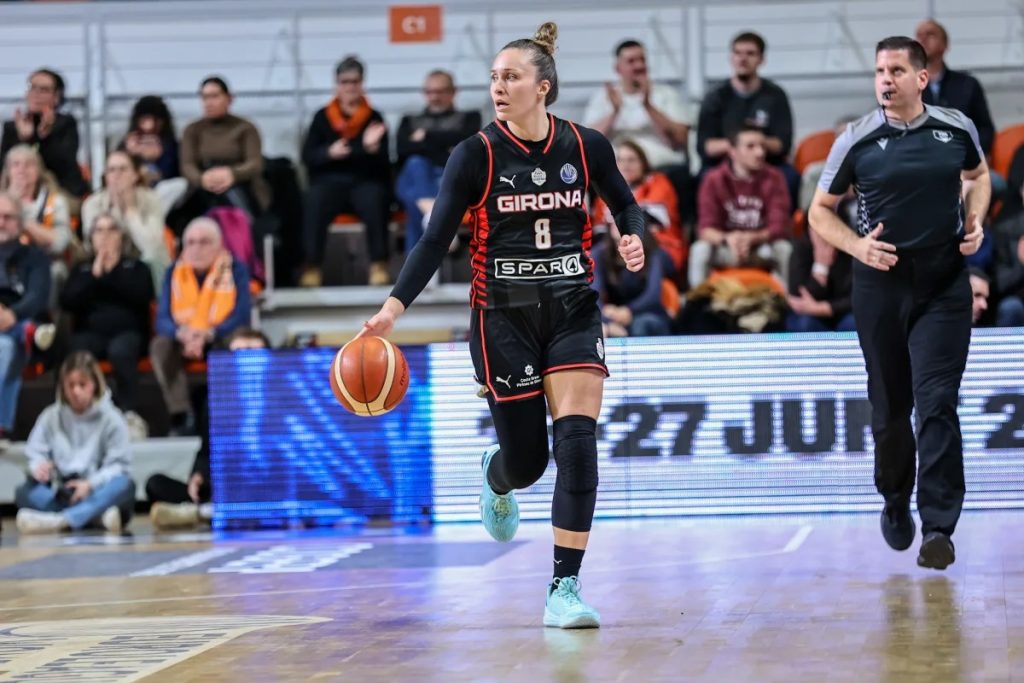
The condition required her to recognise how much she could demand from her body during each training session and game. “It is like a constant tug-of-war with your body. This is what I have been dealt and there is no solution,” she explained. The discomfort was particularly noticeable after competing; during games, the adrenaline allowed her to forget about it. Because the diagnosis arrived at the beginning of her adult life, she eventually incorporated it into her idea of normality. “I wish I did not have it, and everything would probably be much easier, but for me this is normal.” An Erasmus stay in Belgium later provided a break when she had become overwhelmed by the injury. She turned down the opportunity to play there and instead focused on the academic and personal experience. “It toughens you up and forces you to find your own way. It made me return to basketball with much more enthusiasm.”
When holidays also meant basketball
Aros León provided the environment in which she began to feel like a basketball player again and helped her understand her physical limits. Canella continued competing while completing a degree in Business Administration and Management and later a master’s degree in business intelligence. Her studies influenced several sporting decisions: she rejected opportunities in the top division to remain in places where she could continue combining both activities. She later joined Barça CBS and added a third occupation. She worked as a data analyst for a multinational company from 8am until 5.30pm and went directly to training after finishing her working day. When she began receiving call-ups from Spain’s 3×3 team, she used part of her annual leave to attend training camps and tournaments.
That combination produced her first senior European title in 2021, on a court installed beside the Eiffel Tower in Paris. “You enjoy 3×3 enormously, and the rewards are very immediate,” she told ‘La Voz de Galicia’ at the time. A year later, after helping Barça earn promotion to the top division, she left her job to focus entirely on sport for the first time. The decision was not driven by financial improvement. “Financially, it does not pay off. Basketball is a short-term project. The other career is for the rest of your life,” she admitted to ‘Relevo’. After four seasons in Barcelona and three with Spar Girona, where she also competed in EuroLeague Women, Meins Avenida recruited her for the 2026/27 campaign because of her ability to play in several positions. The silver medal in Antwerp opens that new chapter after she achieved the objective she had set herself at the beginning of Spain’s rebuilt 3×3 cycle: returning to a major tournament and competing for medals again. “This silver says a great deal about all the work behind Spanish 3×3 basketball,” she said.
 Last related articles