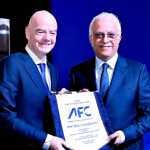
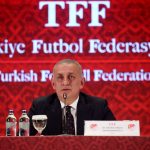
The Asian Football Confederation (AFC) approved amendments to its Statutes in Tokyo on Friday, 23 October, affecting its electoral timetable. The decision puts the continuity of Salman bin Ebrahim Al Khalifa’s leadership at the centre of the debate: the proposal examined before the vote envisaged keeping the current officials in office throughout 2027. Adoption has been confirmed, although its implications must still be checked against the final text.
According to an investigation published on 22 October by The Asian Game, the proposal retains elections at the 2027 Ordinary Congress but delays the elected officials’ assumption of office until 1 January 2028, for a cycle described as 2028–2032. The outlet calculates that this would extend the current leadership’s tenure by approximately 11 months. That consequence is based on the document circulated before the vote and remains subject to verification against the version ultimately adopted.
The AFC’s official explanation points to exceptional circumstances arising from FIFA’s forthcoming changes to the international calendar. The confederation says the transitional provisions aim to keep its electoral and competition cycles aligned, following consultation with football’s world governing body. Its statement, however, does not reproduce the adopted clauses or specify when the affected terms of office begin and end.
Support for Infantino and the rules at home
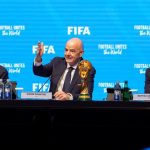
The reform coincides with Salman’s public endorsement of Gianni Infantino’s re-election, following his criticism of the FIFA Forward Enterprise project and the way it had been handled. According to Reuters, both leaders indicated in Tokyo that their differences had been resolved, while Infantino also backed the Asian president’s continued leadership. That political convergence does not establish that electoral support and the statutory amendments were part of an exchange.
Adjusting the calendar may address a legitimate organisational need. But, if the mechanism described is confirmed, that adjustment would also give the officials facing election additional time in office. Both consequences can coexist. The AFC therefore needs to explain why this continuity is necessary and how it ensures that its members understand the implications before electing the next leadership.
Questions over terms of office
The Asian Game’s analysis identifies two further uncertainties: precisely when the period described as 2028–2032 would end, and how the transition would align with the four-year mandates of Asia’s representatives on the FIFA Council. The prior consultation cited by the AFC does not, in itself, establish that FIFA has formally approved each of those implications.
 Last related articles