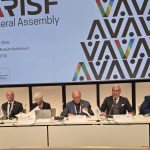
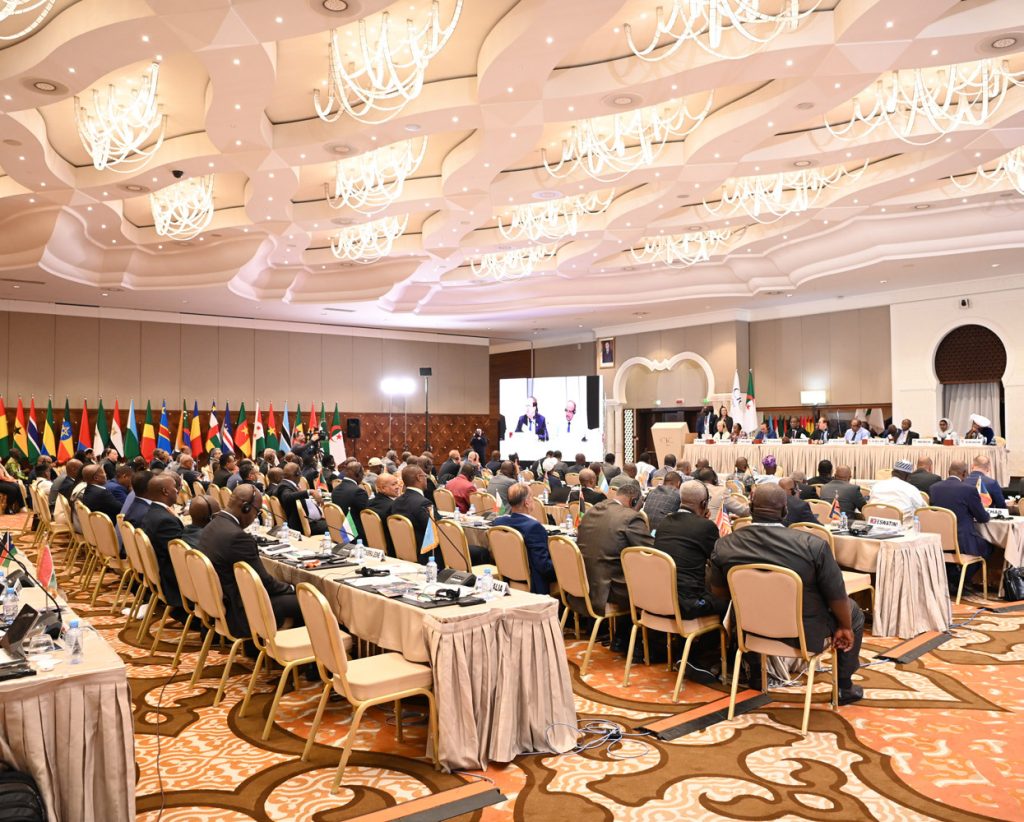
The Association of National Olympic Committees of Africa –ANOCA- held an Extraordinary General Assembly by videoconference on 19 June 2026, chaired by Mustapha Berraf, with 52 of the 54 African National Olympic Committees taking part. The meeting delivered three main messages: unanimous support for Berraf’s candidacy for the presidency of the Association of National Olympic Committees -ANOC-, confirmation of progress towards the African School Games 2027 in Abuja and the announcement of a $1 million annual partnership dedicated to African youth.
Support for Berraf was one of the central points of the session. African committees recalled that no leader from the continent has ever chaired ANOC and approved a motion giving their “unconditional, full and complete support” to the ANOCA president’s candidacy. The text also called on the African Olympic and Sports Movement to unite behind the bid and encouraged National Olympic Committees from other continents to support the African proposal.
An African candidacy for ANOC
The motion framed Berraf’s candidacy within a continental reading. African representatives highlighted the consolidation of unity among the 54 National Olympic Committees, the development of sports infrastructure, the training of leaders, increased support for athletes and Africa’s growing influence on the global sports stage. They also praised his “decisive contribution to the cause of Olympism” and reaffirmed their confidence in his ability to lead ANOC to further progress.
The Assembly thus linked the institutional debate to a question of representation. Berraf’s candidacy is not presented only as an individual aspiration, but as an opportunity to strengthen Africa’s presence in international Olympic governance. At a time when the continent is preparing major youth events and looking towards a key cycle, ANOCA is seeking to project an image of internal cohesion and external ambition.
Abuja 2027 and African school sport
The second major focus was the preparation of the African School Games 2027, scheduled to take place in Abuja. The Assembly reviewed and approved the Coordination Committee’s report presented in the Nigerian capital on 9 and 10 June, which highlighted the commitment of the Federal Government of Nigeria and the National Sports Commission. It also confirmed progress by the local organising committee, already established and supported by 14 specialised subcommittees.
Members endorsed the principle of a broad sports programme, with more than 20 disciplines and around 2,500 young athletes. Clarification is still required on the final schedule and accommodation plans, which will be addressed with the Nigerian authorities in the coming weeks. Beyond the organisation of the event itself, Abuja 2027 appears as a central piece of ANOCA’s strategy to place youth at the heart of African Olympic development.
A broader continental agenda
The Assembly also addressed other projects on the African calendar, including the African Beach Games, scheduled for Equatorial Guinea, and the African Youth Games, to be held in Ethiopia. In that context, Berraf expressed his intention to award the African Olympic Order of Merit to the president of the Republic of Equatorial Guinea, in recognition of his personal commitment to the growth of the Olympic Movement in Africa.
The meeting also concluded with the announcement of a partnership with a non-profit organisation, which has committed to providing sports equipment worth $1 million per year to 50 OlympAfrica centres. The aim is to benefit disadvantaged young people across the continent and strengthen a network that ANOCA presents as a tool for education, training and personal development. “The General Assembly demonstrated, once again, the unity and institutional maturity of the African Olympic Movement,” said Berraf, who added that National Committees are committed to making 2027 a historic year for Africa.
Dakar 2026 as a test for Africa
Before 2027, the continent will have an event of special symbolic and operational importance with the Dakar 2026 Youth Olympic Games, the first Olympic event organised in Africa. In his message marking ANOCA’s 45th anniversary, Berraf described the event as “a historic milestone for Africa” and argued that the continent has the capacity to host, inspire and succeed. Dakar 2026 will therefore act as a test of visibility, co-ordination and confidence for the African Olympic ecosystem.
The anniversary also allowed ANOCA to connect its current agenda with its historical trajectory. The organisation was founded on 28 June 1981 in Lomé and reaches its 45th anniversary with 54 National Olympic Committees and seven development zones. In his message, Berraf paid tribute to the association’s founders, highlighted the role of African athletes and stressed that every medal won by the continent represents more than a sporting result, describing it as an expression of sovereignty and international presence. The milestone also comes at a moment of strong symbolic meaning for African Olympism. For the first time, the International Olympic Committee -IOC- is led by an African woman, Kirsty Coventry, a circumstance Berraf presented as a source of pride for the entire continent.
 Last related articles