The Olympic Refugee Team remains one of the most debated legacies introduced to the Olympic Games under former International Olympic Committee President Thomas Bach. First unveiled at Rio 2016, the initiative has steadily expanded, reaching 36 athletes at Paris 2024, with nearly half originating from Iran.
A limited number of these athletes, including Syrian boxer Wessam Salamana, Saeid Fazl Oli, Javad Mahjoub, and Kimia Alizadeh, were once among the leading competitors in their home countries. The majority, however, had moved away from elite-level competition or were no longer performing at the standard required for national team selection, let alone Olympic qualification.
A significant number of these athletes have benefited from Olympic Solidarity scholarships during their transition. While the humanitarian dimension of the project is clear, its sporting output has remained limited.
Cindy Ngamba, the Cameroonian boxer who relocated to the United Kingdom as a child and developed within the British boxing communities, made history at Paris 2024 by becoming the first refugee athlete to win an Olympic medal, claiming bronze. She remains the only member of the Olympic Refugee Team to have achieved this milestone. Other athletes competing under the IOC refugee banner have yet to reach the Olympic podium.
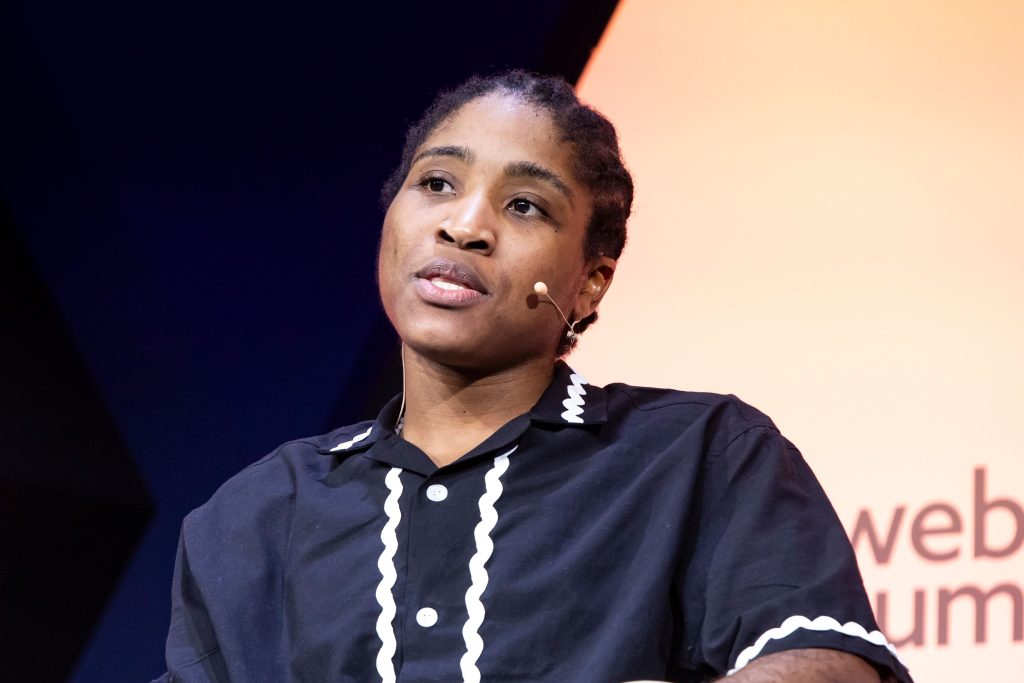
Cindy Ngamba
Kimia Alizadeh, Iran’s first female Olympic medallist, represents a distinct case. She won bronze at Rio 2016 in the under-57 kg taekwondo category before seeking asylum in Germany in January 2020. She cited enforced dress codes and the political use of athletes within Iranian sport as key reasons for her decision.
Alizadeh later competed for the Olympic Refugee Team at the Tokyo Games but did not reach the podium. She subsequently acquired Bulgarian citizenship to continue her Olympic career and competed at Paris 2024 under the Bulgarian flag. Her preparation within the Bulgarian team was overseen by Farzad Zolghadri, the son of Hassan Zolghadri, a highly ideological figure within the Iranian Taekwondo Federation at the time Alizadeh was competing for the Iranian national team. According to publicly available reports, Hassan Zolghadri has also been described as a senior member of the Islamic Revolutionary Guard Corps.
The origins of this initiative lie in the refugee crisis triggered by the war in Syria, which brought global attention to the scale of forced displacement. In 2017, Bach established the Olympic Refuge Foundation in partnership with the United Nations High Commissioner for Refugees (UNHCR). The move was widely welcomed in humanitarian circles. However, the initiative has yet to establish a clearly defined, merit-based pathway for identifying and supporting refugee athletes whose careers were disrupted by conflict.
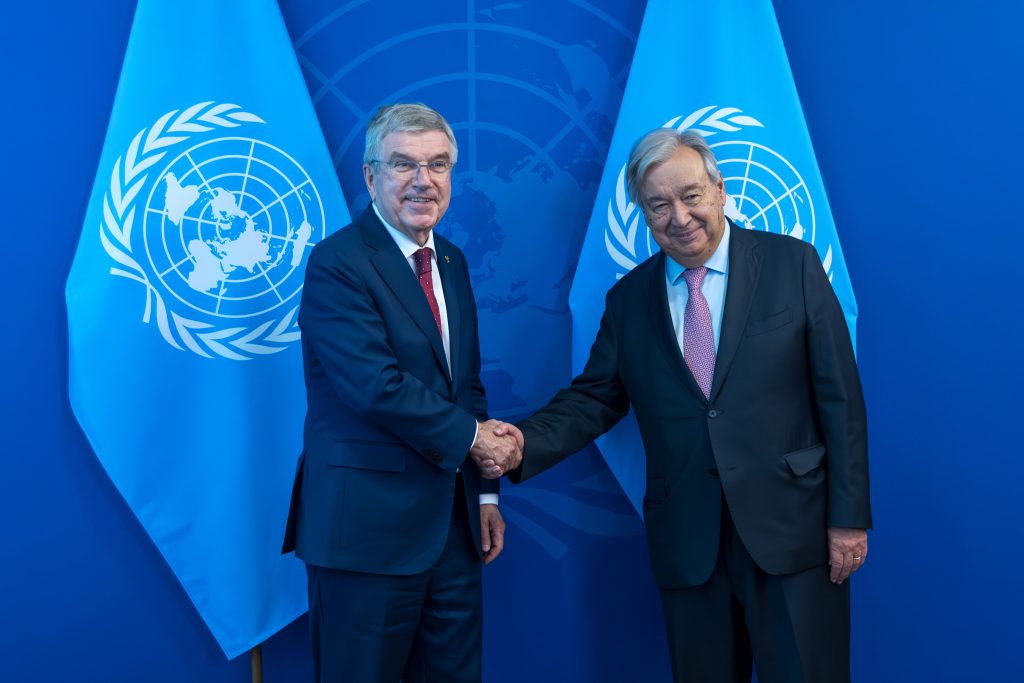
Antonio Guterres and Thomas Bach
It is important to note that the foundation was not originally designed to build an Olympic-level team. Its stated mission focuses on using sport to improve mental health, promote peace, and foster social cohesion among displaced populations.
In this respect, the foundation has delivered measurable results. Through sustained investment in refugee camps across Africa, Asia, and Europe, it has reached hundreds of young people, providing structured sporting activities to help address trauma. Funded through Olympic broadcasting revenues and commercial income via Olympic Solidarity, these programmes have benefited from a level of financial continuity that is uncommon in humanitarian initiatives.
The principal governance challenge emerges at the elite-performance level. A clear disconnect persists between grassroots programmes and the identification of athletes capable of competing at Olympic standard. There is no structured talent identification system within the foundation, and selection processes often depend on referrals from federations rather than a transparent and globally coordinated mechanism.
The result is a team with strong symbolic value but limited competitive depth. The Olympic Refugee Team highlights an important humanitarian cause, yet as a high-performance sporting project, it continues to raise fundamental questions about credibility and purpose.
 Last related articles