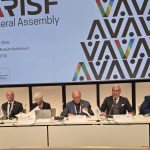
The International Hockey Federation (FIH) has opened a new space for dialogue to address some of the challenges athletes face both on and off the field. The first FIH Athletes’ Forum, held alongside the FIH Hockey World Cup 2026, brought together members of the Athletes’ Committee, players and young athletes participating in the Young Ambassadors Programme, as well as representatives of the Olympic Movement, with an agenda focused on representation, wellbeing and the future of those who shape hockey.
More than simply an opportunity for discussion, the meeting highlighted the need for athletes to have meaningful participation in the decisions that will shape the development of their sport. The conversation focused on four key areas: the vision of the FIH Athletes’ Committee, the IOC’s Athlete365 platform, mental health and career transition. Through different experiences, the Forum also provided an opportunity to explore how athletes can be supported throughout their careers and prepared for the changes that come once they leave elite competition.
Athletes’ voices as part of decision-making
The Forum brought together a diverse representation from hockey and the Olympic Movement, including figures such as Camila Caram and PR Sreejesh, co-chairs of the FIH Athletes’ Committee; Kim Bui, IOC member and member of the IOC Athletes’ Commission; international umpire Irene Presenqui; and Athletes’ Committee members Andrew Charter, Catherine Thaggard-Fabiano, Jacqueline Mwangi, Mohamed Mea and Cesar Garcia. Hockey Olympian Hugo Inglis, winner of the IOC 2025 Climate Action Award, also took part. The diversity of profiles allowed the needs of athletes to be addressed from different stages and experiences within the sport.
One of the central points was the difference between being represented and actually having the ability to influence decisions. The meeting highlighted the need to create spaces where athletes can share their experiences and participate in decisions that directly affect their present and future. This approach also extends to younger generations, with particular attention to young athletes who are beginning to become involved in sporting structures. The aim is for their participation to go beyond listening or receiving information, allowing them to develop the tools needed to play an active role in decision-making processes.
Mental health and preparation for life after sport
Mental wellbeing was a priority throughout the discussions. The career of an elite athlete is shaped by physical demands, competitive pressure, public exposure and decisions that can have consequences beyond a single season or Olympic Games. For this reason, the Forum addressed the need to develop mechanisms that support athletes not only while they compete, but also during the different transitions that form part of a sporting career. In this context, the IOC’s Athlete365 platform was highlighted as a tool to expand access to resources and support for athletes.
FIH President Tayyab Ikram identified mental health and wellbeing as priorities on the organisation’s agenda and called for action across the entire hockey ecosystem. His proposal also seeks to strengthen athlete representation structures from the FIH itself through to Continental Federations and National Associations, creating forums where athletes can express themselves. At the same time, he focused on preparing the younger generation to take on responsibilities in decision-making, linking sporting development directly with athletes’ ability to participate in shaping their own future.
 Last related articles