GRAVITEO Urban Sports Festival will hold its first edition from 17 to 19 July 2026 at the Circuit de Barcelona-Catalunya, with a mix of urban sports, urban culture, music, food, brands and public participation. The event, promoted by Prensa Ibérica and Fira Circuit, with institutional and federative support, will bring together official competitions in climbing, skateboarding, roller freestyle, scooter and Nordic walking, as well as open events for amateurs and experience areas for the public.
The arrival of GRAVITEO fits into a broader change at the Circuit. The Montmeló venue has not stopped placing motorsport at the centre of its identity, but the operation of an infrastructure of this size can no longer depend only on major Formula 1, MotoGP or endurance competitions. The strategy is to add activity across more days of the year, attract new audiences and generate complementary revenue that also helps sustain the sporting business of motorsport.
GRAVITEO, an urban festival with a federative base
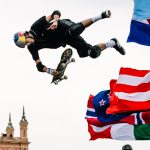
The competitive core of the festival is built around eight official events. In climbing, the programme includes the European Boulder Championship and a World Climbing Europe Series speed event, as well as the Spanish Nordic Walking Cup. In wheeled disciplines, the Royal Spanish Skating Federation will oversee the Spanish Skateboarding Championships in Street and Vert, the Spanish Roller Freestyle Championships in Street and Vert, and the Spanish Scooter Street Championship.
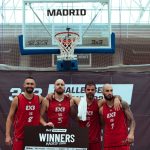
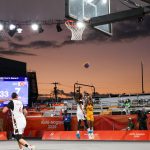
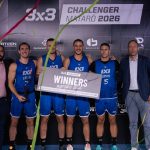
The approach, however, is not limited to elite competition. GRAVITEO will include popular running, skating and duathlon events, as well as basketball 3×3, pickleball and hybrid strength-and-endurance circuit exhibitions. Entry and parking will be free with prior registration, within a format that seeks to combine championship, festival and public participation. The organisation expects to bring together more than 700 athletes and attract thousands of visitors over the three days.
 Urban sport designed as an experience
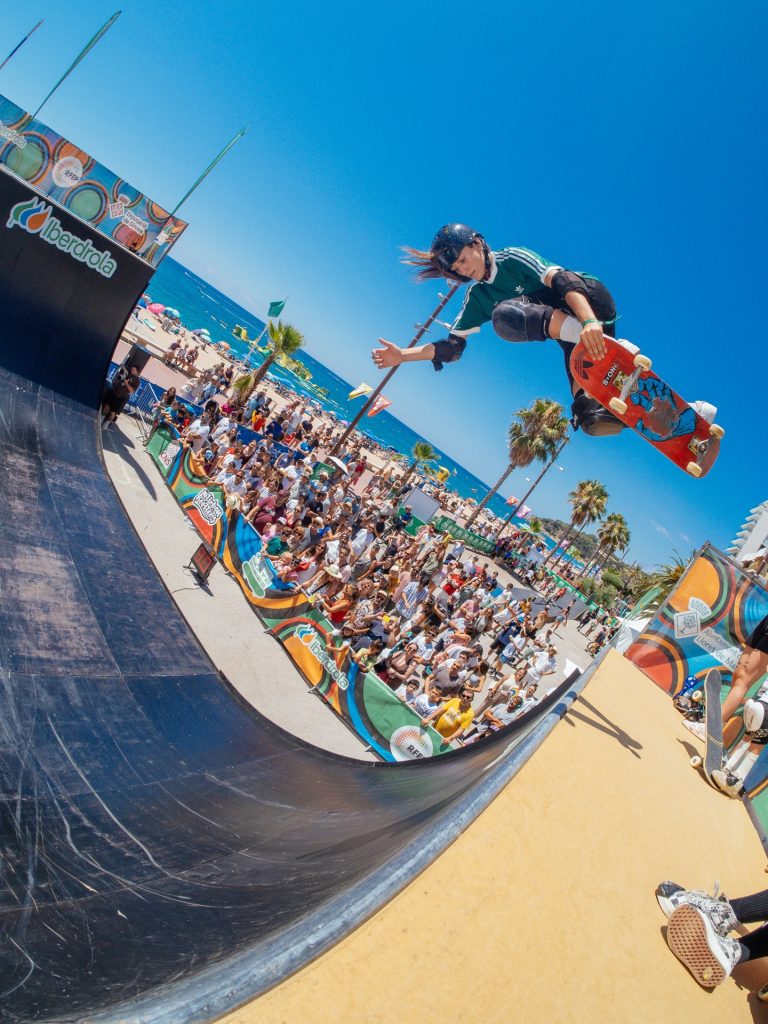
The festival represents an increasingly common way of presenting urban sport: not only as competition, but as an experience event. Live music, DJ sessions, food trucks, brand areas, exhibitions and public activities will accompany the official competitions. That combination allows the Circuit to operate as a sports venue, but also as a cultural, commercial and leisure space.
From the federative perspective, the event is also being framed as an opportunity. Bernat Clarella, president of the Spanish Federation of Mountain and Climbing Sports, described it as a chance to place Catalonia at the centre of international climbing and highlighted the combination of national competitions, international events and popular activities. From the Government of Catalonia, sports minister Berni Álvarez has linked this type of project to a vision of “360-degree sports”, in which sport is also understood through its social, territorial and economic impact.
The Circuit as a year-round business platform
That model connects with the new stage of the Circuit de Barcelona-Catalunya under the commercial operation of Fira Circuit. In 2025, the first full year with Fira de Barcelona in charge of management, the venue closed with €46 million in revenue, 7% more than the previous year, and pre-tax profit of €2.7 million. Fira Circuit also paid an annual fee of €11.5 million to Circuits de Catalunya, above the €9 million initially expected.
The key to the change lies in venue occupancy. The Circuit recorded its highest activity level in the last decade in 2025, with more than 650,000 visitors and very high annual occupancy. Racing remains essential, but the calendar is increasingly completed with corporate events, business meetings, hospitality experiences, cultural activities, music, innovation, mobility and leisure. The logic is not to replace motorsport, but to make better use of an infrastructure that for years concentrated much of its value in a handful of race weekends.
More uses to keep motorsport at the centre
The Circuit Strategic Plan had already pointed in that direction before Fira Circuit entered the picture. The roadmap proposed a more sustainable, innovative, industrial and digital model, linked to mobility, the automotive sector, Industry 4.0, fairs, congresses, live music, other sporting events and e-sports. In that vision, Montmeló had to remain an international competition benchmark, but also become a driving infrastructure for new economic and technological uses.
GRAVITEO fits into that strategy because it opens the Circuit to disciplines and audiences that do not necessarily arrive through Formula 1 or MotoGP. The festival does not change the venue’s economics on its own, but it does exemplify the model being built: more days of activity, more formats, more corporate and cultural business, and greater capacity to turn the Circuit into a year-round platform. That diversification helps motorsport remain viable in Montmeló, rather than displacing it, within an infrastructure seeking profitability without losing its main sporting identity.
 Last related articles