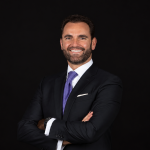
Kakhi Kakhiasvili, the three-time Olympic gold medallist in weightlifting from Georgia, is widely regarded as his country’s first Olympic medallist in the post-Soviet era. Competing at the 1992 Barcelona Olympic Games as part of the Unified Team following the dissolution of the Soviet Union, his medal was ultimately recorded for Georgia, marking an important moment for the nation in international sport.
In Georgia, Kakhiasvili is often referred to as the “father of 50 children”, a recognition of his long-standing role in developing young weightlifters. Within Olympic training centres, he has been actively involved in mentoring and supporting promising athletes, offering both guidance and practical support to the next generation.
He also completed and published the unfinished book of his late coach, Vano Grikurov, who passed away during the COVID-19 period. For Kakhiasvili, Grikurov was more than a coach, serving as a mentor, friend and father figure who played a decisive role in shaping his sporting career.
Having grown up and competed within the highly competitive Soviet weightlifting system, Kakhiasvili became a six-time consecutive national champion of the USSR prior to his Olympic breakthrough in Barcelona, a level of dominance he has often described as coming from an environment where success was never easily achieved.

Today, Kakhiasvili serves as Vice President of the Georgian Weightlifting Federation. I had the opportunity to meet him in Batumi and conduct this exclusive interview for SportsIn.
Kakhi, thank you for giving me this opportunity to write about you in SportsIn. I would like to begin with the Soviet Union period, when you first reached the path that led you to the Barcelona Olympic Games. How was weightlifting structured in the Soviet Union at that time?
Weightlifting in the Soviet Union was extremely strong. The level of competition was very high and very close, and earning a place in the national team was not easy. To qualify for the Barcelona Olympics, I had to win six domestic tournaments. Even after joining the national training camp, the situation did not get easier.
In the 90kg category, there was another lifter who was strongly supported by the head coach at the time, Vasili Alexeev. Despite all the efforts made to keep me behind in the selection process, I managed to win the national title in that category by a margin of 250 grams and secured my place in the Soviet team for the Barcelona Olympics.
The Soviet Union was a very powerful sporting nation. Sport was highly valued and significant resources were allocated to it. Experienced sports specialists and medical staff supported the athletes. In many ways, sport was one of the tools used to demonstrate the country’s strength both domestically and internationally, and for this reason it received strong state attention.

You competed for the Unified Team at the 1992 Barcelona Olympic Games, yet your gold medal was ultimately recorded for Georgia. How did that situation unfold, and what led to that decision?
First, I should say that my coach, Vano Grikurov, was not officially registered as part of the Soviet national team. I insisted that he travel with me to Barcelona, despite resistance from the head coach at the time, Vasili Alexeev. His presence proved crucial. He gave me confidence and support on the way to winning my first Olympic gold medal.
The Barcelona Games took place during a period of major political change, with the collapse of the Soviet Union and the emergence of newly independent states, including Georgia. After my victory, I refused to step onto the podium under the Russian flag, which was widely seen as the successor to the Soviet Union.
At the same Games, there had already been controversy involving another athlete from the region. A Chechen competitor, who had promised his people a gold medal, finished third and reacted by throwing away his bronze medal during the ceremony. His action was judged as disrespectful to the Olympic Games, and he received a lifetime ban. That incident made the atmosphere even more tense.
My situation, however, was different. I had won, but I initially refused to go onto the podium because of the flag. It was a form of protest, and I was fully aware of the risks. The Olympic Charter is both principled and strict, and there was a strong possibility that I could face sanctions.
There was confusion among the organisers. They were saying that the athlete who lost the day before did not want to accept his bronze medal, and now the one who had won did not want to step onto the podium either.
Everything changed when I showed them the Georgian flag draped over my shoulders. At that moment, they understood. The organisers quickly replaced the Russian flag with the Georgian one.It became a moment of pride. The victory was celebrated not only in my hometown of Tskhinvali, but across Georgia as a whole.

It is understood that Vano Grikurov held a role in your life that went far beyond that of a coach. Would you like to speak about him and his influence on you?
He was like a father to me. He was my teacher and my friend. He had a major influence on my life, and I spent most of my time with him. In many ways, I was with him even more than I was with my own family, and he played a decisive role in my sporting success.
I started weightlifting when I was twelve years old. Vano was our neighbour and used to watch us play football. He thought I was physically very weak and wanted to improve my strength. At first, when he invited me to his gym, I thought he was going to teach me boxing. Later I realised he was a weightlifting coach.
Weightlifting in Georgia owes a great deal to Vano Grikurov. In addition to myself, he introduced many athletes to Olympic-level weightlifting. Unfortunately, he passed away during the COVID-19 period.
Giorgi Asanidze and I completed his unfinished book and published it. In that book, he also wrote about me and how I went through my journey to becoming a champion. I am planning to publish an English translation of the book as well. I will give you a copy of it now so you can keep it as a memory from me.
You led the Georgian Weightlifting Federation for many years and oversaw the hosting of the 2019 European Championships. Today, Lasha Talakhadze has taken on a leading role within the federation. During your presidency, he achieved remarkable success, including three Olympic gold medals. How do you reflect on his career and your role in that period?
I have three Olympic gold medals. I had hoped that Lasha would surpass my record and win a fourth Olympic title before moving fully into a leadership role. He is an exceptionally technical lifter and had the ability to achieve that. Unfortunately, injuries prevented him from reaching that goal.
In 2019, during my time as president of the federation, we hosted the European Championships. The organisation was rated very highly and received positive feedback from the then president of the European Weightlifting Federation. I have promised Lasha that I will support him in delivering an even better edition of the European Championships in Batumi in 2026. For this event, prize money of 144,000 euros has been allocated, and referees and guests have been accommodated in hotels of an appropriate standard.

When I took over the leadership of the national federation, four of our athletes were suspended due to doping violations, and we were also required to pay a fine of 100,000 dollars. We were close to facing a broader suspension.
At that point, rebuilding the federation’s infrastructure was essential. Previously, there were only four weightlifting training centres in the country. Today, that number has increased to 44, including facilities in smaller cities and rural areas. What you see now is the result of work carried out over many years, and that progress continues.
I can confidently say that Georgia is now among the leading nations in weightlifting across all age groups. I am pleased to see that this progress has continued even after my presidency.
In Georgia, you are often referred to as the “father of 50 children”. It may surprise you that I know this, but even during my short time in Batumi I have made good Georgian friends who spoke about it. Could you explain this to the readers of SportsIn, if you are happy to do so?
I am from the village of Megvrekisi, a place located near the occupied territories of Georgia. During my time as president of the national weightlifting federation, I established training centres across many parts of the country. However, my own village was not among them.
Later, with my own financial support and with the help of several friends, we built a training centre in the village. I named it Vano, in honour of my coach, Vano Grikurov. We took responsibility for supporting around 50 children and young athletes who train in weightlifting there. It was the least I could do for my hometown. I have now moved back to the village myself and live there.
Thank you, Kakhi, and I am also very grateful for the books you kindly gifted to me.
 Last related articles