Prince Reza Pahlavi wrote in a post on his official X account about his interest in football and called on Iranians to bring the historic symbol of Iran, known as the Lion and Sun, to stadiums as a unifying emblem for the Iranian nation.
He also paid tribute to protesters who had taken part in peaceful demonstrations and were killed by the Iranian authorities, stressing that during the days when Iranian footballers compete in the 2026 World Cup, supporters should wear white T-shirts printed with images of those killed, as a way of showing support for the Iranian people.
“We invite you to wear white T-shirts bearing the names and symbolic numbers of footballers, athletes and young people who have been killed, executed or subjected to persecution and repression by the Islamic Republic regime.”
Iranians, as one of the world’s ancient civilisations, are described as having a rich ethnic, religious and cultural diversity. Persian historical symbols are presented as a point of unity for this nation. The 1979 revolution, known as the Islamic Revolution, transformed the country’s political system into a Shia ideological state, where women have faced systematic discrimination across all fields, including sport. Gender segregation has been enforced in stadiums, and some non-Muslim citizens have been barred from participating in sports teams.
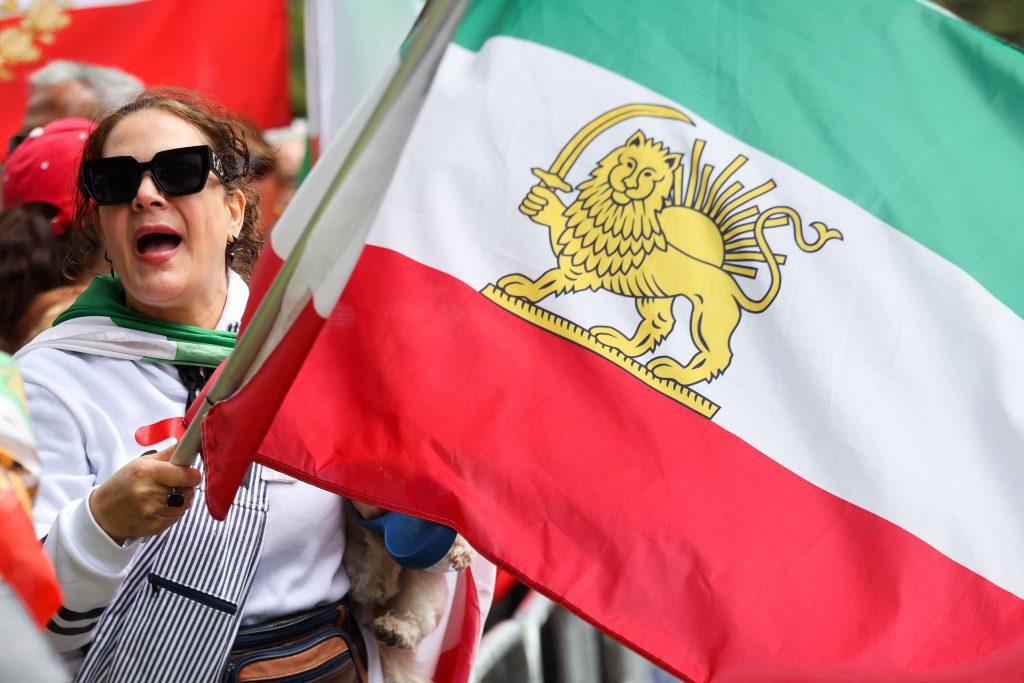
Iranians are seeking democracy and secularism
Over the past 47 years, the people of the country have tried various paths to break free from this ideological system, from student uprisings in the 1990s, which were largely reformist in nature, to protests linked to the death of Mahsa Amini, which called for regime change in Iran, and the most recent uprising, which in January reportedly left around forty thousand people dead and placed Iran among countries whose popular movements are pushing for democracy and secular governance.
However, it appears that football, as the most popular sport in Iran, is being used as a tool to project the image of the ruling establishment. The Football Federation of the Islamic Republic of Iran, whose president Mehdi Taj and several officials were unable to obtain US visas due to alleged links to the Islamic Revolutionary Guard Corps, has reportedly requested that FIFA prevent the display of symbols other than the flag of the Islamic Republic.
This statement, reported in some media under the headline “FIFA has banned the Lion and Sun flag in stadiums”, was neither confirmed by FIFA nor included in its official news releases. It nevertheless sparked outrage among many Iranians, who described it as an insult to Iran’s historical symbols. Several campaigns have also been launched arguing that the Lion and Sun emblem does not belong to any political party or faction, but represents the national identity of Iranians, under which they take pride in their ancient history.
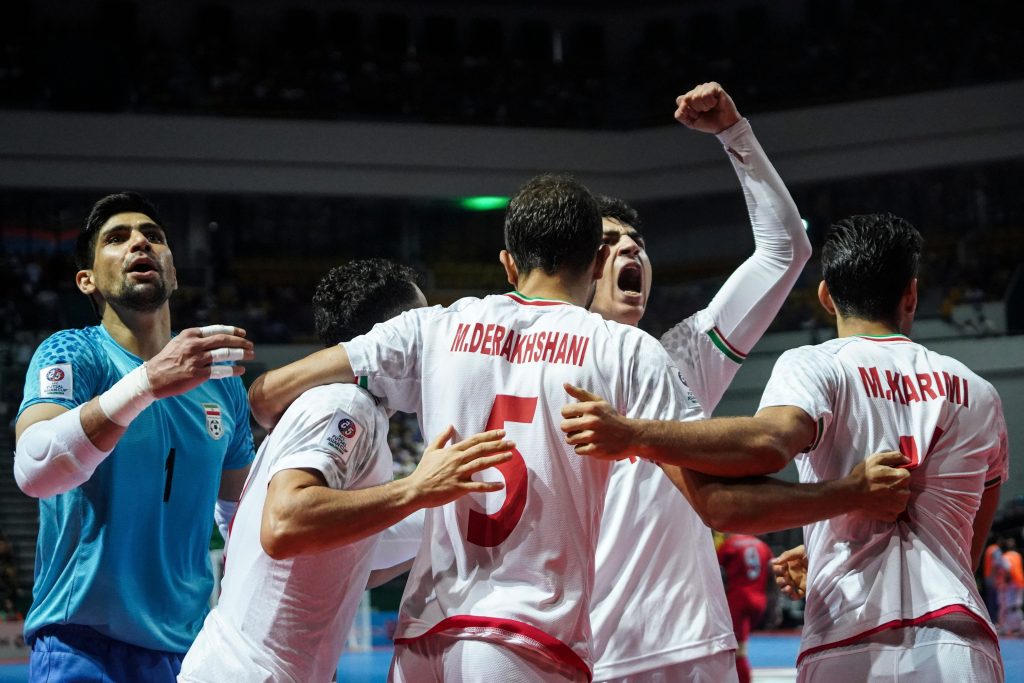
The importance of participation in the World Cup
It appears that the participation of the Iranian national football team under the administration of the Islamic Republic holds significant importance for the current regime, particularly at a time when it is under threat of collapse and facing military and economic pressure from the United States and Israel.
Upon arriving in Mexico to settle at their designated hotel in Tijuana, the team reportedly used a pin marked “#168” on their uniforms in memory of schoolchildren in Minab, near an Iranian military base, who were accidentally killed in what Iranian media described as a US military strike that resulted in the deaths of 168 students.
The team’s goalkeeper, Alireza Beiranvand, pledged in a social media post dedicated to the Supreme Leader of the Islamic Republic, who was killed in a US airstrike, that he would keep Iran’s goal “as tightly shut as the Strait of Hormuz” during World Cup matches. The post immediately triggered strong reactions among many Iranians. They view Ali Khamenei, to whom the goalkeeper allegedly dedicated his pledge, as responsible for the killing of tens of thousands of people, and argue that the Iranian football team does not represent the Iranian nation at the World Cup.
The Iranian team is placed in Group G alongside New Zealand, Belgium and Egypt. Although Group G matches will be held in California, the team has been based in Tijuana, Mexico, according to the decision of the Iranian Football Federation. It is reported that players will travel to the United States 48 hours before each match and return to their base after the games conclude.
 Last related articles