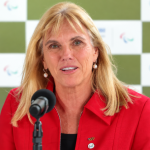
Squash has yet to play its first Olympic match and is already working to extend its presence beyond Los Angeles 2028. World Squash President Zena Wooldridge acknowledged during the Aichi-Nagoya Asian Games that its debut does not guarantee a place at Brisbane 2032. “We don’t know whether we will be in there or not,” she told ‘Reuters’. The federation is making its case for inclusion in the Australian Games through a proposal focused on adaptable facilities, limited operational requirements and international growth. No decision has been announced to exclude squash: its place at the following edition remains undecided.
The distinction stems from how squash secured its inclusion. The International Olympic Committee -IOC- approved squash as one of five additional sports proposed for LA28, alongside baseball/softball, cricket, flag football and lacrosse. That decision, taken in October 2023, applied specifically to the Los Angeles Games. World Squash is therefore working on two fronts: preparing an Olympic competition with an approved qualification system while convincing Brisbane’s organisers that the sport can also fit their financial and operational circumstances.
Adapting to available venues
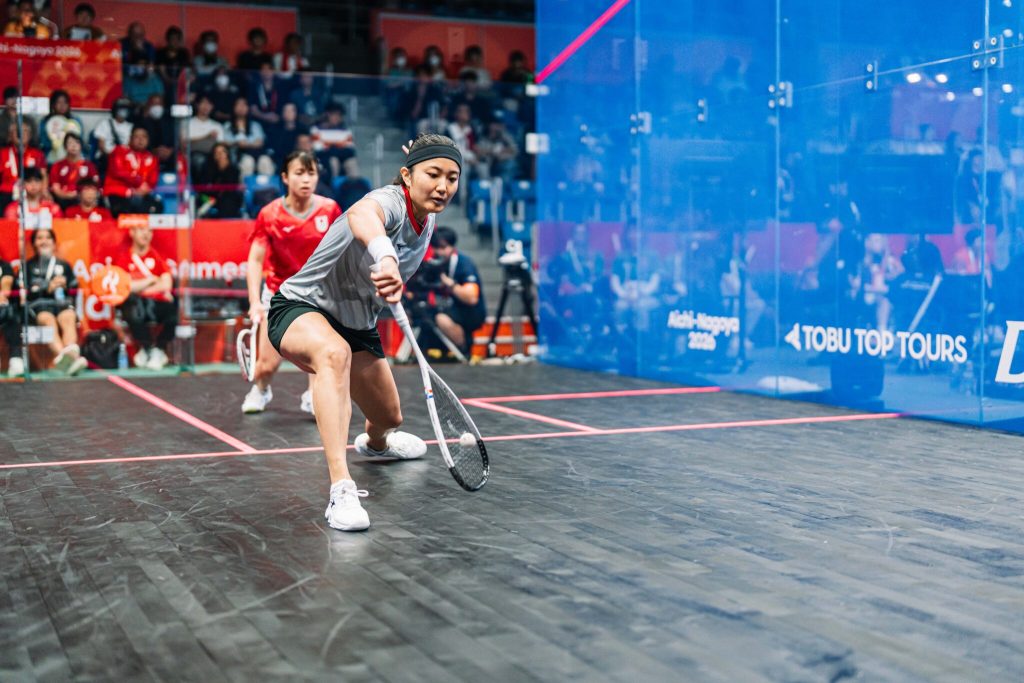
Wooldridge believes Brisbane faces tighter budget constraints and has fewer venues available than Los Angeles. Her response is to offer the organising committee flexibility through modular glass courts that can be assembled, dismantled and relocated. “We can deliver a major event on a single court, and we can share the venue,” she explained. The proposal aims to use existing spaces and avoid permanent facilities whose upkeep would be difficult to justify afterwards. The argument is not that staging squash comes without costs, but that its requirements can be accommodated within a shared venue, reducing the need for new construction.
The federation has already presented that approach to the Australian organisers. In March 2025, representatives from World Squash, Squash Australia and the Professional Squash Association -PSA- met Brisbane 2032 CEO Cindy Hook and Sports Director Brendan Keane. Wooldridge and five-time world champion Sarah Fitz-Gerald were among those attending. The Australian Open provided a practical example at the time: a glass court installed inside the South Bank Piazza multipurpose amphitheatre, beside the Brisbane River. Its use demonstrated a possible hosting arrangement, although the location has not been selected as an Olympic venue.
Cost is also part of the case
The strategy Wooldridge describes starts with understanding the host’s challenges and adapting the sport’s proposal accordingly. For Brisbane, the question extends beyond finding space for a court: the competition must also fit the schedule, training areas must be allocated, and services, staffing and operations must be coordinated with the rest of the Games. Sharing a venue offers one option, but requires detailed arrangements for installation and transitions between uses. In that context, squash’s technical requirements form part of its case for inclusion alongside its sporting appeal and international reach.
Wooldridge also points to growth in India and China, as well as the potential of women’s squash, among the arguments for retaining the sport on the Olympic programme. The federation aims to demonstrate the sport’s ability to expand in highly populated markets and create new opportunities for participation. This complements its venue proposal: World Squash is seeking to show both its international development and its ability to fit into Games with limited resources and space. Both elements support its case, without guaranteeing inclusion.
Concrete steps towards LA28
While those discussions continue, preparations for Los Angeles are progressing towards two 16-player draws, one for men and one for women. The IOC-approved qualification system combines continental competitions, world rankings, host-country places, universality places and a final qualifying tournament. “For many, the Olympic dream will feel one step closer today,” Wooldridge said when the system was announced. On 23 September, Seattle and Bellevue, in the United States, were confirmed as hosts of that final qualifier from 6 to 10 June 2028. It will feature 24 players in each draw and award the last two Olympic places, one to each winner.
A day later, World Squash Officiating -WSO- published the selection pathway for the debut’s officiating team: one officiating lead, eight referees and two reserves. The organisation will seek continental representation and at least three women among the eight appointed referees, with selection remaining merit-based. Federations can submit nominations until 31 October 2026. Candidates will undergo assessments, training and monitoring at international competitions before the list is reduced to 12 referees by the end of the 2026–2027 season. The final appointment recommendations are scheduled for February 2028.
 Last related articles