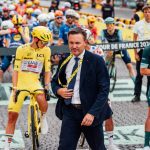
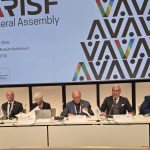
Belgium won that match 4-1, but two months later it is still asking for explanations. The result against the United States in the World Cup round of 16 did not close the case of Folarin Balogun, who was allowed to play despite being sent off in the previous round. Now, the controversy has reached the FIFA elections: the Belgian federation announced this week that it will not support Gianni Infantino’s re-election without satisfactory answers about this episode and other decisions taken by the governing body.
The American striker was due to serve a one-match suspension for his tackle against Bosnia and Herzegovina. However, enforcement of the sanction was deferred following a phone call from Donald Trump to Infantino. Balogun was able to face Belgium, and his team was eliminated. For Belgian officials, winning on the pitch did not resolve what had happened off it.
A match that reaches the FIFA Council
The federation’s president, Pascale Van Damme, has requested that the case be included on the agenda of the FIFA Council meeting on 15 October. “We remain aligned with UEFA and are jointly seeking clear answers,” the federation says. The request gives the complaint a date and a venue: Belgium wants the discussion to reach the governing body, with explanations about the procedure followed and its consequences.
The second issue is FIFA Forward Enterprise (FFE), the proposal to bring private capital into FIFA’s commercial activities that was abandoned following opposition. Its withdrawal halted the operation but left unresolved the debate over how it had been developed. Distrust of that initiative also underlies the request from Finland, Sweden and Denmark to meet European Commissioner for Sport Glenn Micallef, reported on 2 September.
The money promised and the explanations still pending
When it presented FFE on 28 July, FIFA argued that investors would hold minority stakes and that the organisation would retain control over sporting decisions. The attraction for its members lay in the funding: it proposed increasing each federation’s allocation under the Forward programme from eight million to twenty million dollars for 2027–2030. “This is about the democratisation of football worldwide,” Infantino said. Its launch was conditional on majority support from the federations and the Council’s approvals.
The three Nordic associations are now seeking someone to engage with outside that structure. The European Commission has received the letter, although the available information does not confirm that the meeting has been agreed to. There is a joint initiative among those federations; describing it already as a European front with a shared electoral programme would go beyond what has been announced.
Infantino, meanwhile, maintains his intention to stand in the March 2027 election, as FIFA confirmed on 6 September. His candidacy is moving forward, and Belgium has explained what it needs in order to support it. The next round of this disagreement has a date marked on the Council’s calendar: 15 October, if FIFA includes the requested item. This time, there will be no scoreline to settle it.
 Last related articles