It is often said that football is the most unpredictable sport in the world, perhaps because it is the most popular one (because, of course, it is not the only one). And rarely do we stop to reflect on the fact that football is the sport that best reflects who we are… Few things describe today’s society better than the speed with which we change our minds, and this FIFA World Cup proves it.
You do not need to carry out a deep analysis to reach that conclusion; you only need to look at the results. Germany is one of the best examples of this World Cup. It started with a resounding 7-1 win over Curacao, a result that fuelled the feeling of superiority and immediately placed the German national team among the great favourites. But the next match already changed the tone. Germany beat Ivory Coast 2-1, yes, but it did so after suffering much more than expected and in stoppage time. Suddenly, the 7-1 was no longer an unquestionable statement. It was a result that needed context. Germany was still the same. Its players too. The only thing that had changed was the perception.
Spain has experienced a similar rollercoaster. The goalless draw against Cape Verde caused nerves among part of the press and the fans. Doubts emerged about the team’s level, the lack of goals and its real ability to go far in the tournament. Barely five days later, the 4-0 win over Saudi Arabia changed the mood. The team that had seemed stuck could breathe again. The victory appeared to resolve every question mark and completely changed the state of mind around the team.
Brazil has also gone down that road in a matter of days. The 1-1 draw against Morocco left cold feelings and opened a debate over whether the Brazilian national team was really ready to aspire to the title. Then came the 3-0 win over Haiti and many of those doubts seemed to disappear as quickly as they had appeared. As if a single result could erase everything that came before.
How can anyone already call it Messi’s World Cup?
Argentina, meanwhile, has fuelled optimism through accumulation. First, it beat Algeria 3-0, with a performance that strengthened confidence in the reigning world champion. Then it beat Austria 2-0, with two goals from Lionel Messi, who once again occupied the emotional and footballing centre of the World Cup. Argentina does not just win: it conveys the feeling that each of its matches can become a new chapter in a bigger story. Some are already saying that this is Messi’s World Cup… With only two matches played! Knowing how the average fan works, it feels like a bubble, because enthusiasm, when it accelerates too quickly, can also distort analysis. Surely, in Scaloni’s country, there are also those who take these results with more restraint and do not raise expectations so much… But that is an immense minority, like those who did not worry in Spain about the draw against Cape Verde or those who did not buy into Germany’s hype after thrashing Curacao.
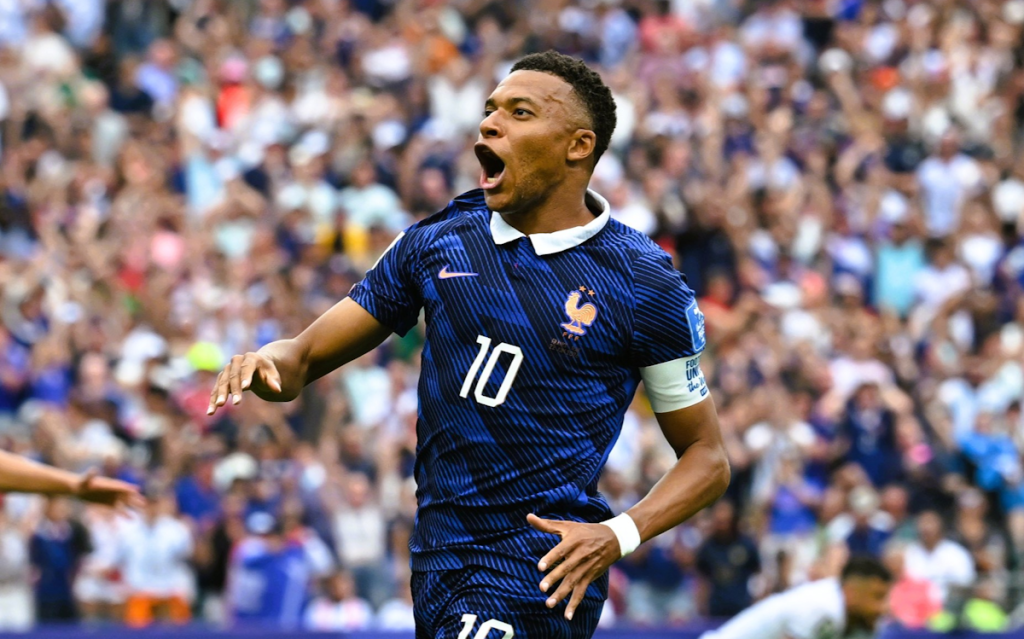
France is in a similar situation to Argentina. It debuted with a 3-1 win over Senegal and then beat Iraq 3-0. Two wins, six goals scored, one conceded and the feeling that its candidacy has strengthened without too many cracks. Kylian Mbappé has once again made the difference and France seems established in that category of national team that is expected to win, convince and not leave even the slightest doubt. But even in that scenario, the same thing should be remembered: two matches do not explain an entire World Cup. They guide it, but they do not sentence it. On the opposite side are Portugal and Cristiano Ronaldo… already in crisis and at a dead end for many (they have only played one match).
This is not new. At every World Cup or major football event – where everything is exposed more than in any other sport – conclusions are drawn after every match. Even when they should not be. What is striking is that this happens in an era in which time, media and technology allow every last detail of each match and player to be analysed. Never have so many data points, statistics, television programmes, podcasts, articles and specialised content been generated. Millions of people spend hours studying every move of a team. And yet, there seems to be the same general inability to contextualise a result or keep it on hold instead of drawing conclusions. A draw stops being a draw and becomes a crisis. A win stops being a win and turns into irrefutable proof that everything works… It does not matter if there are players coming back from injuries, if there has been travel or adaptation involved… The context around the match does not receive the importance it should, and only names and results are debated. A short-term and mean-minded mentality.
Perspective, reflection, patience
Nuance disappears. Reflection disappears. Context disappears. Germany went from storm to suffering. Spain, from nerves to relief. Brazil, from suspicion to confidence. Argentina and France, from optimism to the almost collective conviction that everything is moving in the right direction. And in all cases, we are talking about national teams that have played only two matches. Far too little to issue verdicts. Enough, however, for football to once again activate that very modern need to turn every episode into a definitive conclusion. A click with an expiry date, one that may prove wrong within hours (something that does not seem to matter).
It does not seem to be a football problem. It is a reflection of today’s society. The society of social media, instant reactions, judgements issued in real time and conclusions drawn before there is enough information to sustain them. We live in the culture of now. Of right now. Of the constant need to take a position before even understanding what is happening.
Hopefully, perspective, reflection, patience and analytical ability will go viral. Saying that things are not yet ready for judgement. The credibility of an opinion that holds up over time. And hopefully that will be exported into society’s everyday life.
 Last related articles