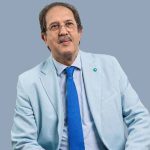
The spokesperson for the Ministry of Foreign Affairs of Ukraine, Heorhii Tykhyi, called for an internal investigation by the International Olympic Committee -IOC- after a Russian national was selected to carry the Ukraine placard during the opening ceremony of the Milano Cortina 2026 Winter Olympic Games. “The fact that the International Olympic Committee chose a Russian person to carry Ukraine’s placard is despicable. It goes beyond any human morality or any principle. It is simply difficult to describe”, he said during an official briefing on February 18. The Ukrainian government also requested a formal apology and demanded clarification on who authorised the decision.
The incident occurred days after another episode had already placed the IOC at the centre of its institutional relationship with Ukraine during the Games, when Ukrainian skeleton athlete Vladyslav Heraskevych was disqualified for wearing a helmet displaying images linked to victims of the war. In that case, the Olympic body based its decision on its regulations concerning political neutrality and symbolism. The selection of a Russian volunteer to lead the Ukrainian delegation introduced a different issue, related to ceremonial protocol and its symbolic dimension. Both episodes unfolded within the same Olympic cycle, as the Olympic Movement maintained its neutrality framework while Ukraine formally communicated its institutional position and sought explanations for decisions taken during the Games.
The volunteer’s selection and the reaction of the Ukrainian government
The controversy originated during the opening ceremony held at San Siro stadium, when Anastasia Kucherova, an architect born in Russia and living in Milan for more than fourteen years, carried the placard bearing the name Ukraine at the front of the country’s five-athlete delegation. According to the organisers, volunteers were initially assigned countries randomly, although they were later allowed to indicate preferences. Kucherova chose to lead Ukraine, and her nationality was neither announced nor evident during the ceremony.
After her background became public, the Ukrainian government described the decision as contrary to principles commonly applied in international competitions. Tykhyi stated that, in situations involving armed conflict, organisers typically avoid circumstances that could create symbolic proximity between countries at war. “Everyone knows that in major international sports competitions, countries that are at war are usually kept apart. This is a serious violation of the Olympic Charter and the principles of international sport”, he said.
The volunteer’s explanation: “Not everyone thinks the same”
Anastasia Kucherova later explained that she had consciously chosen to represent Ukraine. “When you walk beside these people, you understand that they have every right to feel hatred toward any Russian. However, I think it is important to make even a small gesture to show that perhaps not all people think the same”, she said. She also noted that she had lived in Italy for more than a decade and had not returned to Russia since 2018.
The role of volunteers in Olympic ceremonies forms part of the standard organisational protocol and does not imply official representation or institutional affiliation with delegations. However, the symbolic meaning of such roles gained a different dimension in the context of the war initiated by Russia against Ukraine in 2022. Kyiv’s formal request for an investigation required the IOC to review whether established procedures had been followed.
A context extending into the Paralympic Winter Games
The controversy also developed alongside the decision by the International Paralympic Committee -IPC- to authorise the participation of ten athletes — six from Russia and four from Belarus — under their national flags at the Milano Cortina 2026 Paralympic Winter Games, scheduled from March 6 to March 15. The Ukrainian government announced that its officials would not attend the Paralympic Winter Games as a form of institutional protest following the IPC’s decision.
The Minister of Sports of Ukraine, Matviy Bidny, described the decision as “outrageous” and accused Russia of using sport as a political instrument, while the Ministry of Foreign Affairs instructed Ukrainian ambassadors to convey the country’s position internationally. In this context, the volunteer’s selection during the Olympic opening ceremony became part of a broader sequence of institutional developments, as the International Olympic Committee evaluated its response to Ukraine’s formal request for an investigation and apology.
 Last related articles