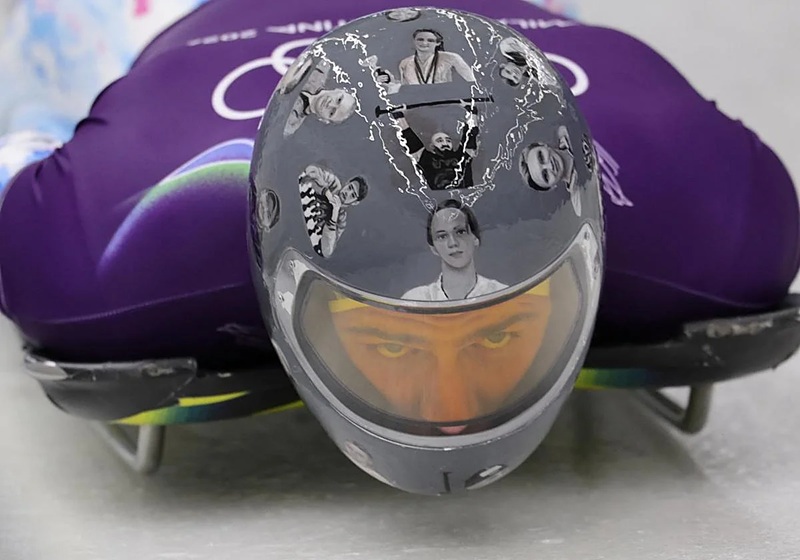
Ukrainian skeleton pilot Vladyslav Heraskevych has been disqualified from the Milano Cortina 2026 Winter Olympic Games after refusing to remove a helmet featuring images of athletes killed during the war in Ukraine. The International Olympic Committee -IOC- confirmed that he would not be allowed to start in the men’s skeleton event for failing to comply with athlete expression guidelines in the competition area and initially decided to withdraw his accreditation for the Games.
Heraskevych, 27, is one of the leading figures in Ukrainian skeleton and carried his country’s flag at the opening ceremony. Four years ago, at the Beijing 2022 Games, he drew international attention by displaying a “No War in Ukraine” banner. This time, he insisted on racing with a helmet bearing photographs of Ukrainian athletes killed since the Russian invasion began, stating: “These people sacrificed their lives and because of that I am able to be here today. I will not betray them.”
The episode places the IOC in a complex position: while the Russian flag is excluded from these Games due to the invasion of Ukraine, the organisation’s neutrality rules prohibit any form of expression within the competition area, even when it involves a gesture of remembrance for athletes who lost their lives in the conflict.
Rule 50 and the strict application of guidelines
Rule 50 of the Olympic Charter states that “no kind of demonstration or political, religious or racial propaganda is permitted in any Olympic sites, venues or other areas.” The jury of the International Bobsleigh and Skeleton Federation -IBSF- ruled that the helmet did not comply with the regulations, prompting action by the IOC. In its official statement, the organisation said that after being given “one final opportunity,” the athlete “will not be able to start” and confirmed the withdrawal of his accreditation.
Mark Adams, spokesperson for the IOC, told reporters: “We want all athletes to have their moment, that’s very important. We understand his grief and we want him to express it, but in the competition area no messaging is allowed.” Adams added that the issue “is not the message itself, but where it is expressed,” defending the need to maintain a neutral and common competitive environment for all participants.
Coventry’s mediation attempt
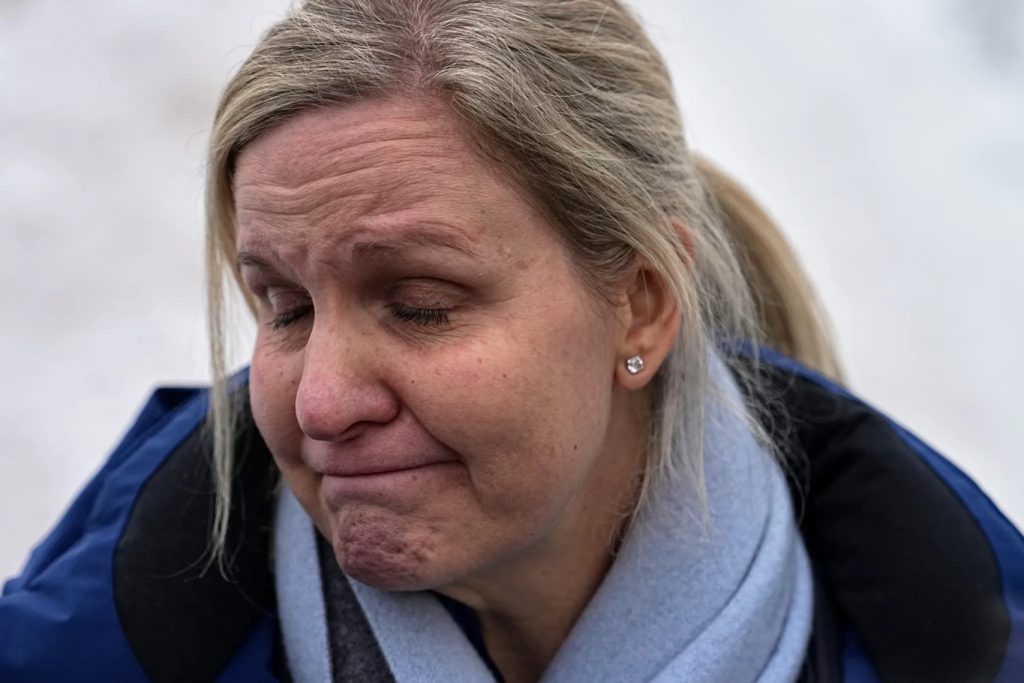
IOC President Kirsty Coventry personally met with the athlete before the final decision. “I was not meant to be here, but I felt it was really important to come and talk to him face to face,” she said, visibly emotional. “No one is disagreeing with the messaging. It’s a powerful message of remembrance. The challenge was finding a solution within the field of play. Sadly, we were not able to reach one. I really wanted to see him race.”
The IOC offered the alternative of wearing a black armband in tribute, a proposal Heraskevych rejected. “I believe the IOC doesn’t have enough black armbands to remember all the athletes who were killed in this war,” he said. He reiterated that the helmet contained no political slogans or advertising, only photographs of athletes such as weightlifter Alina Perehudova and boxer Pavlo Ischenko.
Following the meeting, Kirsty Coventry explained that athletes had asked for certain areas — the competition track, the podium and the Olympic Village — to remain “safe zones,” free from any messaging. “We have these rules in place to try to be fair and to allow athletes to feel safe,” she stated. Although the initial decision included withdrawing his accreditation, Coventry requested the Chair of the IOC Disciplinary Commission to reconsider that measure. The request was accepted, allowing Heraskevych to remain at the Milano Cortina 2026 Games, though he will not compete.
A complex balance in a context of war
The case unfolds at Games marked by the ongoing Russian invasion of Ukraine. The Russian flag is not present in Milano Cortina 2026, although 13 Russian and 7 Belarusian athletes have been cleared to participate as Individual Neutral Athletes. In this setting, the IOC maintains that neutrality within the competition area must be preserved from any form of demonstration, even when the conflict directly affects members of the Olympic movement.
The National Olympic Committee of Ukraine submitted a formal request to allow the “helmet of remembrance,” arguing that it complied with safety requirements and did not contain explicit political messages. Ukrainian Foreign Minister Andrii Sybiha described the decision as “a moment of shame,” while Heraskevych announced his intention to appeal to the Court of Arbitration for Sport -CAS-. The episode highlights the tension between the uniform application of Olympic rules and the humanitarian dimension of a conflict that forms part of the backdrop to these Games, raising broader questions about the limits of individual expression within the Olympic framework.
 Last related articles