Real Madrid is not only one of the biggest clubs in football, but also an anomaly within global sport. Forbes ranked it in 2025 as the world’s most valuable football club, with a valuation of $6.75 billion, and as the first club in the sport to surpass $1 billion in revenue. Unlike major NBA franchises, NFL teams or much of Europe’s elite, controlled by companies, funds, magnates or multi-club groups, the Spanish club retains a member-owned structure in which its socios are the owners. That condition turns any presidential election into more than an internal dispute: it affects the governance of one of the most powerful sporting institutions that still does not belong to a private owner.
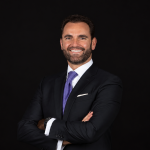
That is the stage now occupied by Enrique Riquelme, the Alicante businessman and president of Cox, who has presented his candidacy to compete with Florentino Pérez for the presidency of Real Madrid. The club’s Electoral Board validated his candidacy after he met the statutory requirements, including a financial guarantee of €193 million, opening the door to the first election with real competition at the club since 2006. Riquelme is trying to present himself as a generational, business-oriented and management alternative to a president who has dominated Real Madrid’s institutional life since returning to office in 2009.
From Cox to Real Madrid
Enrique Riquelme was born in 1989 in Cox, a town in the Vega Baja area of Alicante, and comes from a family linked to construction, real estate and services. His business career has developed mainly around Cox Energy, the renewable energy company he founded and chairs, focused on photovoltaic power generation, renewable energy commercialisation, self-consumption and, following its corporate growth, areas such as water, engineering, operations and maintenance. The company increased its revenue by 62% in 2025, to €1.14 billion, and reached a record EBITDA of €225 million, according to the results reported by the group itself.
Riquelme’s public profile grew with Cox’s international expansion and its presence in markets such as Spain, Portugal, Mexico, Chile, Colombia and Panama. In 2025, the company took another step up in scale by agreeing to buy Iberdrola assets in Mexico for $4.2 billion, a deal that included 15 plants with 2.6 GW of capacity and an 11.8 GW renewable portfolio. The transaction fits a growth-by-acquisition strategy and reinforced Riquelme’s image as a businessman associated with fast moves, complex financing and transforming markets.
Abengoa and the leap in scale
Abengoa was the operation that definitively took him out of the specialist business sphere and placed him at the centre of Spain’s economic landscape. In 2023, Cox was awarded the productive assets of the historic Andalusian company with an offer valued at €564 million, including all business areas and the corporate perimeter, as well as commitments linked to liquidity and job preservation. At that time, he was already being described as a businessman with “boldness” and “a flair for relationships” in analysis of his Abengoa offer, when, at 34, he had already built a company with an international presence and a large-scale project portfolio.

That background helps explain the type of candidacy he is putting forward for Real Madrid. He does not come from traditional sports politics, but from a business culture of growth, restructuring and international ambition. His team also reflects that logic, with profiles linked to the legal, financial, industrial and institutional worlds, and with women in relevant positions. The candidacy is trying to project an idea of modern and professionalised management, closer to corporate language than to classic club opposition.
The challenge of reaching a Real Madrid election
Running for the presidency of Real Madrid is an obstacle course. The statutes require long-standing membership, Spanish nationality, full legal capacity and a financial guarantee calculated on the club’s budget. That filter has historically reduced the chances of real competition and helps explain why Florentino Pérez has been proclaimed president without rivals in the most recent elections since his return in 2009.
Riquelme had already shown interest in 2021, but this time he has managed to reach the end of the process. His message seeks to avoid direct confrontation with Pérez and rests on a phrase repeated during his public presentation: “This is not a candidacy against anyone, it is in favour of Real Madrid.” He has also asked members “not to be afraid” and defends a “serious and professional” project in sporting and social terms, with the idea of restoring the role of the member within an institution that, despite its global scale, still formally belongs to its members.
The difficulty of his challenge is clear. Pérez carries the weight of a presidency marked by trophies, the transformation of the Santiago Bernabéu, international growth and economic strength. Riquelme, by contrast, is trying to open an election after two decades without real competition, and to do so from a different identity: a young businessman from the energy sector, with high-risk operations and a narrative of renewal. His candidacy does not only measure the wear or continuity of Florentino Pérez, but also the extent to which the members of the world’s largest member-owned club want to use a tool that simply does not exist in other sporting giants: directly voting for the institutional owner of their club.
 Last related articles